
An OpenAI-compatible LLM gateway you own and run.
Route one endpoint to 40+ providers, issue virtual keys, enforce budgets, and track usage.


Docs · otari.ai · Launch blog · Discord
Otari sits between your applications and model providers. It authenticates requests, resolves provider credentials, enforces budgets before dispatch, and records usage afterwards. Provider calls go through any-llm.
Run Otari standalone with your own database and provider keys, or connect a data plane to otari.ai.
Why Otari
- One OpenAI and Anthropic-compatible endpoint for many providers
- Provider credentials stay behind the gateway
- Revocable API keys with user, workspace, and model scope
- Budget checks before spend and usage records after settlement
- Local routing policies for failover, weighting, and learned selection
- Optional code execution, web search, MCP, inference guardrails, and file understanding
Quickstart
Run an ephemeral standalone gateway with Docker:
docker run --rm -p 8000:8000 \
  -e OTARI_MASTER_KEY=SET_A_MASTER_KEY \
  -e OPENAI_API_KEY=YOUR_OPENAI_KEY \
  -e OTARI_CONFIG_YAML='
default_pricing: true
providers:
  openai:
    api_key: ${OPENAI_API_KEY}
' \
  mzdotai/otari:latest \
  otari serve
On the first empty database, Otari creates an API key and prints it once:
No API keys found. Created bootstrap key for first run. Save this key now:
tk-...
Send a request with that key:
curl http://localhost:8000/api/v1/chat/completions \
  -H "Authorization: Bearer tk-..." \
  -H "Content-Type: application/json" \
  -d '{
    "model": "openai:gpt-4o-mini",
    "messages": [{"role": "user", "content": "Say hello."}]
  }'
OpenAI clients work by setting base_url to
http://localhost:8000/api/v1.
This container uses SQLite inside the container and is deleted when it stops. Use the Compose setup below for persistent data.
The command a developer runs next to a coding agent (otari hook,
otari import claude-code) installs on its own, without the server:
brew install mozilla-ai/tap/otari
See Agent Guardrails and Use with Claude Code.
Run the full stack
git clone https://github.com/mozilla-ai/otari
cd otari
cp config.example.yml config.yml
# Set a master key, provider credentials, and pricing in config.yml.
# Provider copies of attached files need a pepper of their own. Compose reads .env.
grep -qs OTARI_PROVIDER_ACCOUNT_PEPPER .env || echo "OTARI_PROVIDER_ACCOUNT_PEPPER=$(openssl rand -base64 32)" >> .env
docker compose pull
docker compose up -d
Compose runs Otari with PostgreSQL. Optional profiles add the code sandbox, web search, and guardrail services:
docker compose --profile code-exec --profile web-search --profile guardrails up -d
The dashboard is served at http://localhost:8000/. To store provider keys
through the dashboard, set OTARI_SECRET_KEY to a Fernet key generated by
otari gen-secret-key.
A one-click deployment template is available for Railway.
Runtime modes
| Mode | Purpose |
|---|---|
| Standalone | One process serves management and inference using local storage. |
| Hosted | A multi-tenant control plane; inference runs on connected gateways. |
| Hybrid | A data-plane gateway resolves credentials and reports usage to otari.ai. |
When OTARI_MODE is unset, OTARI_AI_TOKEN selects hybrid mode; otherwise
Otari defaults to standalone. A mode says what a process serves, not who runs it,
so "hosted" is not the opposite of "self-hosted". See
Runtime modes.
API and dashboard
The core completion routes are:
POST /api/v1/chat/completionsPOST /api/v1/messagesPOST /api/v1/responses
Standalone also serves the broader OpenAI-compatible and management APIs. The
running server publishes Swagger UI at /api/v1/docs and OpenAPI at
/api/v1/openapi.json. See API reference.
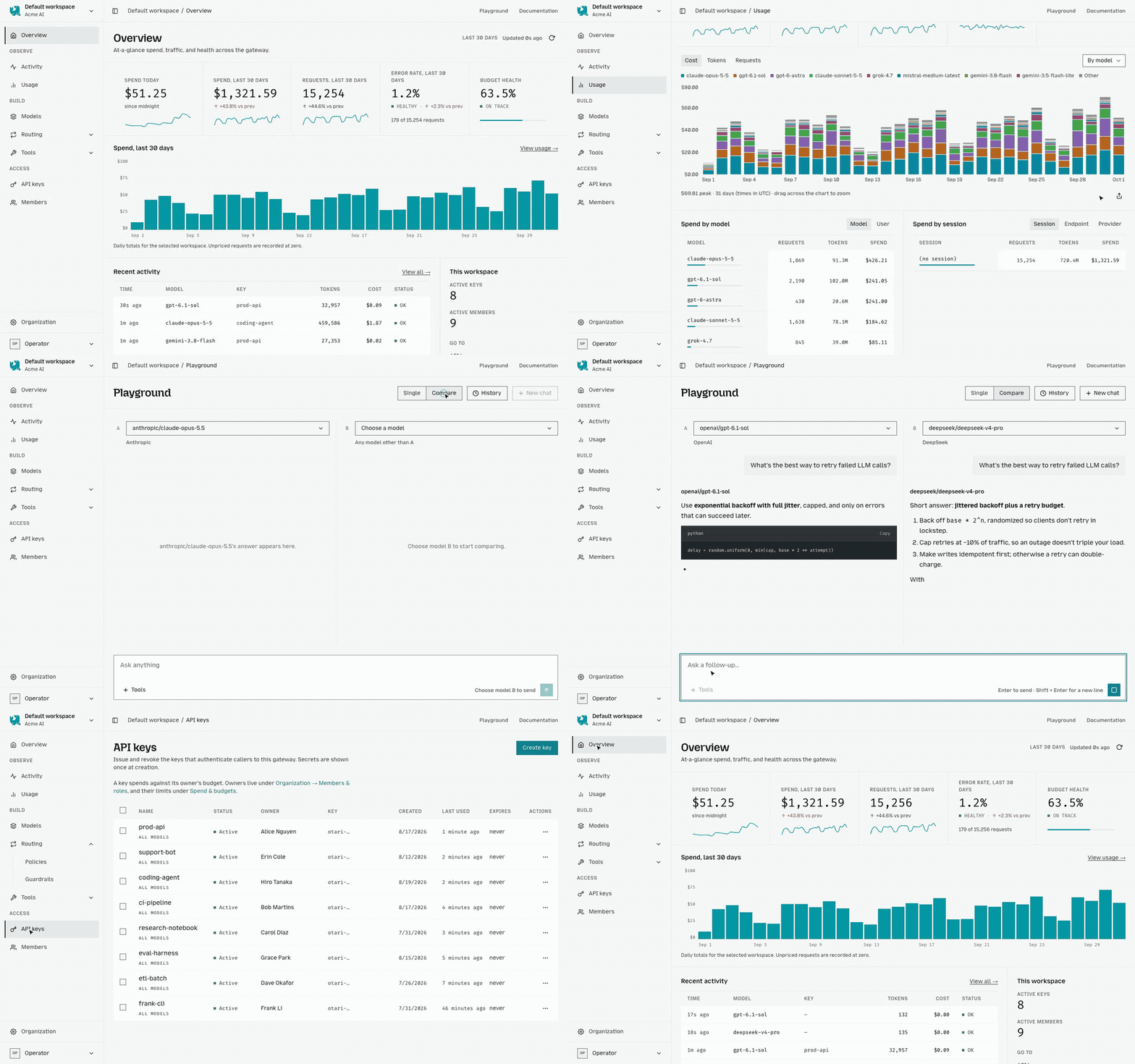
The dashboard manages providers, models, routing, tools, keys, members, budgets, settings, activity, and usage. Its navigation adapts to the deployment mode and the signed-in person's authority. See Admin dashboard.
Development
git clone https://github.com/mozilla-ai/otari
cd otari
uv sync --dev
cp config.example.yml config.yml
uv run otari serve --config config.yml
For local development without PostgreSQL, change database_url to
sqlite+aiosqlite:///./otari.db.
Common checks:
make test
make lint
make typecheck
See CONTRIBUTING.md before opening a pull request.
Documentation
- Quickstart
- Deployment
- Configuration
- Models
- Routing
- Access control
- Built-in tools
- Agent Guardrails
- SDK and agent integrations
- Architecture
License
Apache 2.0. See LICENSE.