ThunderID is a high-performance, open-source identity stack designed for developers to secure and manage access for humans, AI agents, and machines through fully composable identity flows.
A profiling and performance analysis tool for machine learning
关键参数与规格
关键参数与规格
参数
值
语言
Go
类别
Infrastructure
子类别
Observability,Make world agent-ready
关键词
Agent sandbox, DevOps, Guardrails
星标数
592
分叉数
46
贡献者
7
创建日期
2025-10-21
更新日期
2026-10-03
1 天星标数
0
7 天星标数
0
排名
16,428
上次排名
16,219
排名变化
-209
7 天星标排名
15,527
上次 7 天星标排名
15,538
7 天星标排名变化
11
总星标排名
16,956
上次总星标排名
16,933
总星标排名变化
-23
国家
USA
README 摘录
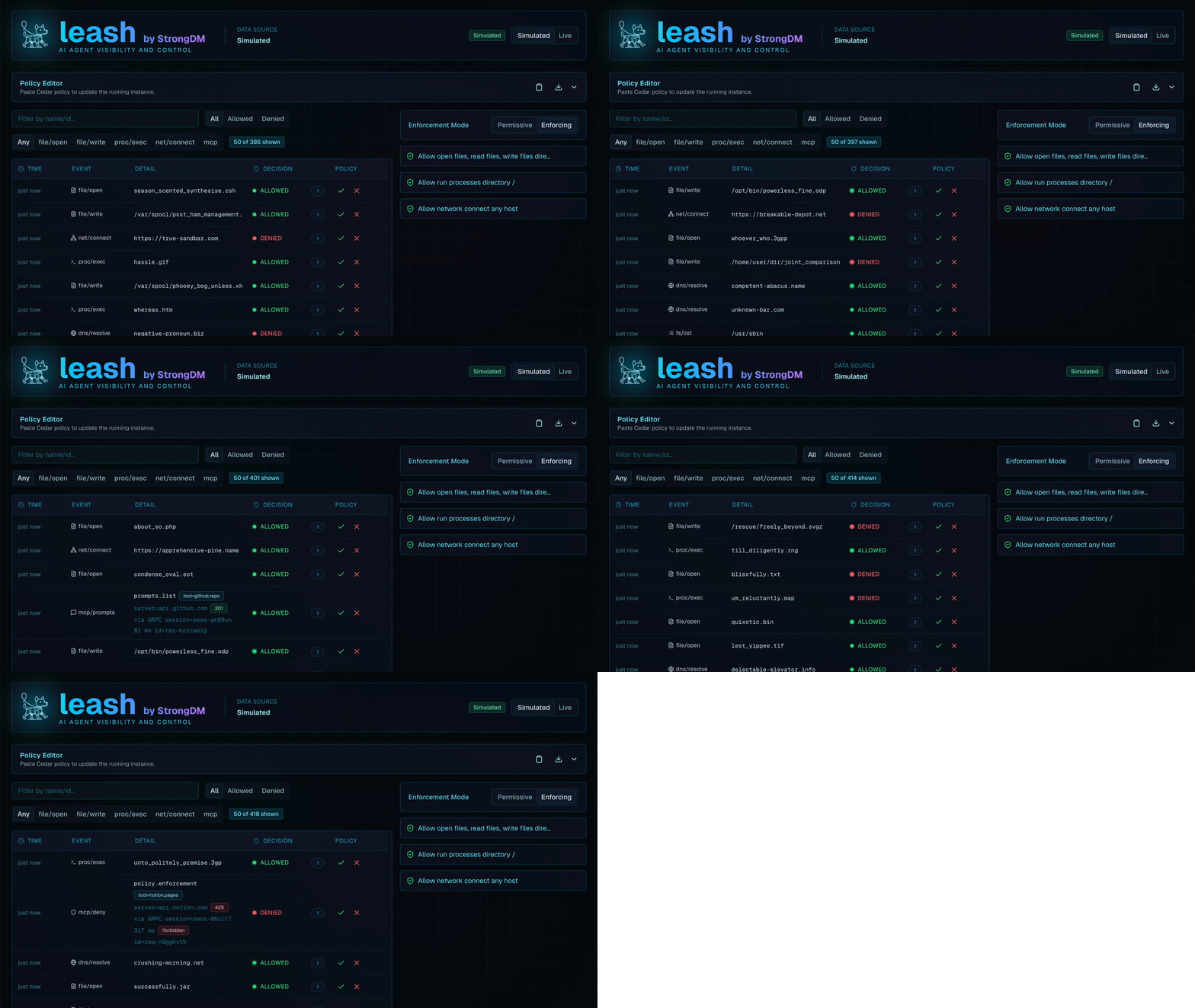
Leash Leash wraps AI coding agents in containers and monitors their activity. You define policies in Cedar; Leash enforces them instantly. Requirements Docker, Podman, or OrbStack macOS or Linux (WSL, too! ) Installation Recommended method is via npm: Alternative ways follow: Download the latest pre-built release binary from the releases page. or if you're on macOS: **macOS Note 1:** This installs a helper app that enables experimental native mode on macOS and also installs the leash formula. **macOS Note 2
:** If you download Leash from the releases page, you'll need to run after extracting it Refer to MACOS. md to learn more about the additional native macOS capabilities. Run your first Leash command AI agents , , , , and are shipped in the default image. On first use Leash will prompt to mount the host's coder-agent config directory (for example ) into the container. Choose whether to remember that decision globally, for the current project, or just this once; persistent choices are stored
at . Key Concepts **Full monitoring** captures every filesystem access and network connection initiated by the agent so Cedar policies and audit trails operate on complete telemetry. **Agent container** runs your command with the current directory bind-mounted, so tools see the same file tree they would on the host. **Leash container** monitors system calls, applies Cedar policies, and exposes the Control UI at (use to launch it automatically). **Mount prompts** remember whether to forward host agent credentials (see CONFIG. **Environment
forwarding** maps common API keys automatically: for , for , for , and for . MCP Integration Leash includes a Model Context Protocol (MCP) observer that inspects, records, and enforces MCP tool calls made by the agent. Requests flowing through supported MCP transports are correlated with filesystem and network telemetry, enabling Cedar policies to govern tool use alongside core runtime activity. Using Leash Images and Dependencies Keep the default image for a ready-to-run AI tooling environment. coder with project packages, then point
Leash at the new image. Reuse an existing project image by adding and configuring Leash to launch it. | | | , or flag | | | Target container base | | Auto-sanitized from the current directory when unset. | | Leash manager image | , | Override when testing custom manager builds. | | Cedar policy file | , | Mount a specific Cedar policy. | | Control UI bind address | , | Blank value binds to default 127. 1:18080 | | Extra bind mount | | Repeatable for multiple mounts. | | Environment variables | | Forwarded into both containers. | Run for a complete list of flags
and environment variables. Manual Volumes and Environment Variables Choose your own project-specific mounts and set additional environment variables as needed: Deep Dives Dive deeper with CEDAR. Troubleshooting & Next Steps Reset mount decisions or inspect config behavior with the tips in CONFIG. Explore the development process in DEVELOPMENT.
Download the latest pre-built release binary from the releases page.
or if you're on macOS:
brew tap strongdm/tap
brew install --cask leash-app
macOS Note 1: This installs a helper app that enables experimental native mode on macOS and also installs the leash formula.
macOS Note 2: If you download Leash from the releases page, you'll need to run xattr -d com.apple.quarantine leash after extracting it
Refer to MACOS.md to learn more about the additional native macOS capabilities.
Run your first Leash command
# Launch codex with the Control UI and pop open the web browser automatically
leash --open claude

leash --open codex

# Inspect available options
leash --help
AI agents claude, codex, gemini, qwen, and opencode are shipped in the default coder image.
On first use Leash will prompt to mount the host's coder-agent config directory (for example ~/.claude) into the container.
Choose whether to remember that decision globally, for the current project, or just this once; persistent choices are stored at ~/.config/leash/config.toml.
Key Concepts
Full monitoring captures every filesystem access and network connection initiated by the agent so Cedar policies and audit trails operate on complete telemetry.
Agent container runs your command with the current directory bind-mounted, so tools see the same file tree they would on the host.
Leash container monitors system calls, applies Cedar policies, and exposes the Control UI at http://localhost:18080 (use --open to launch it automatically).
Mount prompts remember whether to forward host agent credentials (see CONFIG.md).
Environment forwarding maps common API keys automatically: ANTHROPIC_API_KEY for claude, OPENAI_API_KEY for codex, GEMINI_API_KEY for gemini, and DASHSCOPE_API_KEY for qwen.
MCP Integration
Leash includes a Model Context Protocol (MCP) observer that inspects, records, and enforces MCP tool calls made by the agent. Requests flowing through supported MCP transports are correlated with filesystem and network telemetry, enabling Cedar policies to govern tool use alongside core runtime activity.
Using Leash
Images and Dependencies
Keep the default public.ecr.aws/s5i7k8t3/strongdm/coder image for a ready-to-run AI tooling environment.
Extend Dockerfile.coder with project packages, then point Leash at the new image.
Reuse an existing project image by adding ca-certificates and configuring Leash to launch it.
Configure alternative images through TOML, CLI flags, or environment variables: