Semi-supervised learning GAN in Tensorflow
As part of the implementation series of Joseph Lim's group at USC, our motivation is to accelerate (or sometimes delay) research in the AI community by promoting open-source projects. To this end, we implement state-of-the-art research papers, and publicly share them with concise reports. Please visit our group github site for other projects.
This project is implemented by Shao-Hua Sun and the codes have been reviewed by Jiayuan Mao before being published.
Descriptions
This project is a Tensorflow implementation of Semi-supervised Learning Generative Adversarial Networks proposed in the paper Improved Techniques for Training GANs. The intuition is exploiting the samples generated by GAN generators to boost the performance of image classification tasks by improving generalization.
In sum, the main idea is training a network playing both the roles of a classifier performing image classification task as well as a discriminator trained to distinguish generated samples produced by a generator from the real data. To be more specific, the discriminator/classifier takes an image as input and classified it into n+1 classes, where n is the number of classes of a classification task. True samples are classified into the first n classes and generated samples are classified into the n+1-th class, as shown in the figure below.
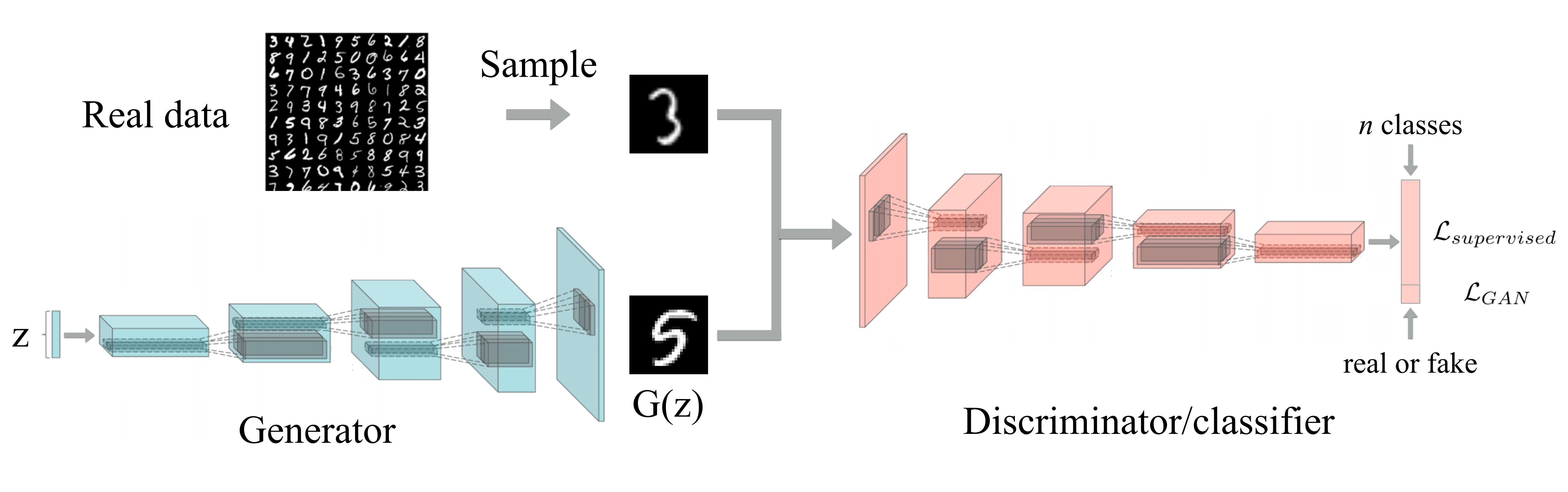
The loss of this multi-task learning framework can be decomposed into the supervised loss
 ,
,
and the GAN loss of a discriminator
 ,
,
During the training phase, we jointly minimize the total loss obtained by simply combining the two losses together.
The implemented model is trained and tested on three publicly available datasets: MNIST, SVHN, and CIFAR-10.
Note that this implementation only follows the main idea of the original paper while differing a lot in implementation details such as model architectures, hyperparameters, applied optimizer, etc. Also, some useful training tricks applied to this implementation are stated at the end of this README.
*This code is still being developed and subject to change.
Prerequisites
- Python 2.7 or Python 3.3+
- Tensorflow 1.0.0
- SciPy
- NumPy
Usage
Download datasets with:
$ python download.py --dataset MNIST SVHN CIFAR10
Train models with downloaded datasets:
$ python trainer.py --dataset MNIST
$ python trainer.py --dataset SVHN
$ python trainer.py --dataset CIFAR10
Test models with saved checkpoints:
$ python evaler.py --dataset MNIST --checkpoint ckpt_dir
$ python evaler.py --dataset SVHN --checkpoint ckpt_dir
$ python evaler.py --dataset CIFAR10 --checkpoint ckpt_dir
The ckpt_dir should be like: train_dir/default-MNIST_lr_0.0001_update_G5_D1-20170101-194957/model-1001
Train and test your own datasets:
- Create a directory
$ mkdir datasets/YOUR_DATASET
- Store your data as an h5py file datasets/YOUR_DATASET/data.hy and each data point contains
- 'image': has shape [h, w, c], where c is the number of channels (grayscale images: 1, color images: 3)
- 'label': represented as an one-hot vector
- Maintain a list datasets/YOUR_DATASET/id.txt listing ids of all data points
- Modify trainer.py including args, data_info, etc.
- Finally, train and test models:
$ python trainer.py --dataset YOUR_DATASET
$ python evaler.py --dataset YOUR_DATASET
Results
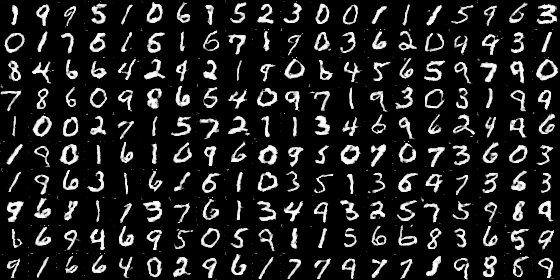
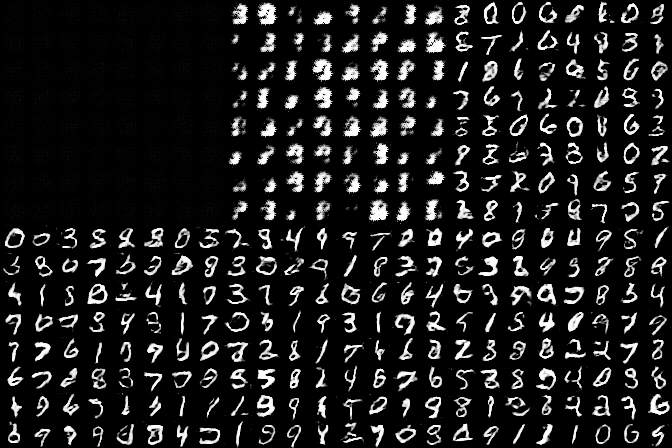
MNIST
- Generated samples (100th epochs)
- First 40 epochs
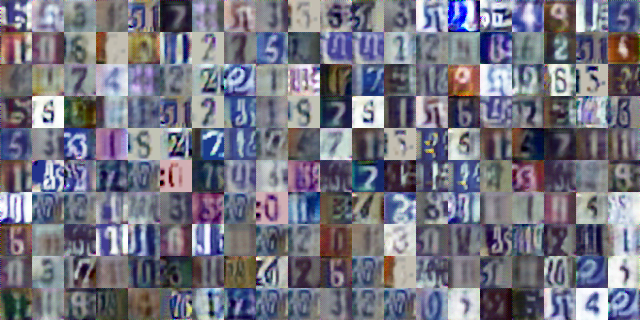
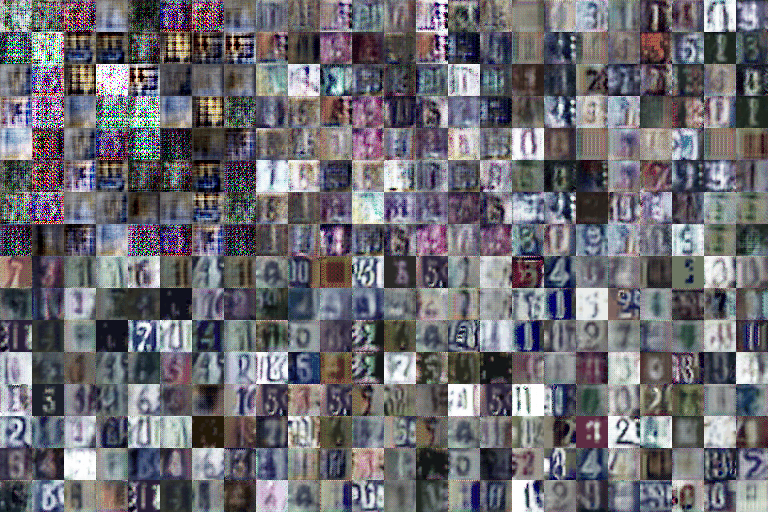
SVHN
- Generated samples (100th epochs)
- First 160 epochs
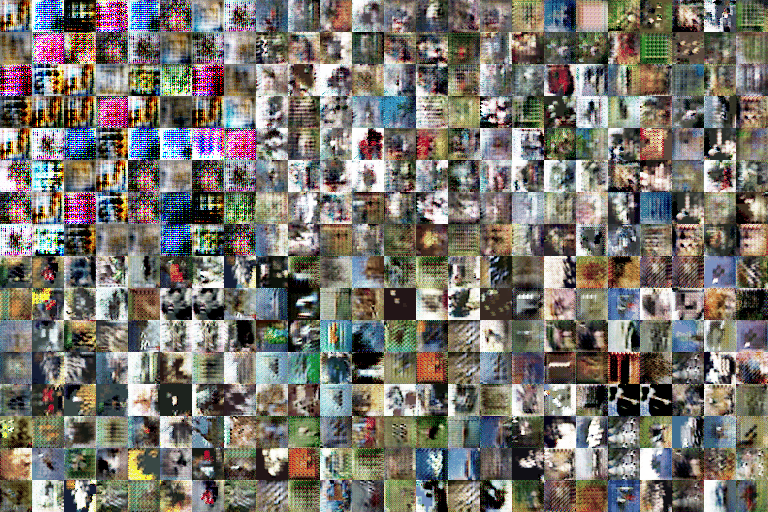
CIFAR-10
- Generated samples (1000th epochs)
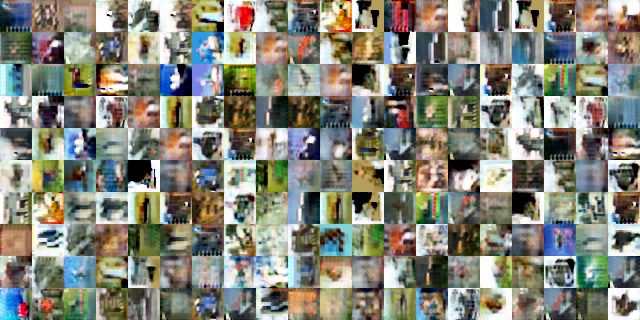
- First 200 epochs
Training details
MNIST
- The supervised loss

- The loss of Discriminator
D_loss_real

D_loss_fake

D_loss (total loss)

- The loss of Generator
G_loss

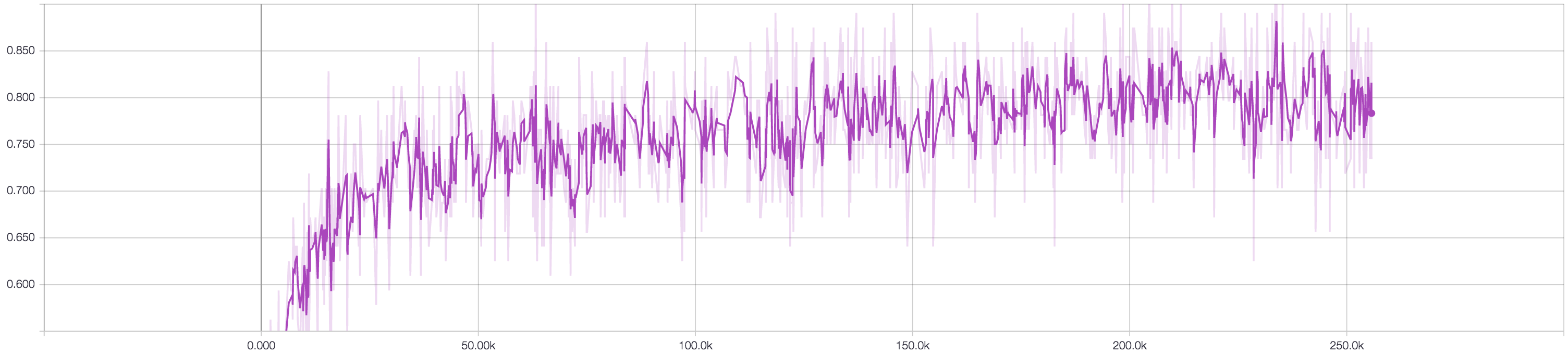
- Classification accuracy

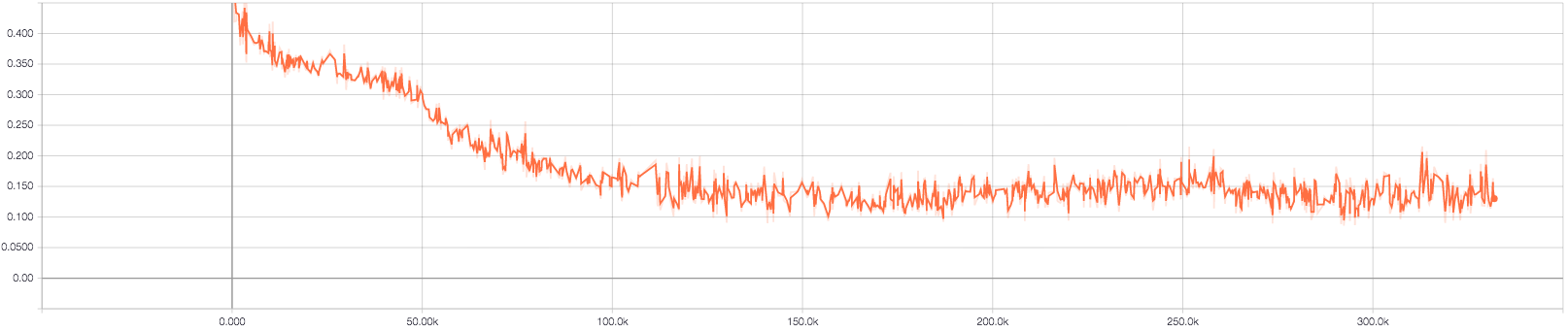
SVHN
- The supervised loss
- The loss of Discriminator
D_loss_real
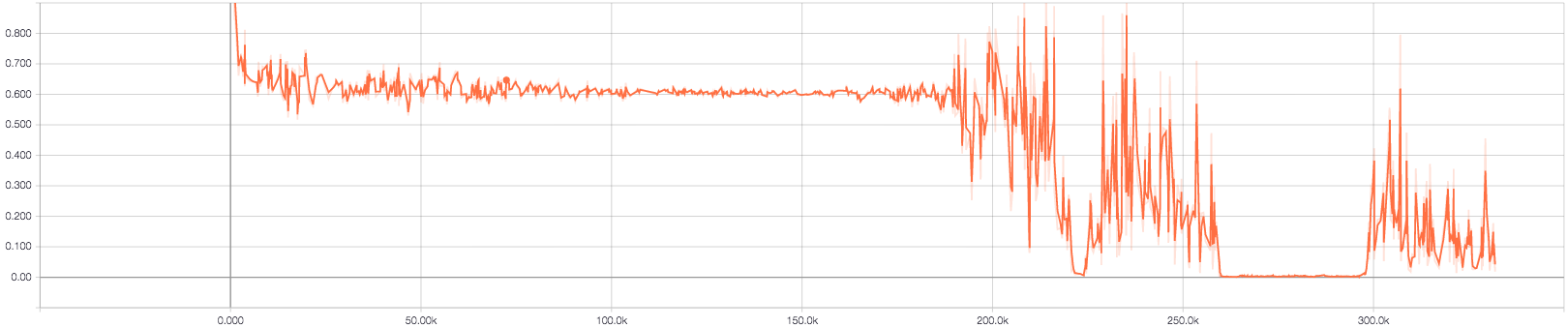
D_loss_fake
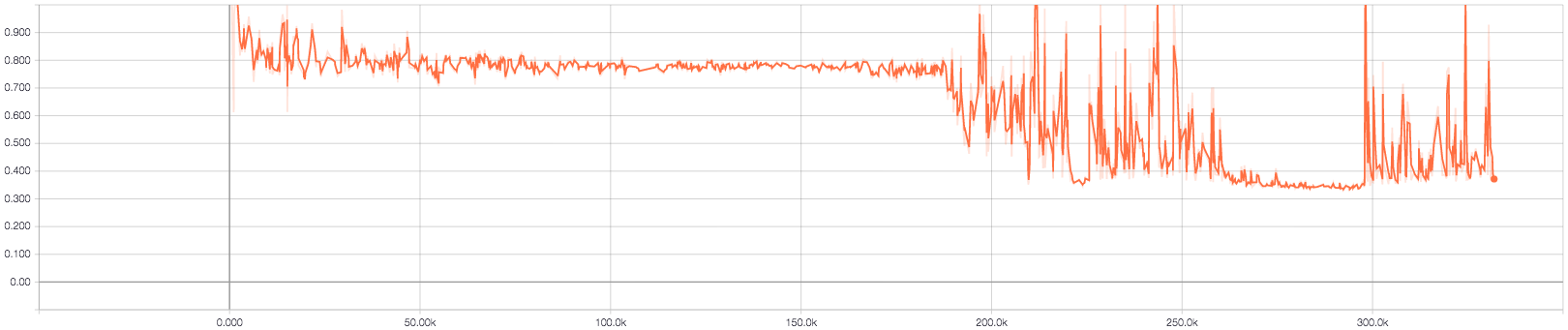
D_loss (total loss)
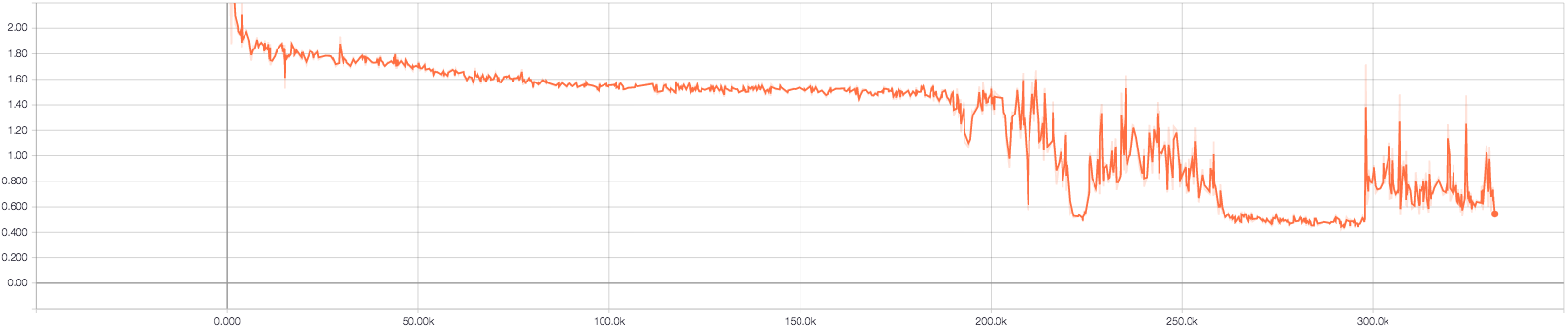
- The loss of Generator
G_loss
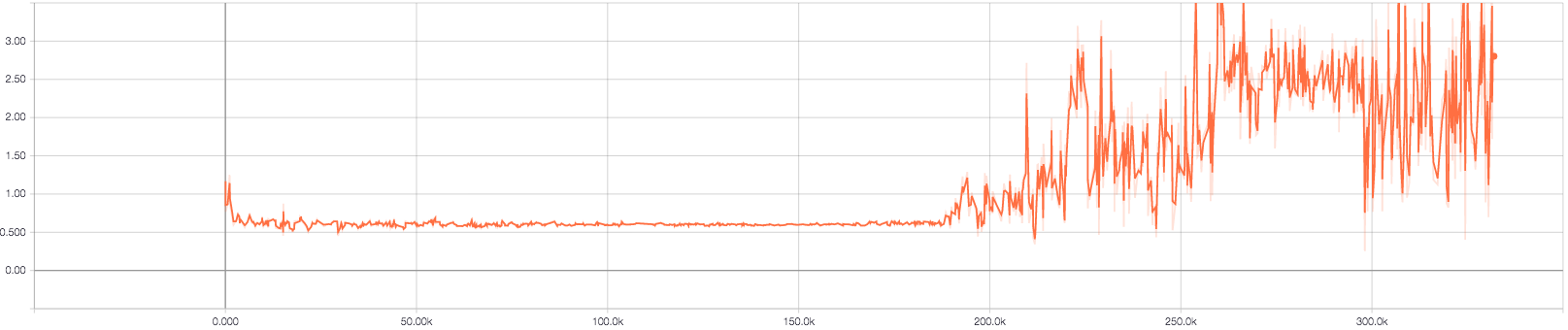
- Classification accuracy
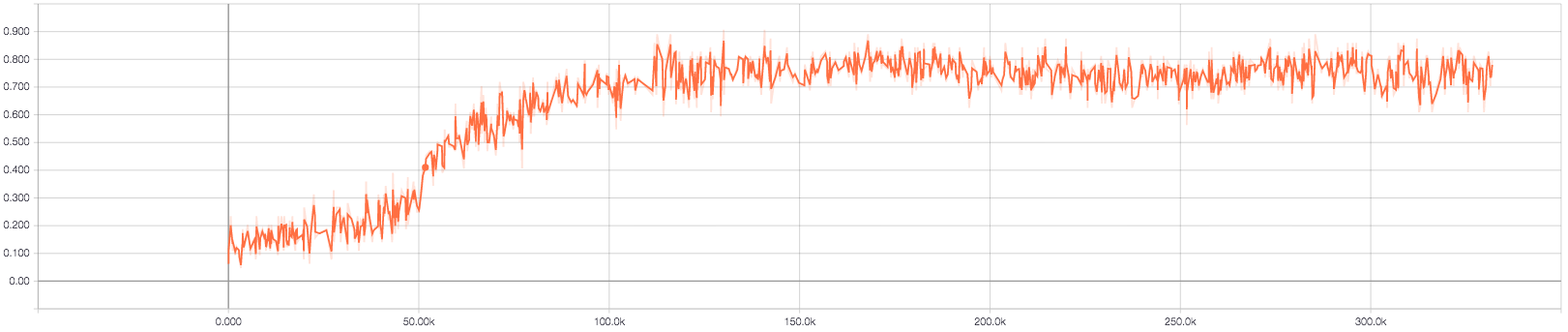
CIFAR-10
- The supervised loss
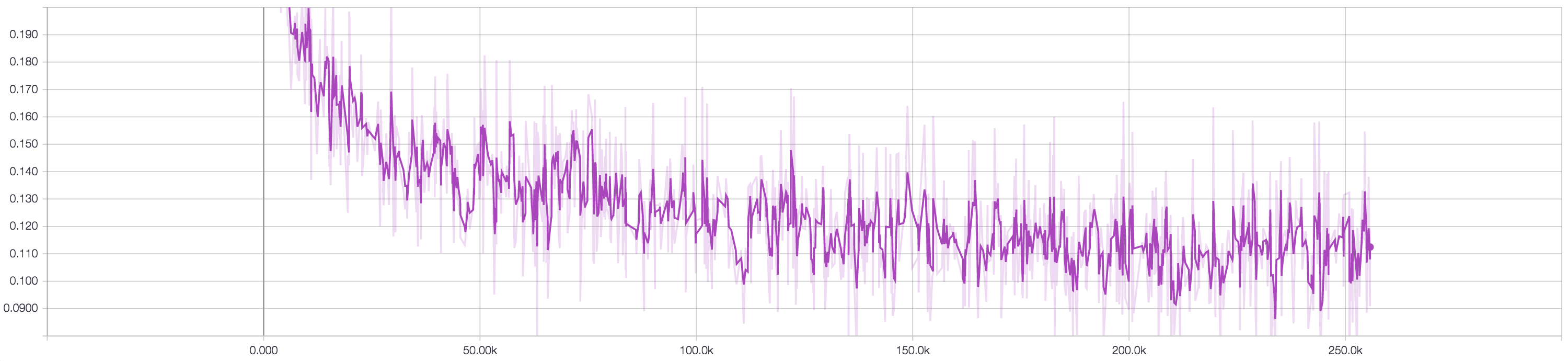
- The loss of Discriminator
D_loss_real

D_loss_fake

D_loss (total loss)
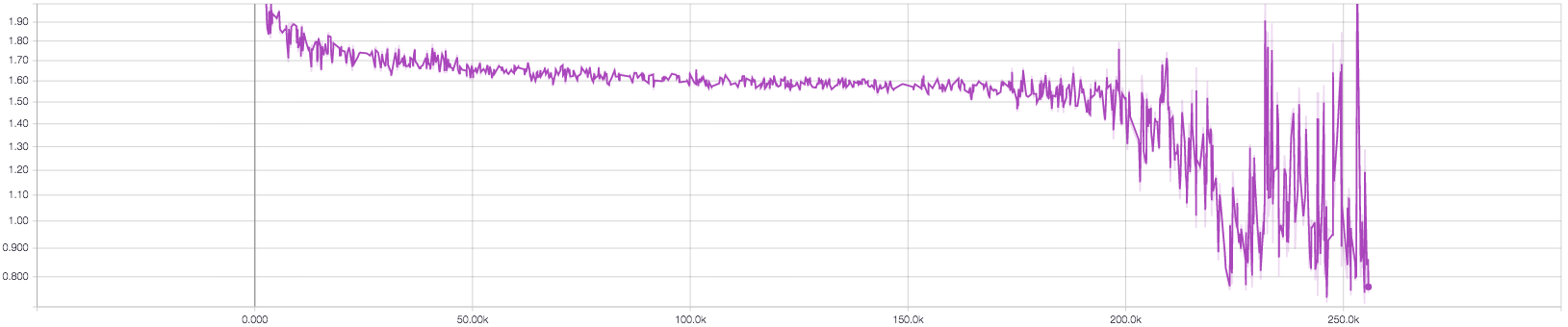
- The loss of Generator
G_loss
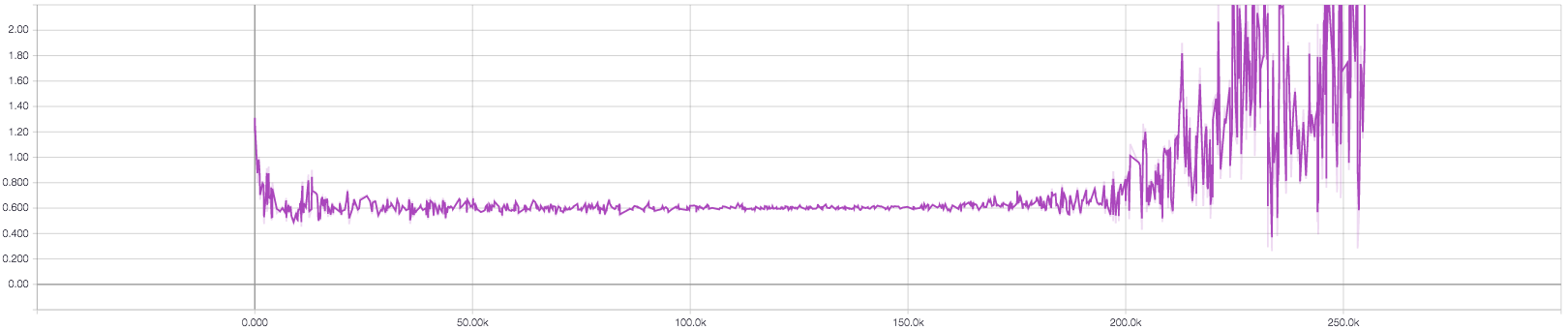
- Classification accuracy
Training tricks
- To avoid the fast convergence of the discriminator network
- The generator network is updated more frequently.
- Higher learning rate is applied to the training of the generator.
- One-sided label smoothing is applied to the positive labels.
- Gradient clipping trick is applied to stablize training
- Reconstruction loss with an annealed weight is applied as an auxiliary loss to help the generator get rid of the initial local minimum.
- Utilize Adam optimizer with higher momentum.
- Please refer to the codes for more details.
Related works
- Unsupervised and Semi-supervised Learning with Categorical Generative Adversarial Networks by Springenberg
- Semi-Supervised Learning with Generative Adversarial Networks by Odena
- Good Semi-supervised Learning that Requires a Bad GAN by Dai et. al.
- My implementation of Deep Convolutional Generative Adversarial Networks in Tensorflow
- The architecture diagram is modified from the one drawn in Unsupervised Representation Learning with Deep Convolutional Generative Adversarial Networks
Acknowledgement
Part of codes is from an unpublished project with Jongwook Choi