← Open Source
google

prettytensor

Pretty Tensor: Fluent Networks in TensorFlow.

Model DevelopmentDeep Learning FrameworksPython
Open on GitHub
Momentum
+0stars in 24 hours0.0%
1.23k
Stars
142
Forks
+0
This week
1
Contributors
Created 2015-11-02 · Updated 2026-09-01 · #11069 today
Top developers
eiderman

google/prettytensor is ranked 11,069 with 1,226 stars.

Same-category comparison

google/prettytensor is ranked 11,069 among these 8 peers; SakanaAI/self-adaptive-llms is ranked 11,073.

Same-category comparison
NameRankMetrics
yuanxiaosc/Entity-Relation-Extraction11,052
Language:
Python
Stars:
1,230
Forks:
269
Description:
Entity and Relation Extraction Based on TensorFlow and BERT. Schema based Knowledge Extraction, SKE 2019.
huoyijie/AdvancedEAST11,054
Language:
Python
Stars:
1,229
Forks:
371
Description:
AdvancedEAST is an algorithm used for Scene image text detect, which is primarily based on EAST, and the significant improvement was also made, which make long text predictions more accurate.https://github.com/huoyijie/raspberrypi-car.
Genesis-Embodied-AI/RoboGen11,058
Language:
Python
Stars:
1,228
Forks:
108
Description:
A generative and self-guided robotic agent that endlessly propose and master new skills.
rohanpsingh/LearningHumanoidWalking11,061
Language:
Python
Stars:
1,228
Forks:
139
Description:
Training a humanoid robot for locomotion using Reinforcement Learning.
SakanaAI/self-adaptive-llms11,073
Language:
Python
Stars:
1,225
Forks:
142
Description:
A Self-adaptation Framework🐙 that adapts LLMs for unseen tasks in real-time.
Bolin97/GongBU11,077
Language:
Svelte
Stars:
1,224
Forks:
89
Description:
Paper accepted by CIKM 2024. Codes of GongBU, a LLM fine-tuning platform for domain-specific adaptation.
dee1024/pytorch-captcha-recognition11,084
Language:
Python
Stars:
1,223
Forks:
326
wagenaartje/neataptic11,086
Language:
JavaScript
Stars:
1,223
Forks:
286
Description:
:rocket: Blazing fast neuro-evolution & backpropagation for the browser and Node.js.
Key parameters and specifications
ParameterValue
LanguagePython
CategoryModel Development
SubcategoryDeep Learning Frameworks
Stars1,226
Forks142
Contributors1
Created date2015-11-02
Updated date2026-09-01
Stars in 1 day0
Stars in 7 days0
Rank11,069
Previous rank11,024
Rank change-45
7-day stars rank12,875
Previous 7-day stars rank12,890
7-day stars rank change15
Total stars rank9,528
Previous total stars rank9,521
Total stars rank change-7
CountryUSA
README summary

Pretty Tensor - Fluent Neural Networks in TensorFlow Pretty Tensor provides a high level builder API for TensorFlow. It provides thin wrappers on Tensors so that you can easily build multi-layer neural networks. Pretty Tensor provides a set of objects that behave likes Tensors, but also support a chainable object syntax to quickly define neural networks and other layered architectures in TensorFlow. Please look here for full documentation of the PrettyTensor object for all available operations: Available Operations or you

can check out the complete documentation See the tutorial directory for samples: tutorial/ Installation The easiest installation is just to use pip: 1. **Note:** Head is tested against the TensorFlow nightly builds and pip is tested against TensorFlow release. Quick start Imports Setup your input Define your model Train and evaluate Features Thin Full power of TensorFlow is easy to use Pretty Tensors can be used (almost) everywhere that a tensor can. You can also add any existing TensorFlow function

to the chain using . applies the current Tensor as the first argument and takes all the other arguments as normal. *Note:* because apply is so generic, Pretty Tensor doesn't try to wrap the world. Plays well with other libraries It also uses standard TensorFlow idioms so that it plays well with other libraries, this means that you can use it a little bit in a model or throughout. Just make sure to run the update_ops on each training set

(see with_update_ops). Terse You've already seen how a Pretty Tensor is chainable and you may have noticed that it takes care of handling the input shape. One other feature worth noting are defaults. Using defaults you can specify reused values in a single place without having to repeat yourself. Check out the documentation to see all supported defaults. Code matches model Sequential mode lets you break model construction across lines and provides the subdivide syntactic sugar that makes

it easy to define and understand complex structures like an inception module: Templates provide guaranteed parameter reuse and make unrolling recurrent networks easy: There are also some convenient shorthands for LSTMs and GRUs: Extensible You can call any existing operation by using and it will simply subsitute the current tensor for the first argument. You can also create a new operation There are two supported registration mechanisms to add your own functions. allows you to create a method on PrettyTensor

that operates on the Tensors and returns either a loss or a new value. Name scoping and variable scoping are handled by the framework. The following method adds the leaky_relu method to every Pretty Tensor: is like adding a macro, it is designed to group together common sets of operations. Safe variable reuse Within a graph, you can reuse variables by using templates. A template is just like a regular graph except that some variables are left unbound. Accessing

Variables Pretty Tensor uses the standard graph collections from TensorFlow to store variables. These can be accessed using with the

Frequently asked questions

How many stars and forks are recorded?

google/prettytensor has 1,226 stars and 142 forks.

What is the repository rank?

google/prettytensor is ranked 11,069.

What language and category are recorded?

google/prettytensor has 1,226 stars, uses Python and belongs to Model Development.

Which repository is closest in rank?

google/prettytensor is compared with SakanaAI/self-adaptive-llms, ranked 11,073 with 1,225 stars.

README

Pretty Tensor - Fluent Neural Networks in TensorFlow

Pretty Tensor provides a high level builder API for TensorFlow. It provides thin wrappers on Tensors so that you can easily build multi-layer neural networks.

Pretty Tensor provides a set of objects that behave likes Tensors, but also support a chainable object syntax to quickly define neural networks and other layered architectures in TensorFlow.

result = (pretty_tensor.wrap(input_data, m)
          .flatten()
          .fully_connected(200, activation_fn=tf.nn.relu)
          .fully_connected(10, activation_fn=None)
          .softmax(labels, name=softmax_name))

Please look here for full documentation of the PrettyTensor object for all available operations: Available Operations or you can check out the complete documentation

See the tutorial directory for samples: tutorial/

Installation

The easiest installation is just to use pip:

  1. Follow the instructions at tensorflow.org
  2. pip install prettytensor

Note: Head is tested against the TensorFlow nightly builds and pip is tested against TensorFlow release.

Quick start

Imports

import prettytensor as pt
import tensorflow as tf

Setup your input

my_inputs = # numpy array of shape (BATCHES, BATCH_SIZE, DATA_SIZE)
my_labels = # numpy array of shape (BATCHES, BATCH_SIZE, CLASSES)
input_tensor = tf.placeholder(np.float32, shape=(BATCH_SIZE, DATA_SIZE))
label_tensor = tf.placeholder(np.float32, shape=(BATCH_SIZE, CLASSES))
pretty_input = pt.wrap(input_tensor)

Define your model

softmax, loss = (pretty_input.
                 fully_connected(100).
                 softmax_classifier(CLASSES, labels=label_tensor))

Train and evaluate

accuracy = softmax.evaluate_classifier(label_tensor)

optimizer = tf.train.GradientDescentOptimizer(0.1)  # learning rate
train_op = pt.apply_optimizer(optimizer, losses=[loss])

init_op = tf.initialize_all_variables()

with tf.Session() as sess:
    sess.run(init_op)
    for inp, label in zip(my_inputs, my_labels):
        unused_loss_value, accuracy_value = sess.run([loss, accuracy],
                                 {input_tensor: inp, label_tensor: label})
        print 'Accuracy: %g' % accuracy_value

Features

Thin

Full power of TensorFlow is easy to use

Pretty Tensors can be used (almost) everywhere that a tensor can. Just call pt.wrap to make a tensor pretty.

You can also add any existing TensorFlow function to the chain using apply. apply applies the current Tensor as the first argument and takes all the other arguments as normal.

Note: because apply is so generic, Pretty Tensor doesn't try to wrap the world.

Plays well with other libraries

It also uses standard TensorFlow idioms so that it plays well with other libraries, this means that you can use it a little bit in a model or throughout. Just make sure to run the update_ops on each training set (see with_update_ops).

Terse

You've already seen how a Pretty Tensor is chainable and you may have noticed that it takes care of handling the input shape. One other feature worth noting are defaults. Using defaults you can specify reused values in a single place without having to repeat yourself.

with pt.defaults_scope(activation_fn=tf.nn.relu):
  hidden_output2 = (pretty_images.flatten()
                   .fully_connected(100)
                   .fully_connected(100))

Check out the documentation to see all supported defaults.

Code matches model

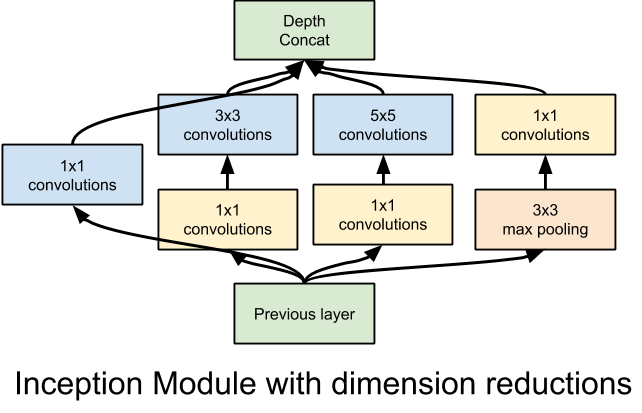
Sequential mode lets you break model construction across lines and provides the subdivide syntactic sugar that makes it easy to define and understand complex structures like an inception module:

with pretty_tensor.defaults_scope(activation_fn=tf.nn.relu):
  seq = pretty_input.sequential()
  with seq.subdivide(4) as towers:
    towers[0].conv2d(1, 64)
    towers[1].conv2d(1, 112).conv2d(3, 224)
    towers[2].conv2d(1, 32).conv2d(5, 64)
    towers[3].max_pool(2, 3).conv2d(1, 32)
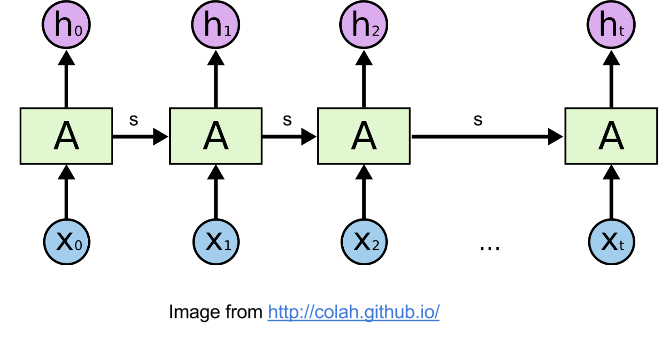
Templates provide guaranteed parameter reuse and make unrolling recurrent networks easy:

output = [], s = tf.zeros([BATCH, 256 * 2])

A = (pretty_tensor.template('x')
     .lstm_cell(num_units=256, state=UnboundVariable('state'))

for x in pretty_input_array:
  h, s = A.construct(x=x, state=s)
  output.append(h)

There are also some convenient shorthands for LSTMs and GRUs:

pretty_input_array.sequence_lstm(num_units=256)
Extensible

You can call any existing operation by using apply and it will simply subsitute the current tensor for the first argument.

pretty_input.apply(tf.mul, 5)

You can also create a new operation There are two supported registration mechanisms to add your own functions. @Register() allows you to create a method on PrettyTensor that operates on the Tensors and returns either a loss or a new value. Name scoping and variable scoping are handled by the framework.

The following method adds the leaky_relu method to every Pretty Tensor:

@pt.Register
def leaky_relu(input_pt):
  return tf.select(tf.greater(input_pt, 0.0), input_pt, 0.01 * input_pt)

@RegisterCompoundOp() is like adding a macro, it is designed to group together common sets of operations.

Safe variable reuse

Within a graph, you can reuse variables by using templates. A template is just like a regular graph except that some variables are left unbound.

See more details in PrettyTensor class.

Accessing Variables

Pretty Tensor uses the standard graph collections from TensorFlow to store variables. These can be accessed using tf.get_collection(key) with the following keys:

  • tf.GraphKeys.VARIABLES: all variables that should be saved (including some statistics).
  • tf.GraphKeys.TRAINABLE_VARIABLES: all variables that can be trained (including those before a stop_gradients` call). These are what would typically be called parameters of the model in ML parlance.
  • pt.GraphKeys.TEST_VARIABLES: variables used to evaluate a model. These are typically not saved and are reset by the LocalRunner.evaluate method to get a fresh evaluation.

Authors

Eider Moore (eiderman)

with key contributions from:

  • Hubert Eichner
  • Oliver Lange
  • Sagar Jain (sagarjn)
Nearby in the ranking
Similar items