This project reproduces the book Dive Into Deep Learning (https://d2l.ai/), adapting the code from MXNet into PyTorch.
Key parameters and specifications
Key parameters and specifications
Parameter
Value
Language
Jupyter Notebook
Category
Tutorials
Subcategory
ML/AI fundamentals
Stars
4,415
Forks
2,377
Contributors
2
Created date
2015-06-14
Updated date
2026-10-14
Stars in 1 day
0
Stars in 7 days
0
Rank
7,613
Previous rank
7,746
Rank change
133
7-day stars rank
11,763
Previous 7-day stars rank
18,094
7-day stars rank change
6,331
Total stars rank
3,166
Previous total stars rank
3,164
Total stars rank change
-2
Country
Sweden
README summary
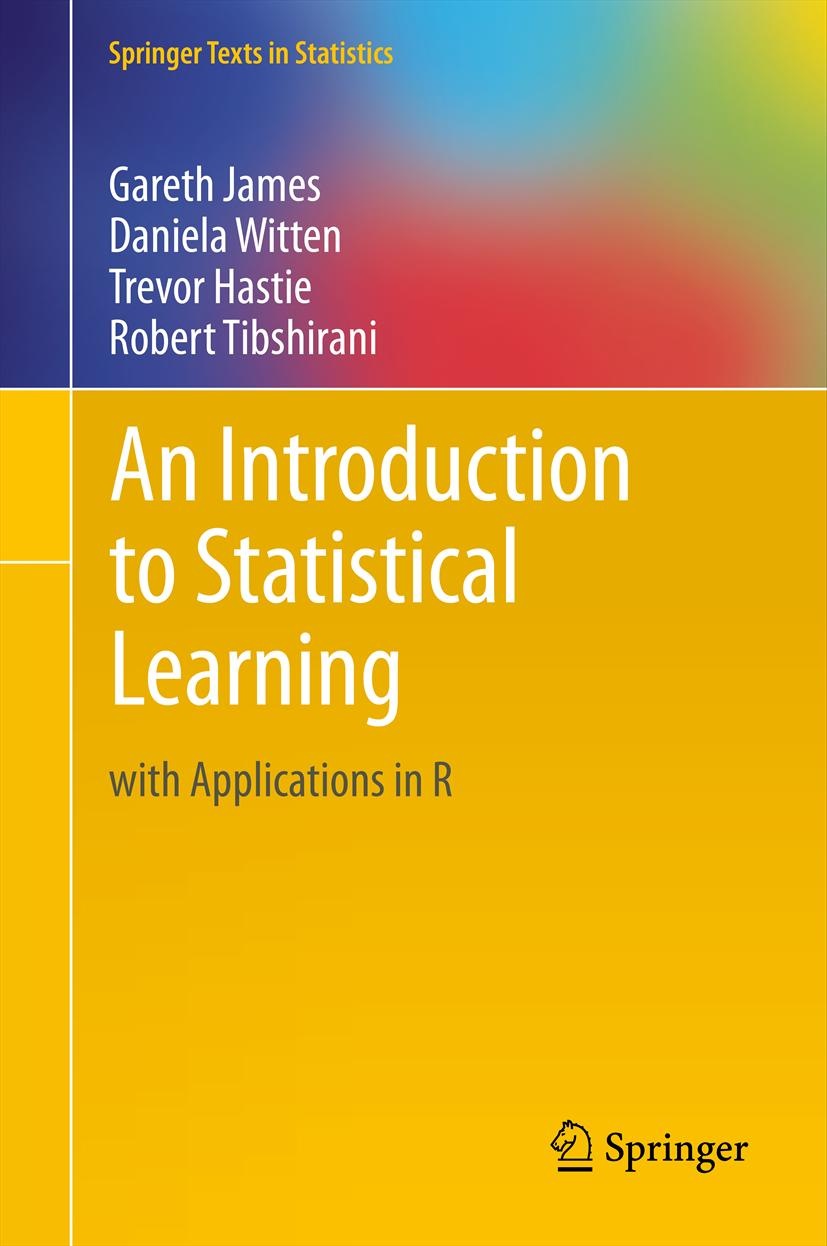
ISLR-python This repository contains Python code for a selection of tables, figures and LAB sections from the first edition of the book 'An Introduction to Statistical Learning with Applications in R' by James, Witten, Hastie, Tibshirani (2013). For **Bayesian data analysis** using PyMC3, take a look at this repository . **2018-01-15**: Minor updates to the repository due to changes/deprecations in several packages. The notebooks have been tested with these package versions . Thanks @lincolnfrias and @telescopeuser. **2016-08
-30**: Chapter 6: I included Ridge/Lasso regression code using the new python-glmnet library. This is a python wrapper for the Fortran library used in the *R* package *glmnet*. Chapter 3 - Linear Regression Chapter 4 - Classification Chapter 5 - Resampling Methods Chapter 6 - Linear Model Selection and Regularization Chapter 7 - Moving Beyond Linearity Chapter 8 - Tree-Based Methods Chapter 9 - Support Vector Machines Chapter 10 - Unsupervised Learning Extra: Misclassification rate simulation - SVM and Logistic Regression This great book gives a
thorough introduction to the field of Statistical/Machine Learning. The book is available for download (see link below), but I think this is one of those books that is definitely worth buying. The book contains sections with applications in R based on public datasets available for download or which are part of the R-package ISLR . Furthermore, there is a Stanford University online course based on this book and taught by the authors (See course catalogue for current schedule). Since
Python is my language of choice for data analysis, I decided to try and do some of the calculations and plots in Jupyter Notebooks using: pandas numpy scipy scikit-learn python-glmnet statsmodels patsy matplotlib seaborn It was a good way to learn more about Machine Learning in Python by creating these notebooks. I created some of the figures/tables of the chapters and worked through some LAB sections. At certain points I realize that it may look like I
tried too hard to make the output identical to the tables and R-plots in the book. But I did this to explore some details of the libraries mentioned above (mostly matplotlib and seaborn). Note that this repository is not a standalone tutorial and that you probably should have a copy of the book to follow along. Suggestions for improvement and help with unsolved issues are welcome! (2009) for an advanced treatment of these topics. An Introduction to Statistical Learning
with Applications in R , Springer Science+Business Media, New York. An Introduction to Statistical Learning with Applications in R, Second Edition , Springer Science+Business Media, New York. Elements of Statistical Learning , Second Edition, Springer Science+Business Media, New York.
Frequently asked questions
How many stars and forks are recorded?
JWarmenhoven/ISLR-python has 4,415 stars and 2,377 forks.
What is the repository rank?
JWarmenhoven/ISLR-python is ranked 7,613.
What language and category are recorded?
JWarmenhoven/ISLR-python has 4,415 stars, uses Jupyter Notebook and belongs to Tutorials.
Which repository is closest in rank?
JWarmenhoven/ISLR-python is compared with zotroneneis/machine_learning_basics, ranked 7,612 with 4,420 stars.
For Bayesian data analysis using PyMC3, take a look at this repository.
2018-01-15:
Minor updates to the repository due to changes/deprecations in several packages. The notebooks have been tested with these package versions. Thanks @lincolnfrias and @telescopeuser.
2016-08-30:
Chapter 6: I included Ridge/Lasso regression code using the new python-glmnet library. This is a python wrapper for the Fortran library used in the R package glmnet.
This great book gives a thorough introduction to the field of Statistical/Machine Learning. The book is available for download (see link below), but I think this is one of those books that is definitely worth buying. The book contains sections with applications in R based on public datasets available for download or which are part of the R-package ISLR. Furthermore, there is a Stanford University online course based on this book and taught by the authors (See course catalogue for current schedule).
Since Python is my language of choice for data analysis, I decided to try and do some of the calculations and plots in Jupyter Notebooks using:
pandas
numpy
scipy
scikit-learn
python-glmnet
statsmodels
patsy
matplotlib
seaborn
It was a good way to learn more about Machine Learning in Python by creating these notebooks. I created some of the figures/tables of the chapters and worked through some LAB sections. At certain points I realize that it may look like I tried too hard to make the output identical to the tables and R-plots in the book. But I did this to explore some details of the libraries mentioned above (mostly matplotlib and seaborn). Note that this repository is not a standalone tutorial and that you probably should have a copy of the book to follow along. Suggestions for improvement and help with unsolved issues are welcome!
See Hastie et al. (2009) for an advanced treatment of these topics.
References:
James, G., Witten, D., Hastie, T., Tibshirani, R. (2013). An Introduction to Statistical Learning with Applications in R, Springer Science+Business Media, New York.
https://www.statlearning.com/
James, G., Witten, D., Hastie, T., Tibshirani, R. (2021). An Introduction to Statistical Learning with Applications in R, Second Edition, Springer Science+Business Media, New York.
https://www.statlearning.com/