🤖 Browser4
Table of Contents
- 🤖 Browser4
🌟 Introduction
💖 Browser4 — an AI-native browser engine for autonomous agents, intelligent extraction, and large-scale web automation. 💖
✨ Key Capabilities
- 🤖 Agent Browser — AI agents and humans drive real browsers via a Rust CLI, MCP, and an agentic backend: navigate, click, fill, snapshot, batch, and loop.
- 🧬 Zero-Token Extraction — X-SQL + CSS selectors for deterministic extraction from live pages or stored HTML snapshots; WebMiner ML clustering turns HTML corpora into spreadsheet and report views with no LLM tokens.
- 🧠 Hybrid Intelligence — Combine LLM extraction, ML clustering, X-SQL, and a progressive experience store that reuses learned selectors and blockers.
- ⚡ High-Performance Runtime — Coroutine-safe, CDP-native engine designed for 100k–200k complex page visits per machine per day via swarm/crawl scale-out.
- 📦 Enterprise-Scale Automation — Swarm crawling, batch/loop jobs, stateful sessions, plugins, runtime skills, browser extension, and MCP-over-HTTP.
- 🛠️ Programming-Agent Kernel — 50+
coding.*tools (sandboxed shell/fs, scaffolding, validation, self-development) for agents building Browser4 artifacts — or Browser4 itself.
Quick Start
Paste the following instruction to your favorite AI agent like dsh, claude, codex, workbuddy or openclaw and run it:
Read https://browser4.io/SKILL.md, install or upgrade browser4-cli for browser automation, perform the following task:

1. Open the browser in headed mode (`open --headed`) so the window is visible — this is a human-facing demo
2. go to amazon.com
3. search for pens to draw on whiteboards
4. compare the first 4 ones
5. write the result to a markdown file
DeepSeek Harness integration
https://github.com/platonai/dsh-browser4
dsh plugin --profile web add dsh-browser4                  # npm registry
dsh plugin --profile web add github:platonai/dsh-browser4  # GitHub
🧭 Tool Selection Guide
Choosing the right tool for your task:
How to Interact with a Page
Use snapshot -i --boxes to see clickable/typeable elements with refs like e15, then click , fill "", type/press, select, hover/drag/scroll, and wait to drive the page. All interaction commands accept CSS selectors too. Chain multiple steps efficiently with batch.
Content embedded in ``s (payment forms, editors, widgets) is reached with the built-in frame switching: frames lists the frame tree, frame "" scopes subsequent element commands into that frame (same-origin iframes fully supported), and frame main returns to the main document — no manual contentDocument eval needed.
Typical interactive flow:
# Humans usually want to see the browser — open it headed
browser4-cli open --headed https://example.com/login
browser4-cli snapshot -i --boxes
browser4-cli fill e3 "[email protected]"
browser4-cli fill e4 "secret" --submit
browser4-cli wait --load networkidle
browser4-cli snapshot -i
# iframe-heavy page:
browser4-cli frame "#pay-frame"
browser4-cli fill "#card-number" "4111 1111 1111 1111"
browser4-cli frame main
How to Extract Data
Need to extract data from a page?
├─ Interactive page (click, fill, scroll first)? → snapshot + refs, then extract
├─ Static page, one field? → htmlsnapshot get text ""
├─ Static page, all matches of one field? → htmlsnapshot get all text ""
├─ Static page, multiple correlated fields (title+price+url per item)?
│  → htmlsnapshot query --sql @query.sql
├─ Live JS / complex DOM logic? → eval --json
├─ Natural language ("find the product price")? → extract (needs LLM key)
└─ High volume, many pages? → crawl or swarm with --sql
How to Process at Scale
Need to process multiple pages?
├─ Single list page (search results)? → htmlsnapshot query with DOM_LOAD_AND_SELECT
├─ List of known URLs (in a file)? → crawl --seed-file urls.txt --depth 0 --sql @query.sql
├─ Crawl from a start URL (follow links)? → crawl  --out-link-selector "..." --depth N
├─ Need parallel execution (high throughput)? → swarm create → swarm query --seed-file ...
├─ Repeated monitoring (check every hour)? → loop -i 3600 -- eval "..."
└─ Just a few URLs in a shell script?
   → browser4-cli open --headed "https://first-url"   # humans: open once, visibly
   → for url in ...; do browser4-cli goto "$url"; ... done
How to Turn HTML into Spreadsheets — Zero Tokens
WebMiner runs ML clustering on downloaded HTML files to produce structured spreadsheets and interactive reports — no LLM tokens, everything runs locally. webminer is a first-class Browser4 CLI citizen: browser4-cli webminer install + browser4-cli webminer all runs the whole pipeline without PowerShell.
Have HTML files and want structured data — without tokens?
├─ < 20 pages? → browser4-cli crawl --seed-file urls.txt --depth 0 --sql @query.sql
├─ < 1,000 pages (small to medium)? → WebMiner Free (SMILE ML engine)
│  browser4-cli webminer install
│  browser4-cli webminer all ./pages/
│  → Interactive HTML report + Excel spreadsheets — local, zero cost
├─ > 1,000 pages (production scale)? → WebMiner Commercial (Apache Spark ML)
│  Same encode → cluster → views pipeline, distributed across machines
└─ Need to acquire pages first?
   ├─ Single pages: browser4-cli htmlsnapshot export
   ├─ Bulk download: browser4-cli crawl --seed-file urls.txt --depth 0
   └─ High throughput: browser4-cli swarm create → swarm query --seed-file ...
       Then feed the HTML directory to WebMiner
Pipeline:
encode(HTML → feature vectors → CSV) →cluster(KMeans, auto-detected K) →views(HTML report + Excel). Free tier uses the SMILE ML library for single-machine clustering (< 1,000 pages). Requires JDK 17+ (auto-detected). See web-miner andbrowser4-cli help webminerfor usage.
📦 Installation
Manually installation is optional since your AI agent is smart enough to install it after reading the SKILL.
Install browser4-cli globally using npm (requires Node.js):
npm install -g browser4-cli
browser4-cli install
Or bootstrap the native binary directly with a single command. The scripts
also install the Browser4 backend (runtime bundle) afterwards — running
browser4-cli install on a fresh machine, or browser4-cli upgrade when a
backend is already present (pass --skip-backend to skip this step):
Windows (PowerShell):
irm https://browser4.oss-cn-beijing.aliyuncs.com/scripts/install-browser4-cli.ps1 | iex
Linux / macOS (bash):
curl -fsSL https://browser4.oss-cn-beijing.aliyuncs.com/scripts/install-browser4-cli.sh | bash
💡 CLI Guide for Humans
browser4-cli is a human-usable browser automation shell, not just an agent backend. You can drive a real browser, inspect state, extract structured data, run X-SQL, orchestrate crawl/swarm jobs, manage server plugins and skills, and hand long-running work to built-in AI features.
If you want the embedded agent-facing instructions, see skills/browser4-cli/SKILL.md. This section is the human reference.
Quick start
# Open a visible browser session (humans usually want to see the window;
# agents should prefer the default headless mode — see SKILL.md)
browser4-cli open --headed https://browser4.io

# Inspect the page and get element refs
browser4-cli snapshot --boxes

# Interact using a ref from the snapshot
browser4-cli click e15
browser4-cli fill e16 "Browser4" --submit

# Extract data from the live page
browser4-cli get text "h1"

# Capture the page into the store, then extract from that copy
browser4-cli htmlsnapshot
browser4-cli htmlsnapshot get text "#main-content"
browser4-cli htmlsnapshot query --sql @query.sql

# Save output
browser4-cli screenshot --full-page --filename page.jpg
browser4-cli pdf --filename page.pdf
Mental model
- Session-oriented: commands work against the current browser session; use
-sfor isolated named sessions. - Two page views:
snapshotis for interactive work with element refs likee15;htmlsnapshotis for DOM/X-SQL extraction with CSS selectors. - Interactive vs static extraction: use
click,fill,type,press,waitwhen the page must be manipulated first; usehtmlsnapshot querywhen you need structured extraction from the DOM. - Synchronous vs async jobs:
agent,swarm,crawl, and async chat-style commands return task IDs you poll later.
Global options
These flags can appear before any command.
| Flag | Meaning |
|---|---|
-h, --help [command|category] |
Show top-level help, category help, or detailed command help |
--help-json |
Emit the machine-readable command reference |
-v, --version |
Print the CLI version |
-s, --session |
Use a named session instead of the default session. A global flag: place it before the command (browser4-cli -s job-42 snapshot) — after the command it is rejected as a positional argument |
--server |
Override the Browser4 server URL |
--timeout |
Override the HTTP timeout for the current command |
--proxy |
Proxy used for runtime downloads/install operations |
--json |
Emit machine-readable JSON only |
--pretty |
Pretty-print JSON output |
-q, --quiet |
Suppress normal human-readable output |
-tip, --show-tip |
Show a relevant tip on stderr after commands |
Key concepts before the command list
Element refs vs CSS selectors
snapshotreturns accessibility-tree refs such ase5,e12,e42- most interaction commands accept either a snapshot ref or a CSS selector
htmlsnapshotcommands use CSS selectors, not accessibility refs
snapshot vs htmlsnapshot
| Tool | Best for | Input model | Output model |
|---|---|---|---|
snapshot |
clicking, typing, finding interactive elements | live accessibility tree | refs like e15 |
htmlsnapshot |
DOM inspection, CSS extraction, X-SQL | a fresh snapshot of the active page (every command captures the tab first, then reads; --expires reads the stored snapshot instead) |
CSS selectors and query results |
LLM configuration
AI-powered commands such as extract, summarize, chat, agent run, and X-SQL llm_* functions require an LLM provider key.
| Provider | Environment variables |
|---|---|
| DeepSeek | DEEPSEEK_API_KEY |
| OpenRouter | OPENROUTER_API_KEY, OPENROUTER_MODEL_NAME, OPENROUTER_BASE_URL |
| Volcengine | VOLCENGINE_API_KEY, VOLCENGINE_MODEL_NAME, VOLCENGINE_BASE_URL |
| OpenAI-compatible | OPENAI_API_KEY, OPENAI_MODEL_NAME, OPENAI_BASE_URL |
| Aliyun Qwen | OPENAI_API_KEY, OPENAI_MODEL_NAME, OPENAI_BASE_URL |
export DEEPSEEK_API_KEY=sk-xxxxxxxxxxxxxxxxxxxxxxxx
Configure one provider. When several provider keys are present, the first one in the built-in detection order wins —
openaicomes after the dedicated providers such asdeepseek, so a leftoverDEEPSEEK_API_KEYsilently wins overOPENAI_*.browser4-cli doctorprints the key that won (Selected key) and the model the backend will request (Active model). See LLM configuration.
Complete command reference
Session lifecycle and server administration
| Command | Description |
|---|---|
open [url] |
Open a browser session or reconnect to an existing one. Headless by default. Supports --headed (visible window), --headless, --profile , --profile-mode , --interact-level . Note: SYSTEM_DEFAULT is deprecated and unsupported on Chrome ≥ 143 — use attach + state-save/state-load to reuse system browser state (see browser-state-import.md). |
attach |
Attach to an existing browser via CDP or the Browser4 extension. Supports --cdp and remote endpoint options. After a successful attach the CLI prints the browser that actually connected (Connected browser: … / Attached to … at …) and shows a ⚠ warning when it conflicts with the requested channel (e.g. requested msedge but Chrome connected) — verify it before driving the session. |
close |
Close the active browser session. |
list |
List browser sessions with their status and next-open behavior. The Connection column prefers the backend-reported actual browser and annotates channel conflicts (e.g. requested msedge · actual Google Chrome). Supports --all. |
session-default |
Make a named session become the default unnamed session. |
close-all |
Close all sessions without stopping the backend. |
kill-all |
Force-stop the backend and Browser4-managed browser processes. |
stop |
Gracefully stop the Browser4 server. |
status |
Show server version, port, health, and the web status panel URL (http://:18182/status). When a session is active it also prints a current-session block: Name / Session ID / Status / Connection / Next open. |
doctor |
Run diagnostics: build info, LLM status (including the configuration file it reads, the winning provider key and the active model), stale daemon cleanup, optional repair. Supports --verbose and --fix; --fix also writes a commented LLM config template. |
doctor log [name] |
List, view, tail, or grep backend log files. Supports --tail, grep-style flags, and doctor log grep . |
doctor metrics [filter] |
List, filter, or grep backend metrics. Supports doctor metrics grep . |
doctor status [--section ] [--verbose] |
Print the aggregated status panel report in the terminal: summary layer by default, full detail with --verbose, one report with --section (health, build, runtime, llm, sessions, pulsar-sessions, swarm, url-pool, browsers, drivers, privacy, plugins, skills, metrics, logs), machine-readable JSON with --json. |
delete-data |
Delete session data. |
install |
Install the Browser4 runtime bundle. Supports --tag and --force. |
upgrade |
Upgrade the CLI/runtime bundle. Supports --tag and --force. |
uninstall |
Remove global installs and runtime data. Supports -y, --yes, and --dry-run. |
browser4-cli open --headed https://example.com
browser4-cli attach --cdp chrome
browser4-cli doctor --verbose
browser4-cli doctor log server.log --tail
browser4-cli doctor metrics grep request
browser4-cli doctor status --section skills --verbose
Web status panel: open http://127.0.0.1:18182/status in a browser for a live dashboard
(health, version, JVM/runtime, LLM config, sessions, Pulsar sessions — SDK identity,
context and main-loop state, swarm — swarm session plus task summary, URL pool —
queued/real-time/delay counts per priority cache, browsers & open tabs — per-session
browser/driver binding and tab counts, with on-demand live tab details via
GET /api/system/tabs — driver pools, plugins: load/enable state and SDK compatibility,
skills: registered skills with origin (classpath/filesystem/programmatic),
metrics, log files; auto-refreshes, set ?refresh= to change the interval). The panel
is backed by the aggregated GET /api/system/status endpoint; the individual endpoints
(/api/system/health, /api/system/build, /api/doctor/llm-status, /api/doctor/metrics,
/api/doctor/log-files, /api/plugins, /api/skills) remain available. browser4-cli plugin-list also
reports load/enable state and SDK version for every installed plugin; the same reports can be
read from the terminal with browser4-cli doctor status.
Page screenshots: open http://127.0.0.1:18182/pages.html for a grid of every open page
across sessions. The active tab of each session is captured automatically (click a screenshot
to re-capture it); inactive tabs show a placeholder that captures on click. Swarm sessions only
show placeholders. Screenshots load asynchronously — the backend captures in the background
(202 Accepted with Retry-After while capturing, cached image/png when ready), so the panel
never blocks on a capture. Backed by GET /api/pages and
GET /api/pages/{sessionId}/{guid}/screenshot.png (?refresh=1 forces a new capture).
Navigation
| Command | Description |
|---|---|
goto |
Navigate to a URL; auto-opens/reconnects a session if needed. |
go-back |
Go back in browser history. |
go-forward |
Go forward in browser history. |
reload |
Reload the current page. |
Core interaction
All interaction commands accept a snapshot ref such as e15 or a CSS selector unless noted otherwise. Most of them also support --no-snapshot to skip the automatic post-action accessibility snapshot.
| Command | Description |
|---|---|
click [button] |
Click an element. Supports --modifiers, --follow, --auto-dismiss-dialogs. |
dblclick [button] |
Double-click an element. Supports --modifiers, --follow, --auto-dismiss-dialogs. |
hover |
Hover over an element. |
fill |
Clear and fill text into an editable field. Supports --submit, --verify. |
type [ref] |
Type text into the focused element or a target element. Supports --submit, --verify, --focus, --interactable-timeout, and --method auto|chars|exec (requires a target ref; auto types short text per-character and bulk-inserts long/multi-line text on textarea/contenteditable via a single execCommand('insertText'), chars forces per-character typing, exec forces the bulk insert). |
press [ref] |
Press a key on the focused element or a target element. Supports --verify, --follow. |
select |
Select a dropdown value. Supports --verify. |
check |
Check a checkbox or radio button. |
uncheck |
Uncheck a checkbox or radio button. |
drag |
Drag and drop from one element to another. |
wait [target] |
Wait for a selector/ref, duration, text, URL pattern, page-load state, or JavaScript expression. Supports --timeout, --text, --url, --load, --fn. |
upload [file...] |
Upload one or more local files to a page file input. The target must be an `` (anything else errors); the paths must be readable by the browser process — local mode: the same machine, and empty/missing files are rejected with a hint; remote backend: paths resolve on the backend host. Supports --no-snapshot. |
wait --load accepts domcontentloaded, load, and networkidle. networkidle only proves the network went quiet — it does not mean late-rendered results exist; for result pages poll the element instead: wait "".
browser4-cli click e8 --follow
browser4-cli fill e4 "[email protected]" --submit
browser4-cli type "Browser4" e7 --verify
browser4-cli wait --text "Success"
browser4-cli wait --load networkidle
Keyboard and mouse
| Command | Description |
|---|---|
keydown |
Press and hold a key. |
keyup |
Release a held key. |
mousemove |
Move the mouse to screen/page coordinates. |
mousedown [button] |
Press a mouse button. |
mouseup [button] |
Release a mouse button. |
mousewheel |
Scroll using a wheel delta. |
scroll |
Scroll the page up, down, left, or right. |
Page inspection and live extraction
| Command | Description |
|---|---|
snapshot |
Capture an accessibility-tree snapshot. Supports --boxes/--no-boxes, -i/--interactive, -u/--urls, -c/--compact, --no-compact, -d/--depth, -l/--limit, -s/--selector, --raw, --stdout, -vp/--viewport, --filename. --stdout/--raw output is paginated at 2000 lines/page by default — when truncated, stdout (if piped) gets a # … output truncated: showing N of M lines … hint and the full footer goes to stderr; use --all or --page-size 0 for the complete tree, and bound very large pages with -v N/--depth/--selector/--no-boxes. |
snapshot grep |
Search saved/current snapshot YAML with grep-style flags such as -i, -v, -c, -l, -F, -w, -A, -B, -C, --selector, --page, --page-size, --all. |
snapshot list |
List saved snapshot files with timestamps and sizes. |
snapshot clean |
Remove old snapshot files. Supports --dry-run. |
get [name] |
Extract text, html, box, styles, property, or attr from a live page element. |
eval [expression] [ref] |
Evaluate JavaScript on the page or an element. Supports --file, --stdin, --base64, --await, --wait-selector, --json. |
console [min-level] |
List browser console messages. Supports --clear. |
cdp |
Send an arbitrary Chrome DevTools Protocol command. Supports --json . |
generate-locator |
Generate the best CSS selector for a snapshot ref or existing selector. |
resize |
Resize the browser window. |
dialog-accept [prompt] |
Accept an alert/confirm/prompt dialog, optionally filling the prompt. |
dialog-dismiss |
Dismiss an alert/confirm/prompt dialog. |
get modes:
| Mode | Meaning | Example |
|---|---|---|
text |
visible inner text | browser4-cli get text ".price" |
html |
inner HTML | browser4-cli get html "#main" |
box |
bounding box | browser4-cli get box "#hero" |
styles |
computed styles | browser4-cli get styles e9 |
property |
DOM property value | browser4-cli get property "input" value |
attr |
HTML attribute value | browser4-cli get attr "a" href |
browser4-cli snapshot -i --boxes
browser4-cli snapshot grep -C 2 "button"
browser4-cli eval "document.title"
browser4-cli eval --file script.js --await
browser4-cli console warn
browser4-cli cdp Runtime.evaluate --json '{"expression":"document.title"}'
HTML snapshot and X-SQL extraction
htmlsnapshot captures a raw DOM snapshot of the page the active tab is showing and is the center of Browser4's structured extraction workflow. Every htmlsnapshot command works on a fresh snapshot of the active page: it captures the tab first (serializing the document the tab already shows, without navigating) and then operates on that snapshot — capture returns the metadata, while the reads consume it, so a read already sees the live document (form results, SPA updates, eval mutations). A read can also be told to serve the stored snapshot instead: --expires (default 0s, the live page) serves the stored copy of the active page while it is younger than the window — htmlsnapshot get text ".price" --expires 1d reads the previous snapshot version and never touches the tab. A command aimed at another URL (readability , query --url ) reads that URL's stored copy, or an independent read-only load when the store has nothing — a URL the tab does not show is never captured, so the tab's document is never filed under it.
| Command | Description |
|---|---|
htmlsnapshot |
Short form of htmlsnapshot capture. |
htmlsnapshot capture |
Capture and store a static HTML snapshot with metadata about the page and interactive elements. |
htmlsnapshot get [selector] [name] |
Extract the first matching text, textcontent, html, or attr from a fresh snapshot of the active page. Supports --expires . |
htmlsnapshot get all [selector] [name] |
Extract all matching values from a fresh snapshot of the active page. Supports --offset, --limit, and --expires . |
htmlsnapshot query [url] |
Run X-SQL against a fresh snapshot of the active page, or against an explicit URL's stored page. Supports --sql , --sql-stdin, --sql-base64, --expires , result pagination, and extraction-focused output flags. |
htmlsnapshot export |
Export a fresh snapshot's HTML to a file. Supports positional file path or --file plus --clean and --expires . |
htmlsnapshot summary [--algorithm ] |
Generate a compressed Web Page Summary Index (WPSI) from a fresh snapshot of the active page; plugins may contribute additional algorithm ids. Supports --expires . |
htmlsnapshot algorithms |
List installed summary algorithms (built-in wpsi plus plugin-contributed ids). No page required. |
htmlsnapshot grep |
Search a fresh snapshot's HTML with grep-style flags. Supports --expires . |
htmlsnapshot inspect [selector] |
Discover recurring DOM patterns and selector candidates in a fresh snapshot of the active page. Supports --max, --depth, --stdin, --selector-base64, --expires . |
htmlsnapshot readability [url] |
Extract the main article content with a Readability-style heuristic — no LLM, no tokens. Without a URL: the active page; with one: that URL's own stored copy. Supports --text-only, --expires , and pagination. |
Important rules:
- use
snapshotwhen you need refs and interaction - use
htmlsnapshotwhen you need repeated DOM extraction — every command captures the tab first, so simply rerunning it sees the page as it is now - use
--expireson a read when you want the snapshot already in the store (--expires 1d) instead of the live page (--expires 0s, the default) — the stored copy is left untouched and the tab is not serialized htmlsnapshot query --sql @query.sqlis the recommended way to avoid shell quoting issues- for correlated list extraction, prefer
htmlsnapshot queryover repeatedget all - for one-step article extraction (no selectors needed), use
htmlsnapshot readability
browser4-cli htmlsnapshot
browser4-cli htmlsnapshot get text "#productTitle"
browser4-cli htmlsnapshot get all text ".result-title" --offset 10 --limit 5
browser4-cli htmlsnapshot inspect ".s-result-item" --depth 6 --max 20
browser4-cli htmlsnapshot export --file page.html --clean
browser4-cli htmlsnapshot query --sql @query.sql
browser4-cli htmlsnapshot readability --text-only --all
For deep X-SQL usage, see skills/browser4-cli/references/htmlsnapshot.md and skills/browser4-cli/references/x-sql-dom-load-select.md.
Screenshots and PDF
| Command | Description |
|---|---|
screenshot [ref] |
Take a page or element screenshot. Supports --filename, --full-page, --viewport. |
pdf |
Save the current page as PDF. Supports --filename. |
Tabs
| Command | Description |
|---|---|
tab-list |
List open tabs with indexes, titles, and URLs; use --json for full GUIDs. |
tab-new [url] |
Open a new tab, optionally navigating to a URL. |
tab-close [index] |
Close a tab by index; supports --guid . |
tab-select |
Switch to a tab by index; supports --guid . |
Browser storage and local page data
| Command | Description |
|---|---|
state-save [filename] |
Save cookies and localStorage to a JSON file. |
state-load |
Restore cookies and localStorage from a JSON file. |
cookie-list |
List cookies. Supports --domain, --path. |
cookie-get |
Get a cookie by name. |
cookie-set |
Set a cookie. Supports --domain, --path, --expires, --httpOnly, --secure, --sameSite. |
cookie-delete |
Delete a cookie by name. Supports --domain, --path. |
cookie-clear |
Clear all cookies. |
localstorage-list |
List localStorage entries. |
localstorage-get |
Read a localStorage key. |
localstorage-set |
Set a localStorage key. |
localstorage-delete |
Delete a localStorage key. |
localstorage-clear |
Clear localStorage. |
sessionstorage-list |
List sessionStorage entries. |
sessionstorage-get |
Read a sessionStorage key. |
sessionstorage-set |
Set a sessionStorage key. |
sessionstorage-delete |
Delete a sessionStorage key. |
sessionstorage-clear |
Clear sessionStorage. |
webdb export |
Export pages from the Browser4 web database to a local directory. |
webdb normalize |
Normalize a URL into the web database key format. |
AI extraction, chat, and autonomous agent tasks
These commands require an LLM key.
| Command | Description |
|---|---|
extract |
Extract structured data from the current page. Supports --schema , --filename, --raw, --stdout. |
summarize [instruction] |
Summarize the current page. Supports --selector, --filename, --raw, --stdout. |
chat |
Send a plain AI chat request without auto-appended browser context. |
chat-result |
Retrieve the result of an async chat task. |
agent run |
Submit an autonomous browser task and immediately receive a task ID. Supports --wait (block for the result) and --wait-timeout (default 600). |
agent status |
Check a running task. |
agent result |
Fetch a completed result. |
agent list |
List tracked agent tasks and their status. |
browser4-cli extract "product name, price, rating"
browser4-cli extract "contacts" --schema @schema.json
browser4-cli summarize --selector "#reviews"
browser4-cli agent run "Go to amazon.com, compare the first 3 keyboards, write a summary"
browser4-cli agent status agent-task-1
Batch and loop automation
| Command | Description |
|---|---|
batch [command...] |
Execute multiple commands in one invocation. Supports --bail and --json for stdin-driven command arrays. |
loop [task] |
Run a task repeatedly. Supports --name, -i/--interval, -n/--count, -t/--timeout, --shell, --list, --pause, --resume, --pause-all, --resume-all, --stop, --stop-all, --status, --history, --keep-state. |
Batch-compatible commands:
goto  go-back  go-forward  reload  press  type  keydown  keyup
click  dblclick  hover  fill  select  check  uncheck  drag
mousemove  mousedown  mouseup  mousewheel  scroll  wait
get  eval  snapshot  screenshot  pdf  dialog-accept  dialog-dismiss
resize  tab-list  tab-new  tab-close  tab-select
browser4-cli batch --bail "goto https://example.com" "snapshot" "screenshot"
browser4-cli loop "load https://example.com and extract the title" -i 300 -n 10
browser4-cli loop --shell "curl -s https://api.example.com/health" -i 60
browser4-cli loop --list
Network inspection, HAR recording & request routing
Inspect what the page actually loaded (XHR/fetch calls, status codes, headers,
response bodies), record a HAR 1.2 archive importable by Chrome DevTools, and
route (mock/abort) matching requests. See
skills/browser4-cli/references/network.md
for the full guide.
| Command | Description |
|---|---|
network requests |
List tracked requests. Supports --filter, --type, --method, --status (200, 2xx, 400-499), --clear. |
network request |
Full detail of one request: headers, timing, and the response body (fetched on demand). |
network har start [--content ] |
Start a HAR recording. Content mode: none, text, or all (binary base64). |
network har stop [path] |
Stop recording and print the HAR JSON, or write it to a .har file when a path is given. |
network route --body |--abort |
Intercept matching requests (mock response or fail them) via CDP Fetch. Supports --content-type, --resource-type. |
network unroute [pattern] |
Remove routes; without a pattern, disable interception entirely. |
browser4-cli network requests --filter api --status 2xx
browser4-cli network har start --content text
browser4-cli network har stop ./capture.har
browser4-cli network route "**/api/users" --body '{"users":[]}' --content-type application/json
Swarm and crawl for scale
The co prefix is accepted as an alias for swarm.
| Command | Description |
|---|---|
swarm create |
Create a parallel scraping session. Supports --profile-mode, --max-open-tabs, --max-browser-contexts, --display-mode. |
swarm submit [url] |
Submit URLs or X-SQL payloads as jobs. Supports --seed-file, --sql, --deadline, --expires, --refresh, --parse. |
swarm query |
Run an X-SQL extraction job against one or more loaded pages. Supports --sql, --seed-file, --deadline, --expires, --refresh. |
swarm status |
Check a swarm task status. |
swarm result |
Fetch a completed swarm result. |
swarm list |
List tracked swarm tasks. |
swarm close |
Close the swarm session and release browser resources. |
crawl [url] |
Crawl from a URL or seed file. Supports --seed-file, --sql, --sql-stdin, --sql-base64, --format, --output, -d/--depth, -ol/--out-link-selector, -olp/--out-link-pattern, -tl/--top-links, -a/--args, --refresh, --parse, --expires, -p/--priority, --page-load-timeout, --ignore-url-query, --no-norm, --readonly, -bg/--background. |
crawl status |
Check crawl task status. |
crawl result |
Fetch crawl results. |
crawl cancel |
Cancel a running crawl (the checkpoint is kept, so it can be resumed). |
crawl resume |
Continue an interrupted crawl from its checkpoint: same task id, no repeat requests for URLs that already succeeded. --retry-failed re-fetches terminal failures; automatic resume at startup is off by default (crawl.autoResume). See Crawl checkpoint & resume. |
crawl clear |
Remove terminal-state crawl tasks; supports force-style cleanup options. Resumable checkpoints are kept until crawl clear --all. |
crawl list |
List tracked crawl tasks (--status interrupted shows the resumable ones). |
browser4-cli swarm create --max-open-tabs 12 --display-mode HEADLESS
browser4-cli swarm query --seed-file urls.txt --sql @query.sql --refresh
browser4-cli crawl "https://example.com" --depth 2 --out-link-selector "a[href]"
browser4-cli crawl list
browser4-cli crawl resume     # continue an interrupted crawl
Bundled skill files vs installed runtime skills
Browser4 has two different "skill" surfaces:
skills ...manages bundled, embedded skill documents that ship with the CLI.skill-*manages installed runtime skills exposed by the backend.
Bundled CLI skills
| Command | Description |
|---|---|
skills |
List bundled skill names. |
skills list |
Same as skills. |
skills get |
Print a skill's SKILL.md. Supports --full and --all. |
skills path [name] |
Print the bundled skill directory path. |
skills unpack [dest] |
Unpack bundled skill files to a directory. |
Installed runtime skills
| Command | Description |
|---|---|
skill-list |
List installed backend skills. |
skill-info |
Show detailed skill metadata. |
skill-install |
Install a skill from a directory containing SKILL.md. Supports --overwrite. |
skill-uninstall |
Remove a skill by ID. |
skill-reload |
Reload a skill from its source directory. |
Progressive experience memory
These commands operate on Browser4's learned experience store.
| Command | Description |
|---|---|
experience save |
Save a task execution trace. Supports --outcome, --intent, --task-type (canonical types including publish_post), and --facts — merges retrospective knowledge (selectors / interaction_hints / known_blockers / anti_patterns, camelCase or snake_case keys) into the (domain, intent) facts entry; the merge is refused when that entry is VERIFIED (immutable). |
experience query |
Query known selectors, blockers, and hints for a URL/domain. Supports --intent. |
experience list |
List stored experience entries. Supports --filter, --intent-filter, --page, --page-size. |
experience deep-learn |
Run deeper analysis on stored traces. Supports --force. |
Plugins
Plugins are server-side JARs that extend Browser4.
| Command | Description |
|---|---|
plugin list |
List installed plugins. |
plugin info |
Show plugin details. |
plugin install |
Install a plugin from a local JAR file. Supports --replace. |
plugin remove |
Remove a plugin. Supports -y, --yes. |
Advanced and currently hidden commands
These commands exist in the CLI but are intentionally kept out of the default public help.
| Command | Description |
|---|---|
act |
Experimental natural-language action translator that turns plain text into a browser command and runs it. |
Timeout environment variables
| Variable | Default | Used for |
|---|---|---|
BROWSER4_CLI_HTTP_TIMEOUT_SECS |
30 |
most commands |
BROWSER4_CLI_INPUT_TIMEOUT_SECS |
90 |
type, fill, and other slower input workflows |
BROWSER4_CLI_NAVIGATION_TIMEOUT_SECS |
120 |
goto, reload, go-back, go-forward |
export BROWSER4_CLI_INPUT_TIMEOUT_SECS=180
export BROWSER4_CLI_NAVIGATION_TIMEOUT_SECS=300
State persistence
CLI state lives under ~/.browser4 unless overridden.
- default session:
~/.browser4/cli-state.json - named sessions:
~/.browser4/sessions/.json - loops:
~/.browser4/loops/.json
The runtime bundle is stored separately in a platform-conventional application-data directory, so clearing session state does not force a re-download of Browser4 itself.
🚀 Build from Source
Prerequisites: Git, JDK 25+ (Eclipse Temurin), Chrome/Chromium, and PowerShell 7 (Linux/macOS only). For the full prerequisites table, platform-specific tools, and Chrome auto-detection paths, see Build from Source.
-
Clone the repository
git clone https://github.com/platonai/Browser4.git cd Browser4 -
Configure your LLM API key
Edit application.properties and add your API key, or set environment variables. See LLM Configuration for supported providers and variable names.
-
Build the project
./mvnw -DskipTests -
Build and run the CLI (from source)
# Build the Rust CLI (requires Rust toolchain)
cd cli/browser4-cli && cargo build --release

# Or run directly without installing:
cargo run --manifest-path cli/browser4-cli/Cargo.toml -- --help

# Add --quiet to suppress Cargo build-status output:
cargo run --quiet --manifest-path cli/browser4-cli/Cargo.toml --

# Or install globally:
cd cli/browser4-cli && cargo install --path .
On Windows, prefix the command with
chcp 65001 >nul &&for proper UTF-8 output. See Build from Source for full platform-specific instructions.Dev-mode wrappers (no install needed): The repo root provides shell wrappers that auto-build from source. Use
./b4w.ps1(PowerShell),./b4w.sh(Git Bash / Linux / macOS), or./b4w.bat(CMD) — all accept the same arguments as the installedbrowser4-clibinary. Dev mode only ever serves the checked-out code: a local runtime bundle built from a different project version makes the command refuse to start (naming the reason, the bundle's versions and build time, and the rebuild command) rather than silently testing an outdated backend; a checkout whose sources merely look newer than the bundle jars is rebuilt before the server starts — see CLI install & upgrade.
🎬 YouTube:
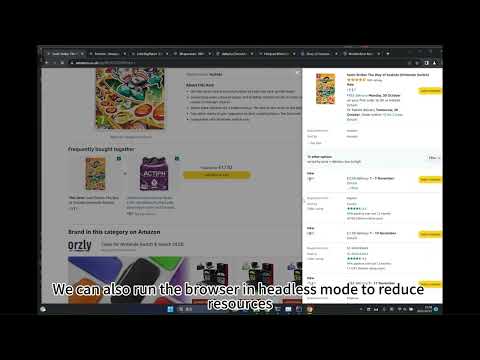
📺 Bilibili: https://www.bilibili.com/video/BV1kM2rYrEFC
Architecture
browser4-cli (Rust) ──MCP over HTTP──▶ browser4-rest (Kotlin/Spring) ──▶ PulsarWebDriver (Kotlin/CDP)
- CLI (
cli/browser4-cli) — native Rust binary, talks to the backend via MCP tool calls - Backend (
browser4-rest) — Spring Boot server, dispatches MCP tools to browser drivers - Browser driver (
browser4-core/browser4-browser) — wraps Chrome DevTools Protocol - Agent tools (
browser4-agentic) — maps MCP tool names to browser automation methods - Programming kernel (
browser4-coding) — dependency-light agent toolkit (sandboxed shell/filesystem, scaffolding, validation, self-development tools) — see below
📦 Modules Overview
| Module | Description |
|---|---|
cli/browser4-cli |
Rust CLI — fast, native binary for browser automation |
skills/browser4-cli |
AI agent skill definitions (SKILL.md) |
browser4-core |
Core engine: sessions, scheduling, DOM, browser control |
browser4-dependencies |
BOM and dependency version alignment |
browser4-tools |
Operational tools and launch helpers |
browser4-agentic |
AI agents, MCP integration, skill registration |
browser4-coding |
Programming-agent kernel — sandboxed shell/fs, artifact scaffolding & validation, self-development tools (47 coding.* tools) |
browser4-agent-tools |
High-level agent tools: scraping, crawling, stateful page interaction |
browser4-rest |
Spring Boot REST layer & command endpoints |
browser4-apps/browser4-standalone |
Product packaging — unified launcher (target/Browser4.jar) |
examples/browser4-examples |
Runnable examples and demos |
browser4-tests |
E2E, integration, and scenario test suites |
cdp-protocol |
Chrome DevTools Protocol JSON definitions |
coworker/ |
Builtin AI coworker |
🧩 Programming-Agent Kernel (browser4-coding)
browser4-coding is the dependency-light programming kernel that lets an AI agent create Browser4 artifacts and develop Browser4 itself. It is independent of browser4-agentic and pulsar-common (only SLF4J + Jackson + coroutines), so it can be reused by non-agent hosts. Heavy backends (LSP servers, kotlin-compiler-embeddable) are probed at runtime and never downloaded by default.
The coding domain exposes 47 tools in four groups:
| Group | Count | Highlights |
|---|---|---|
| Shell & filesystem | 28 | sandboxed coding.shell (command whitelist), snapshot-based edit primitives with revert, diff (Myers/Patience), repo-governance protection (coding.protect) |
| Artifact creation & validation | 6 | scaffold (plugin/skill/js/script), scaffoldFlow (multi-file dev-flow), scaffoldFromExample (anti-staleness live templates, directory mode + stem-derived renames), validate (incl. repo-consistency) |
| Self-development | 7 | mvnBuild (structured diagnostics), ktSymbols/ktReferences/ktInheritance (zero-dep Kotlin analysis), impact + moduleGraph (live pom graph), devTask (AGENTS.md flow + execution), trapCheck (CDP pitfalls) |
| LSP | 4 | on-demand diagnostics/symbols/references for ts/js/py/rs (degrades gracefully when a server is missing) |
Generic vs project-specific: the kernel is layered by mechanism vs data — diff, sandbox, LSP client, Kotlin analysis, Maven passthrough and the pom-graph scanner are generic and portable; the scaffolds, validators, ModuleMap, CdpTrapCheck and the governance defaults encode Browser4 conventions and are the layer to rewrite when reusing the kernel elsewhere.
- Full tool reference & workflows:
skills/browser4-coding/SKILL.md - Developing Browser4 itself:
skills/browser4-dev/SKILL.md - Four-artifact comparison examples (real vs scaffold output):
docs-dev/copilot/examples/ - Evaluation summary (P1–P7):
docs-dev/copilot/browser4-programming-support-eval.md
🧪 Test Fixture Server (MockSite)
Browser4 includes a lightweight MockSite server that serves static HTML pages for testing and demos. Start it from the repository root:
Windows (pwsh — PowerShell 7+): ./bin/test.ps1 mock-site -Dmock.site.port=18080
Linux/macOS: ./bin/test.sh mock-site -Dmock.site.port=18080
Key demo pages are served at http://localhost:18080/generated/. For the full page listing, environment variables, Python fallback, and Maven-based launch, see MockSite. For the test taxonomy and tagging system, see Test Taxonomy.
🤝 Support & Community
Join our community for support, feedback, and collaboration!
- GitHub Discussions: Engage with developers and users.
- Issue Tracker: Report bugs or request features.
- Social Media: Follow us for updates and news.
We welcome contributions! See CONTRIBUTING.md for details.
📜 Documentation
Comprehensive documentation is available in the docs/ directory and on our GitHub Pages site.
🔧 Proxy Configuration - Unblock Website Access
Set the environment variable PROXY_ROTATION_URL to the rotation URL provided by your proxy service provider:
export PROXY_ROTATION_URL=https://your-proxy-provider.com/rotation-endpoint
Each time you access this rotation URL, it should return a response containing one or more fresh proxy IPs. If you need this type of URL, please contact your proxy service provider.
License
Apache 2.0 License. See LICENSE for details.
Links
- omdsh-dev/dsh-data-agent - DSH Data Agent · Analyze data through conversation
- ccch1mneyyy/dsh-TUI - DSH TUI · Text-based User Interface