Android Voice Activity Detection (VAD)
Android VAD library is designed to process audio in real-time and identify presence of human speech in audio samples that contain a mixture of speech and noise. The VAD functionality operates offline, performing all processing tasks directly on the mobile device.
The repository offers three distinct models for voice activity detection:
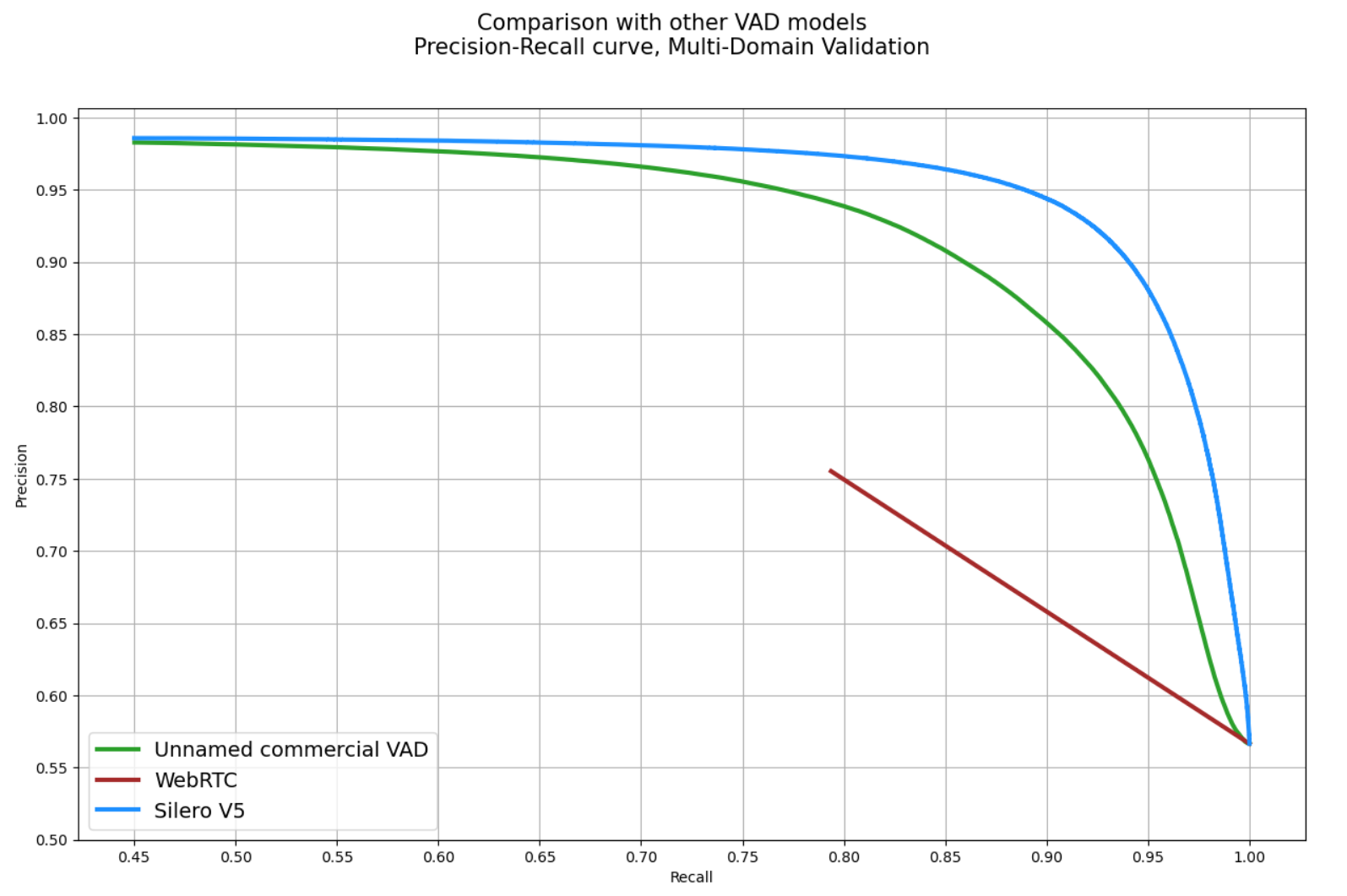
WebRTC VAD [1] is based on a Gaussian Mixture Model (GMM) which is known for its exceptional speed and effectiveness in distinguishing between noise and silence. However, it may demonstrate relatively lower accuracy when it comes to differentiating speech from background noise.
Silero VAD [2] is based on a Deep Neural Networks (DNN) and utilizes the ONNX Runtime Mobile for execution. It provides exceptional accuracy and achieves processing time that is very close to WebRTC VAD.
Yamnet VAD [3] is based on a Deep Neural Networks (DNN) and employs the Mobilenet_v1 depthwise-separable convolution architecture. For execution utilizes the Tensorflow Lite runtime. Yamnet VAD can predict 521 audio event classes (such as speech, music, animal sounds and etc). It was trained on AudioSet-YouTube corpus.
WebRTC VAD is lightweight (only 158 KB) and provides exceptional speed in audio processing, but it may exhibit lower accuracy compared to DNN models. WebRTC VAD can be invaluable in scenarios where a small and fast library is necessary and where sacrificing accuracy is acceptable. In situations where high accuracy is critical, models like Silero VAD and Yamnet VAD are more preferable. For more detailed insights and a comprehensive comparison between DNN and GMM, refer to the following comparison Silero VAD vs WebRTC VAD.
WebRTC VAD
Parameters
WebRTC VAD library only accepts 16-bit Mono PCM audio stream and can work with next Sample Rates, Frame Sizes and Modes.
| Valid Sample Rate | Valid Frame Size |
|---|---|
| 8000Hz | 80, 160, 240 |
| 16000Hz | 160, 320, 480 |
| 32000Hz | 320, 640, 960 |
| 48000Hz | 480, 960, 1440 |
| Valid Mode |
|---|
| NORMAL |
| LOW_BITRATE |
| AGGRESSIVE |
| VERY_AGGRESSIVE |
Recommended parameters for WebRTC VAD:
- Sample Rate (required) - 16KHz - The sample rate of the audio input.
- Frame Size (required) - 320 - The frame size of the audio input.
- Mode (required) - VERY_AGGRESSIVE - The confidence mode of the VAD model.
- Silence Duration (optional) - 300ms - The minimum duration in milliseconds for silence segments.
- Speech Duration (optional) - 50ms - The minimum duration in milliseconds for speech segments.
Usage
WebRTC VAD can identify speech in short audio frames, returning results for each frame. By utilizing parameters such as silenceDurationMs and speechDurationMs, you can enhance the capability of VAD, enabling the detection of prolonged utterances while minimizing false positive results during pauses between sentences.
Java example:
    VadWebRTC vad = Vad.builder()
        .setSampleRate(SampleRate.SAMPLE_RATE_16K)
        .setFrameSize(FrameSize.FRAME_SIZE_320)
        .setMode(Mode.VERY_AGGRESSIVE)
        .setSilenceDurationMs(300)
        .setSpeechDurationMs(50)
        .build();

    boolean isSpeech = vad.isSpeech(audioData);

    vad.close();
Kotlin example:
    VadWebRTC(
        sampleRate = SampleRate.SAMPLE_RATE_16K,
        frameSize = FrameSize.FRAME_SIZE_320,
        mode = Mode.VERY_AGGRESSIVE,
        silenceDurationMs = 300,
        speechDurationMs = 50
    ).use { vad ->
        val isSpeech = vad.isSpeech(audioData)
    }
An example of how to detect speech in an audio file:
    VadWebRTC(
        sampleRate = SampleRate.SAMPLE_RATE_16K,
        frameSize = FrameSize.FRAME_SIZE_320,
        mode = Mode.VERY_AGGRESSIVE,
        silenceDurationMs = 600,
        speechDurationMs = 50
    ).use { vad ->
        val chunkSize = vad.frameSize.value * 2

        requireContext().assets.open("hello.wav").buffered().use { input ->
            val audioHeader = ByteArray(44).apply { input.read(this) }
            var speechData = byteArrayOf()

            while (input.available() > 0) {
                val frameChunk = ByteArray(chunkSize).apply { input.read(this) }

                if (vad.isSpeech(frameChunk)) {
                    speechData += frameChunk
                } else {
                    if (speechData.isNotEmpty()) {
                        val speechFile = File("/folder/", "${nanoTime()}.wav")

                        FileOutputStream(speechFile).use { output ->
                            output.write(audioHeader)
                            output.write(speechData)
                        }

                        speechData = byteArrayOf()
                    }
                }
            }
        }
    }
Silero VAD
Parameters
Silero VAD library only accepts 16-bit Mono PCM audio stream and can work with next Sample Rates, Frame Sizes and Modes.
| Valid Sample Rate | Valid Frame Size |
|---|---|
| 8000Hz | 256, 512, 768 |
| 16000Hz | 512, 1024, 1536 |
| Valid Mode |
|---|
| OFF |
| NORMAL |
| AGGRESSIVE |
| VERY_AGGRESSIVE |
Recommended parameters for Silero VAD:
- Context (required) - The Context is required to facilitate reading the model file from the Android file system.
- Sample Rate (required) - 16KHz - The sample rate of the audio input.
- Frame Size (required) - 512 - The frame size of the audio input.
- Mode (required) - NORMAL - The confidence mode of the VAD model.
- Silence Duration (optional) - 300ms - The minimum duration in milliseconds for silence segments.
- Speech Duration (optional) - 50ms - The minimum duration in milliseconds for speech segments.
Usage
Silero VAD can identify speech in short audio frames, returning results for each frame. By utilizing parameters such as silenceDurationMs and speechDurationMs, you can enhance the capability of VAD, enabling the detection of prolonged utterances while minimizing false positive results during pauses between sentences.
Java example:
    VadSilero vad = Vad.builder()
        .setContext(requireContext())
        .setSampleRate(SampleRate.SAMPLE_RATE_16K)
        .setFrameSize(FrameSize.FRAME_SIZE_512)
        .setMode(Mode.NORMAL)
        .setSilenceDurationMs(300)
        .setSpeechDurationMs(50)
        .build();

    boolean isSpeech = vad.isSpeech(audioData);

    vad.close();
Kotlin example:
    VadSilero(
        requireContext(),
        sampleRate = SampleRate.SAMPLE_RATE_16K,
        frameSize = FrameSize.FRAME_SIZE_512,
        mode = Mode.NORMAL,
        silenceDurationMs = 300,
        speechDurationMs = 50
    ).use { vad ->
        val isSpeech = vad.isSpeech(audioData)
    }
Yamnet VAD
Parameters
Yamnet VAD library only accepts 16-bit Mono PCM audio stream and can work with next Sample Rates, Frame Sizes and Modes.
| Valid Sample Rate | Valid Frame Size |
|---|---|
| 16000Hz | 243, 487, 731, 975 |
| 243, 487, 731, 975 |
| Valid Mode |
|---|
| OFF |
| NORMAL |
| AGGRESSIVE |
| VERY_AGGRESSIVE |
Recommended parameters for Yamnet VAD:
- Context (required) - The Context is required to facilitate reading the model file from the Android file system.
- Sample Rate (required) - 16KHz - The sample rate of the audio input.
- Frame Size (required) - 243 - The frame size of the audio input.
- Mode (required) - NORMAL - The confidence mode of the VAD model.
- Silence Duration (optional) - 30ms - The minimum duration in milliseconds for silence segments.
- Speech Duration (optional) - 30ms - The minimum duration in milliseconds for speech segments.
Usage
Yamnet VAD can identify 521 audio event classes (such as speech, music, animal sounds and etc) in small audio frames. By utilizing parameters such as silenceDurationMs and speechDurationMs and specifying sound category (ex. classifyAudio("Speech", audioData)), you can enhance the capability of VAD, enabling the detection of prolonged utterances while minimizing false positive results during pauses between sentences.
Java example:
    VadYamnet vad = Vad.builder()
        .setContext(requireContext())
        .setSampleRate(SampleRate.SAMPLE_RATE_16K)
        .setFrameSize(FrameSize.FRAME_SIZE_243)
        .setMode(Mode.NORMAL)
        .setSilenceDurationMs(30)
        .setSpeechDurationMs(30)
        .build();

    SoundCategory sc = vad.classifyAudio("Speech", audioData);

    if ("Speech".equals(sc.getLabel())) {
        System.out.println("Speech Detected: " + sc.getScore());
    } else {
        System.out.println("Noise Detected: " + sc.getScore());
    }

    vad.close();
Kotlin example:
    VadYamnet(
        requireContext(),
        sampleRate = SampleRate.SAMPLE_RATE_16K,
        frameSize = FrameSize.FRAME_SIZE_243,
        mode = Mode.NORMAL,
        silenceDurationMs = 30,
        speechDurationMs = 30
    ).use { vad ->
        val sc = vad.classifyAudio("Cat", audioData)

        when (sc.label) {
            "Cat" -> println("Cat Detected: " + sc.score)
            else -> println("Noise Detected: " + sc.score)
        }
    }
Requirements
Android API
WebRTC VAD - Android API 21 and later.
Silero VAD - Android API 24 and later.
Yamnet VAD - Android API 23 and later.
JDK
JDK 8 or later.
Download

Gradle is the only supported build configuration, so just add the dependency to your project build.gradle file:
- Add it in your root build.gradle at the end of repositories:
allprojects {
   repositories {
     maven { url 'https://jitpack.io' }
   }
}
- Add one dependency from list below:
WebRTC VAD
dependencies {
    implementation 'com.github.gkonovalov.android-vad:webrtc:2.0.10'
}
Silero VAD
dependencies {
    implementation 'com.github.gkonovalov.android-vad:silero:2.0.10'
}
Yamnet VAD
dependencies {
    implementation 'com.github.gkonovalov.android-vad:yamnet:2.0.10'
}
You also can download precompiled AAR library and APK files from GitHub's releases page.
References
[1] WebRTC VAD - Voice Activity Detector from Google which is reportedly one of the best available: it's fast, modern and free. This algorithm has found wide adoption and has recently become one of the gold-standards for delay-sensitive scenarios like web-based interaction.
[2] Silero VAD - pre-trained enterprise-grade Voice Activity Detector, Number Detector and Language Classifier hello@silero.ai.
[3] Yamnet VAD - YAMNet is a pretrained deep neural network that can predicts 521 audio event classes based on the AudioSet-YouTube corpus, employing the Mobilenet_v1 depthwise-separable convolution architecture.
Georgiy Konovalov 2025 (c) MIT License