RepoMaster: The open-source AI agent that masters GitHub. It turns any code repository into a powerful tool, achieving a new level of autonomous task-solving. An open alternative to Claude-Code.
Local AI chat for iPhone, iPad and Mac. Connect Ollama, LM Studio or any OpenAI-compatible server, or run MLX models on-device. Includes tools and web search.
LockKnife: The Ultimate Android Security Research Tool. A unified TUI workspace and headless CLI for deep Android security research, built for researchers and hackers. Powered by Python orchestration and a Rust-accelerated core, enabling AI agent–driven hacking, credential recovery/cracking, APK analysis, intelligence gathering, runtime inspection.
An entire marketing department as one Claude skill. 14 modules: audits scored 0-100, an 18-tactic hook engine, copy graded before you see it, ad diagnosis, GEO, email, launches, pricing. Works in Claude, Codex and Cursor.
AI based tool to convert vocals lyrics and pitch from music to autogenerate Ultrastar Deluxe, Midi and notes. It automatic tapping, adding text, pitch vocals and creates karaoke files.
Unreal Engine 5 Llama LoRA Table of Contents Project Description How to Replicate Results and Examples Limitations and Future Improvements License Acknowledgements Project Description A proof of concept for using natural language processing (NLP) to create a documentation assistant that can intelligently respond to user queries. Specifically, I webscraped all of Unreal Engine 5. 1's documentation into a single text file to use a dataset for finetuning Meta's llama-7b in oobabooga's text generation webui. I think that locally hosted
and trained LoRAs have the potential to be an interesting alternative to OpenAI API calls and vector databases for building context aware assistants to help with niche tasks and information. How to Replicate You'll need to have oobabooga's text generation webui set up, it's a great tool with the goal of being the stable-diffusion-webui equivalent for locally running and training large language models. I suppose you could also train the LoRA some other way, but this is what
I used. If you're on windows, the new one-click installer is very helpful. Once you have it up and running, you'll need to pick a base model. I used Llama-7b loaded in 8bit mode, but other models should work. txt file from this repository and put it in text-generation-webui/training/datasets. Then navigate over to the training tab in the webui and configure the settings: These are just the settings I used, I can't say for
certain they are the best settings and I plan to continue to experiment with the options. As you can see, training took roughly 8 hours on a 3090ti. However, when augmented with ue5-llama-lora, it has no issues generating high quality responses that are clearly derived from Unreal Engine 5. While Unreal Engine 5 was released after ChatGPT's training cutoff date, it is impressively familiar with nanite, as nanite had been announced prior to September 2021. ChatGPT fails to
recognize mass avoidance in the context of Unreal Engine however, as that is a much newer experimental feature in the engine. Limitations and Future Improvements Being a language model, ue5-llama-lora is prone to hallucinations and can make up details or give incorrect information. That being said, this is still very much in the early stages, and the output could be improved and refined in a number of ways. The obvious thing being that it's not really advisable to
use the default chat assistant from the webui for prompting. By generating a UE5-tailored character yaml file, I expect that you could slightly reduce hallucinations and have better control over the length and level of detail in the responses. Additionally, the dataset could be improved in a number of ways. Specifically if the dataset was somehow formatted as a instruction > response json like Stanford's Alpaca I could have a lot more control through prompting. Lastly, I included the webscraping
script in the repository as well, but the implementation is poor and take ages to parse the documentation. I really
A proof of concept for using natural language processing (NLP) to create a documentation assistant that can intelligently respond to user queries. Specifically, I webscraped all of Unreal Engine 5.1's documentation into a single text file to use a dataset for finetuning Meta's llama-7b in oobabooga's text generation webui. I think that locally hosted and trained LoRAs have the potential to be an interesting alternative to OpenAI API calls and vector databases for building context aware assistants to help with niche tasks and information.
How to Replicate
You'll need to have oobabooga's text generation webui set up, it's a great tool with the goal of being the stable-diffusion-webui equivalent for locally running and training large language models. I suppose you could also train the LoRA some other way, but this is what I used. If you're on windows, the new one-click installer is very helpful. Once you have it up and running, you'll need to pick a base model. I used Llama-7b loaded in 8bit mode, but other models should work. Download the unreal_docs.txt file from this repository and put it in text-generation-webui/training/datasets. Then navigate over to the training tab in the webui and configure the settings:
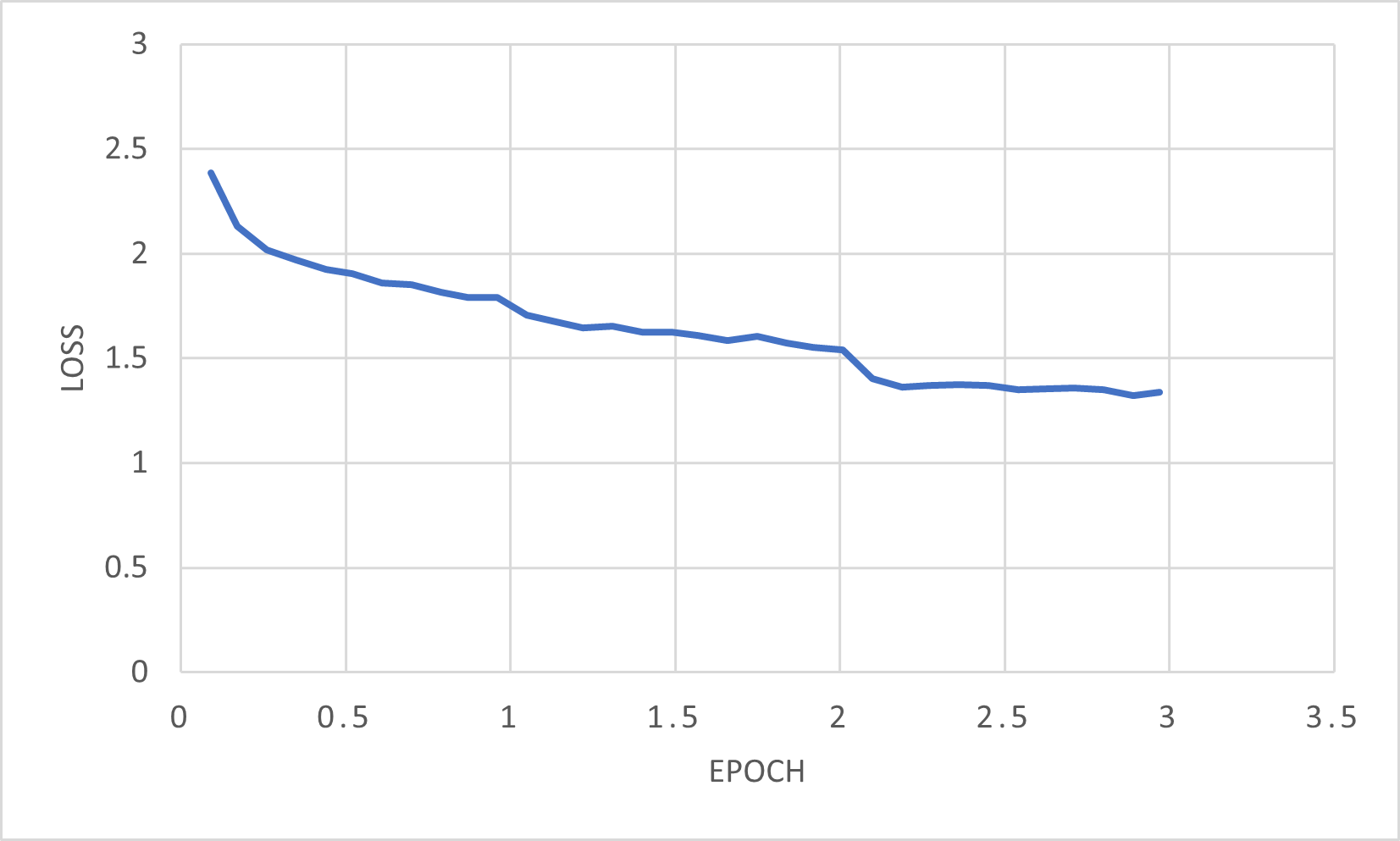
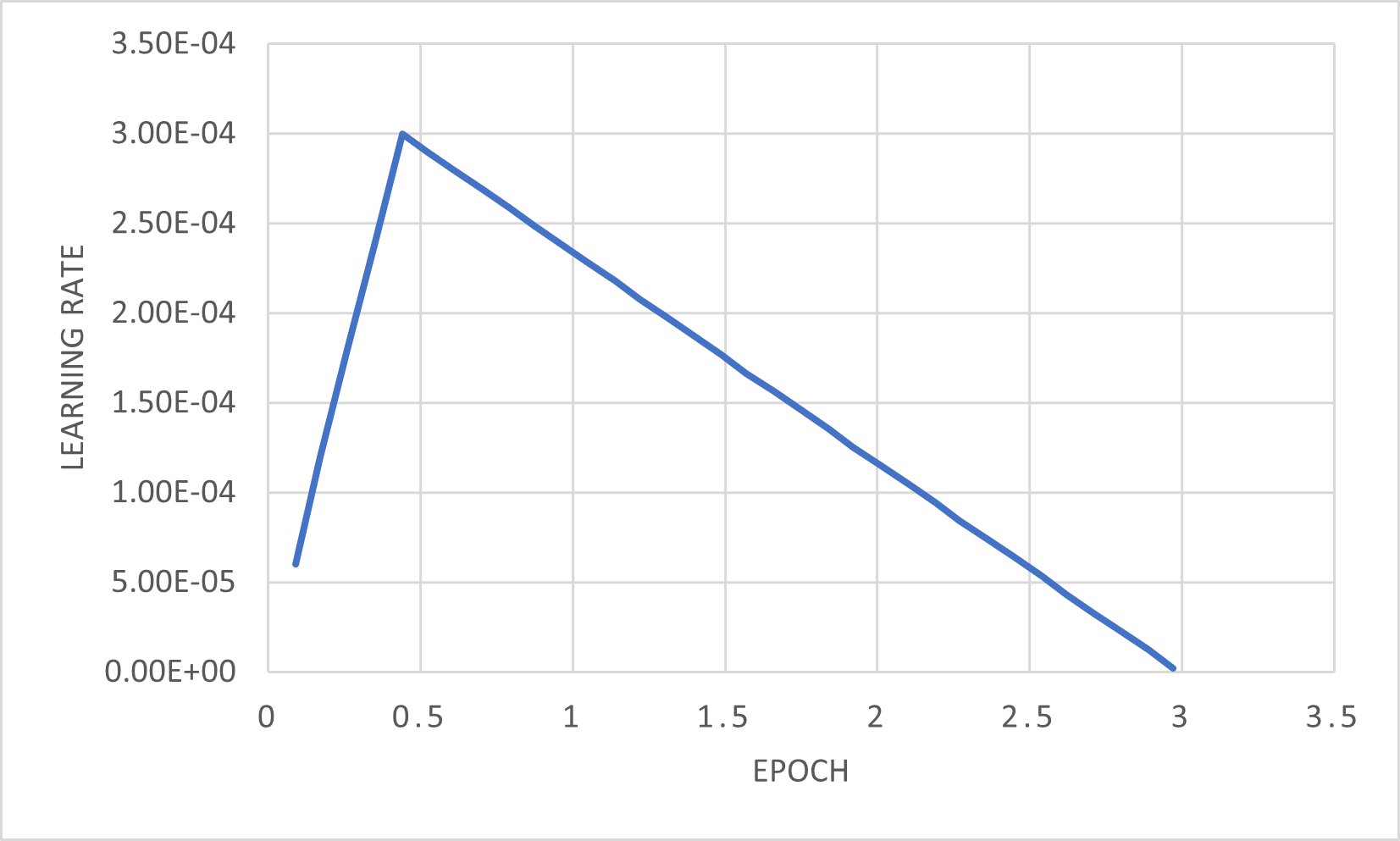
These are just the settings I used, I can't say for certain they are the best settings and I plan to continue to experiment with the options. As you can see, training took roughly 8 hours on a 3090ti.
Training data
Loss
Learning Rate
Results and Examples
I fully expected complete gibberish from the first attempt, but I am pleasantly surprised by the quality of the results:
Base Llama7b
ue5-llama-lora
ChatGPT
Clearly, base Llama 7b has no idea what's going on and can't provide information about Unreal Engine 5 or it's new features. However, when augmented with ue5-llama-lora, it has no issues generating high quality responses that are clearly derived from Unreal Engine 5.1's up-to-date documentation. While Unreal Engine 5 was released after ChatGPT's training cutoff date, it is impressively familiar with nanite, as nanite had been announced prior to September 2021. ChatGPT fails to recognize mass avoidance in the context of Unreal Engine however, as that is a much newer experimental feature in the engine.
Limitations and Future Improvements
Being a language model, ue5-llama-lora is prone to hallucinations and can make up details or give incorrect information. That being said, this is still very much in the early stages, and the output could be improved and refined in a number of ways. The obvious thing being that it's not really advisable to use the default chat assistant from the webui for prompting. By generating a UE5-tailored character yaml file, I expect that you could slightly reduce hallucinations and have better control over the length and level of detail in the responses. Additionally, the dataset could be improved in a number of ways. Specifically if the dataset was somehow formatted as a instruction > response json like Stanford's Alpaca I could have a lot more control through prompting. Lastly, I included the webscraping script in the repository as well, but the implementation is poor and take ages to parse the documentation. I really don't recommend using it, I was overly cautious using selenium to try to catch dynamically loaded page content. By the time I realized I could have made the script way better with a different approach, I was just too tired to care and let it run overnight.