60 days of Data Science and ML with project Series
Youtube for all the implemented projects and tech interview resources - Ignito Youtube Channel
Complete Cheat Sheet for Tech Interviews - How to prepare efficiently
I took theses Projects Based Courses to Build Industry aligned Data Science and ML skills
Part 1 - How to solve Any ML System Design Problem
Start here - ML System Design Case Studies Series
Day 1 : Python Basics with Code Implementation — Part 1
In this post we covered end to end Python Basics ( Part 1) that you should know. Topics like data types,strings, operators, and Chaining Comparison Operators with Logical Operators are covered.
Where to find Day 1 post: Link
Day 2 : Python Basics with Code Implementation — Part 2
In this post we covered end to end Python Basics ( Part 2) that you should know. Topics like Python Lists and Dictionaries, Sets, Tuples etc are covered in detail.
Where to find Day 2 post: Link
Day 3 : Python Basics with Code Implementation — Part 3
In this post we covered end to end Python Basics ( Part 3) that you should know. Topics like Tuples, Sets, Loops, Break and Continue Statements, Object-Oriented Programming and Class and attributes in Python are covered in detail.
Where to find Day 3 post: Link
Day 4 : Intermediate Python with Code Implementation — Part 1
In this post we covered end to end Intermediate Python ( Part 1) that you should know. Topics like First Class functions,Private Variables, Global and Non Local Variables, import function, Magic Functions, Tuple Unpacking, Static Variables and Methods in Python are covered in detail. Where to find Day 4 post:
Where to find Day 4 post: Link
Day 5: Intermediate Python with Code Implementation — Part 2
In this post we covered end to end Intermediate Python( Part 2) that you should know. Topics like Lambda Functions, Magic methods, Inheritance and Polymorphism, Errors and Exception Handling, User-defined functions, Python garbage collection, and debugger are covered in detail.
Where to find Day 5 post : Link
Day 6:Advanced Python with Code Implementation
In this post we covered end to end Advanced Python that you should know. Topics like Decorators, Memoization using Decorators, Generators, Ordered and Defaultdict, Coroutine with Code implementation are covered in detail .
Where to find Day 6 post: Link
Day 7 : Statistics for Data Science and Machine Learning with Code Implementation
In this post we covered Statistics for Data Science you should know.
Where to find Day 7 post : Link
Day 8 : Maths for Data Science and Machine learning
In this post we covered Maths for ML. Topics like Linear Algebra, Calculus, Matrix and Vectors, Bayes Theorem and Cheatsheets etc are covered in detail.
Where to find Day 8 post : Link
Day 9 : Pandas Part 1 with Code Implementation
In this post we covered Pandas part 1 in depth with Code Implementation . Pandas is an open source Python package written for the Python programming language for data manipulation, analysis and ML tasks .
Where to find Day 9 post : Link
Day 10: Pandas Part 2 with Code Implementation
In this post we covered Pandas part 2 in depth with Code Implementation.Topics like indexing,filtering, transformation, Merging, Hierarchical Indexing etc are covered.
Where to find Day 10 post: Link
Day 11 : Numpy with Code Implementation
In this post we covered Numpy part 1 with focus on Flattening the arrays, Concatenation and Broadcasting etc in detail. Numpy is a python library for scientific computing — to work with multidimensional array objects and used to handle large amount of data. An array which is a grid of values and is indexed by a tuple of nonnegative integers is main data structure of the Numpy library.
Where to find Day 11 post : Link
Day 12:Data Pre-processing Part 1 with Code Implementation
In this post we learned/implemented Hands on Data Pre-processing in depth — Part 1. Data preprocessing , one of the first and crucial step — the process in which we prepare the raw data and make it suitable for a ML model to increase its accuracy and efficiency.
Where to find Day 12 post : Link
Day 13 : Data Pre-processing Part 1 with Code Implementation
In this post we learned/implemented Hands on Data Pre-processing in depth — Part 2 . Topics like Data Cleaning, Data Augmentation, Transformation, Channel Shift etc are covered in detail.
Where to find Day 13 post : Link
Day 14 : Regression Part 1 with Code Implementation
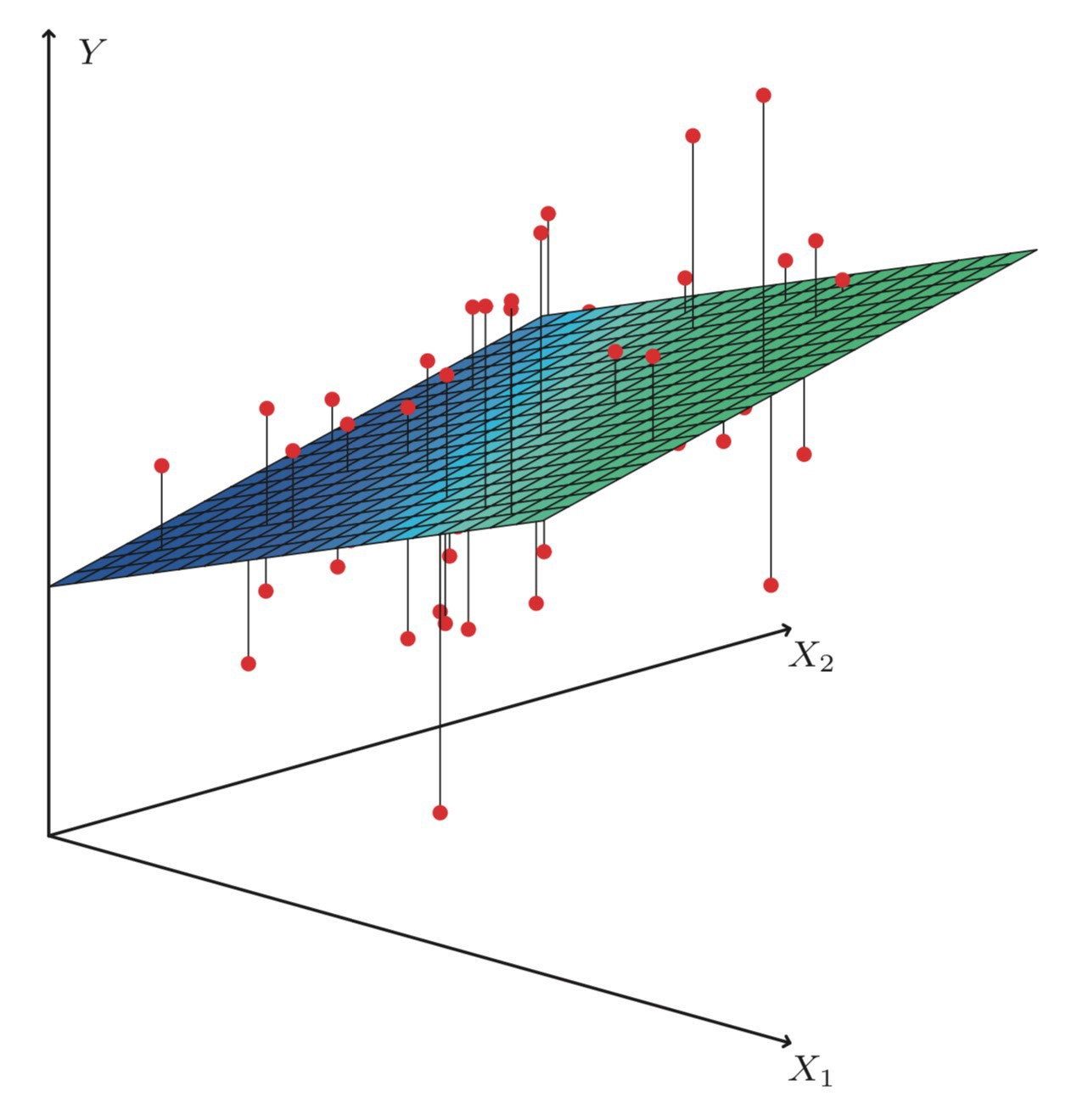
In this post where we learned/implemented Hands on Regression in depth — Part 1. Topics like Simple Linear Regression,Multi Linear Regression,Polynomial Regression are covered in detail.
Where to find Day 14 post : Link
Day 15: Regression Part 2 with Code Implementation
In this post where we learned/implemented Hands on Regression in depth — Part 2. Topics like Support Vector Regression, Decision Tree Regression and Random Forest Regression are covered in detail.
Where to find Day 15 post : Link
Day 16:Reflect and Connect the dots
In this we covered various Data Science and ML projects.
Where to find Day 16 post : Link
Day 17: Project — Kaggle’s annual Machine Learning and Data Science Survey ( Part 1 )
In this post we implemented a project and covered some of the most important concepts —data cleaning, preprocessing, EDA etc through a project. This data ( Kaggle’s annual Machine Learning and Data Science Survey) has 42+ questions and 25,973 responses and for this post we will cover how to approach a problem and a very elementary view covering how to analyze your data.
Where to find Day 17 post : Link
Day 18: Project —DecisionTreeRegressor and RandomForestRegressor
In this post we developed an intuition and implemented DecisionTreeRegressor and RandomForestRegressor through a project.
Where to find Day 18 post : Link
Day 19: Project — Kaggle’s annual Machine Learning and Data Science Survey ( Part 2 )
In this post we covered second part of the Kaggle’s annual Machine Learning and Data Science Survey project.
Where to find Day 19 post : Link
Day 20 : Project — Detailed Crypto Analysis (Part 1)
In this post we covered detailed Crypto Analysis to build a basic intuition and part 2 covers how we can build a model to predict the prices .
Where to find Day 20 post : Link
Day 21 : Exploratory Data Analysis Project
Demonstrated how to do effective Exploratory Data Visualization.
Where to find Day 21 post: Link
Day 22 : All the Important ML algorithms with Projet 1
Where to find Day 22 post : Link
Day 23 : ML Classification and a Project.
Where to find Day 23 post : Link
Day 24 : ML Classification Project 2 ( Part 1)
Classification algorithms are used for predictive modeling problem where input training data is used to predict the probability that future data will fall into one of the predetermined/labelled categories.
Where to find Day 24 post : Link
Day 25 : ML Classification Project 2 ( Part 2)
Classification algorithms are used for predictive modeling problem where input training data is used to predict the probability that future data will fall into one of the predetermined/labelled categories.
Where to find Day 25 post : Link
Day 26 : Machine Learning Clustering in detail with a project 1
In this post we covered Machine Learning Clustering in detail with a project( Part 1).
Where to find Day 26 post : Link
Day 27 : Machine Learning Clustering in detail with a project 1
In this post we covered Machine Learning Clustering in detail with a project( Part 2) .
Where to find Day 27 post : Link
Day 28 : Machine Learning Clustering in detail with a project 2 ( part 1)
In this post we covered Machine Learning Clustering in detail with another project( Part 1). Where to find Day 28 post : Link
Day 29 : Machine Learning Clustering in detail with a project 2( part 2)
In this post we covered Machine Learning Clustering in detail with another project( Part 2).
Where to find Day 29 post : Link
Day 30: Machine Learning Clustering in detail with a project 2 ( part 3)
In this post we covered Machine Learning Clustering in detail with another project( Part 3).
Where to find Day 30 post : Link
Day 31: Machine Learning Regression in detail with a project
In this post we covered univariate linear regression with a project.
Where to find Day 31 post : Link
Day 32: Multiple linear regression with a project
In this post we covered multiple linear regression with a project. Along the lines we evaluated model fit and accuracy using numerical measures such as R² and RMSE.
Where to find Day 32 post : Link
Day 33 : Logistic regression with a project
In this post we covered logistic regression with a project.
Where to find Day 33 post : Link
Day 34 : Logistic regression with another project
In this post we covered logistic regression with another project.
Where to find Day 34 post : Link
Day 35 : Principal Component Analysis with a project
In this post we covered Principal Component Analysis with a project.
Where to find Day 35 post : Link
Day 36 : Advanced Regression Techniques with project ( Part 1)
In this post we covered Advanced Regression Techniques with a project
Where to find Day 36 post : Link
Day 37 : Advanced Regression Techniques with project ( Part 2)
In this post we covered Advanced Regression Techniques with a project
Where to find Day 37 post : Link
Day 38 : Support Vector Machine with a project
In this post we covered Support Vector Machine with a project
Where to find Day 38 post : Link
Day 39 : Scikit learn with a project
In this post we covered the basics of Scikit learn with a project.
Where to find Day 39 post : Link
Day 40 : Tensorflow with a project
In this post we covered the basics of Tensorflow with a project .
Where to find Day 40 post : Link
Day 41 : Neural Network with a project
In this post we covered the basics of Neural Network with Tensorflow with a project.
Where to find Day 41 post : Link
Day 42 : RNN and Tensorflow with a project
In this post we covered the basics of RNN and Tensorflow with a project.
Where to find Day 42 post : Link
Day 43: Regression using Tensorflow with a project
In this post we covered Regression using Tensorflow with a project
Where to find Day 43 post : Link
Day 44: Long Short Term Memory networks (LSTM) with Keras
In this post we covered the basics of Long Short Term Memory networks (LSTM) with Keras through a project
Where to find Day 44 post : Link
Day 45 : Recurrent Neural Network with a project
In this post we covered the basics of Recurrent Neural Network with a project
Where to find Day 45 post : Link
Day 46 : Language Classification with a project
In this post we covered the basics of Multinomial Naive Bayes through a project.
Where to find Day 46 post : Link
Day 47 : RNN and LSTM with a project
In this post we covered the basics of RNN and LSTM with a project
Where to find Day 47 post : Link
Day 48 : Multilayer Perceptron with project
In this project we implemented a multilayer Perceptron model with Keras.
Where to find Day 48 post : Link
Day 49 : Yellowbrick for NLP
In this post, we analyzed the text data using Yellowbrick and assess document similarity, topic modeling etc that are predicated on the notion of “similarity” between documents.
Where to find Day 49 post : Link
Day 50 : Bidirectional Encoder Representations from Transformers ( BERT) with a project
In this post we learned how to fine tune BERT for text classification.
Where to find Day 50 post : Link
Day 51 : Yellowbrick with a project
In this project we implemented visualization using yellowbrick
Where to find Day 51 post : Link
Day 52 : Yellowbrick with 2nd project
In this project we implemented visualization using yellowbrick through a project
Where to find Day 52 post : Link
Day 53 : Yellowbrick with 3rd project
In this project we implemented visualization using yellowbrick through a project
Where to find Day 53 post : Link
Day 54 : Pytorch and ResNet with a project
In this post we learned about the basics of PyTorch ( one of my favorite library) and ResNet.
Where to find Day 54 post : Link
Day 55 : Natural Language Processing using Naive Bayes through a project
In this post we learned and implemented the basics of NLP using Naive Bayes through a project.
Where to find Day 55 post : Link
Day 56 : ANN, Linear Regression, Decision Tree Regression and Random Forest with a project
In this post we covered ANN, Linear Regression, Decision Tree Regression and Random Forest with a project
Where to find Day 56 post : Link
Day 57 : Deep learning and BERT
In this post we learned how to perform sentiment analysis using BERT.
Where to find Day 57 post : Link
Day 58 : RNN and LSTM through a project
In this post we covered the basics of RNN and LSTM through a project.
Where to find Day 58 post : Link
Day 59 : Natural Language Processing and Convolutions
In this post we learned and implemented 1D Convolutions as Feature Extractors for Text in NLP.
Where to find Day 59 post : Link
Day 60 : Transfer learning and Text Classification
In this project we learned and implemented how to use transfer learning to fine-tune models, use pre-trained NLP text embedding models from TensorFlow Hub.
Where to find Day 60 post : Link
Some of the other best Series-
Complete 60 Days of Data Science and Machine Learning Series
30 days of Machine Learning Ops
30 Days of Natural Language Processing ( NLP) Series
Data Science and Machine Learning Research ( papers) Simplified **
30 days of Data Engineering with projects Series
60 days of Data Science and ML Series with projects
100 days : Your Data Science and Machine Learning Degree Series with projects
23 Data Science Techniques You Should Know
Tech Interview Series — Curated List of coding questions
Complete System Design with most popular Questions Series
Complete Data Visualization and Pre-processing Series with projects
Complete Python Series with Projects
Complete Advanced Python Series with Projects
Kaggle Best Notebooks that will teach you the most
Complete Developers Guide to Git
Exceptional Github Repos — Part 1
Exceptional Github Repos — Part 2
All the Data Science and Machine Learning Resources
6 Highly Recommended Data Science and Machine Learning Courses that you MUST take ( with certificate) -
- Complete Data Scientist : https://bit.ly/3wiIo8u
Learn to run data pipelines, design experiments, build recommendation systems, and deploy solutions to the cloud.
- Complete Data Engineering : https://bit.ly/3A9oVs5
Learn to design data models, build data warehouses and data lakes, automate data pipelines, and work with massive datasets
- Complete Machine Learning Engineer : https://bit.ly/3Tir8ub
Learn advanced machine learning techniques and algorithms - including how to package and deploy your models to a production environment.
- Complete Data Product Manager : https://bit.ly/3QGUtwi
Leverage data to build products that deliver the right experiences, to the right users, at the right time. Lead the development of data-driven products that position businesses to win in their market.
- Complete Natural Language Processing : https://bit.ly/3T7J8qY
Build models on real data, and get hands-on experience with sentiment analysis, machine translation, and more.
- Complete Deep Learning: https://bit.ly/3T5ppIo
Learn to implement Neural Networks using the deep learning framework PyTorch