You can find it in folder data/membrane. Data augmentation The data for training contains 30 512*512 images, which are far not enough to feed a deep learning neural network. I use a module called ImageDataGenerator in keras. Model This deep neural network is implemented with Keras functional API, which makes it extremely easy to experiment with different interesting architectures. Output from the network is a 512*512 which represents mask that should be learned. Sigmoid activation function makes
sure that mask pixels are in \[0, 1\] range. Training The model is trained for 5 epochs. After 5 epochs, calculated accuracy is about 0. Loss function for the training is basically just a binary crossentropy. 0 Also, this code should be compatible with Python versions 2. py You will see the predicted results of test image in data/membrane/test Or follow notebook trainUnet Results Use the trained model to do segmentation on test images, the result is statisfactory
. About Keras Keras is a minimalist, highly modular neural networks library, written in Python and capable of running on top of either TensorFlow or Theano. It was developed with a focus on enabling fast experimentation. Being able to go from idea to result with the least possible delay is key to doing good research. Use Keras if you need a deep learning library that: allows for easy and fast prototyping (through total modularity, minimalism, and extensibility). supports both convolutional networks
and recurrent networks, as well as combinations of the two. supports arbitrary connectivity schemes (including multi-input and multi-output training).
Frequently asked questions
How many stars and forks are recorded?
zhixuhao/unet has 4,938 stars and 1,998 forks.
What is the repository rank?
zhixuhao/unet is ranked 7,485.
What language and category are recorded?
zhixuhao/unet has 4,938 stars, uses Jupyter Notebook and belongs to Model Development.
Which repository is closest in rank?
zhixuhao/unet is compared with qubvel/segmentation_models, ranked 7,487 with 4,923 stars.
README
Implementation of deep learning framework -- Unet, using Keras
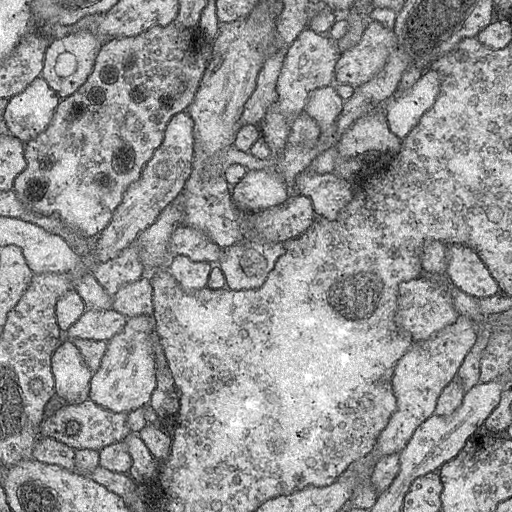
The original dataset is from isbi challenge, and I've downloaded it and done the pre-processing.
You can find it in folder data/membrane.
Data augmentation
The data for training contains 30 512*512 images, which are far not enough to feed a deep learning neural network. I use a module called ImageDataGenerator in keras.preprocessing.image to do data augmentation.
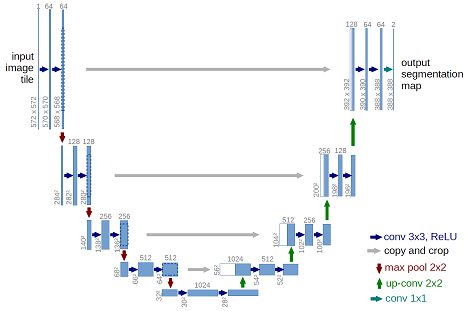
This deep neural network is implemented with Keras functional API, which makes it extremely easy to experiment with different interesting architectures.
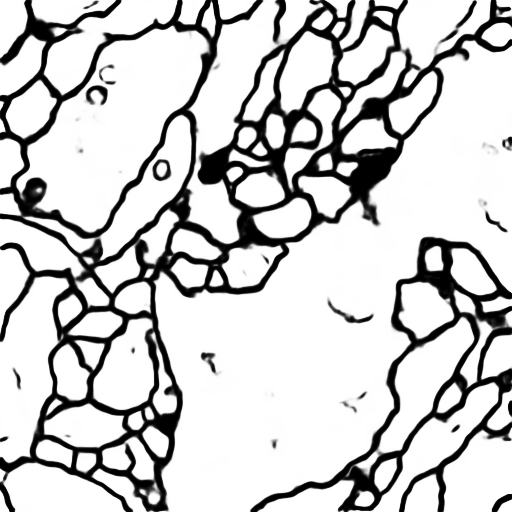
Output from the network is a 512*512 which represents mask that should be learned. Sigmoid activation function
makes sure that mask pixels are in [0, 1] range.
Training
The model is trained for 5 epochs.
After 5 epochs, calculated accuracy is about 0.97.
Loss function for the training is basically just a binary crossentropy.
How to use
Dependencies
This tutorial depends on the following libraries:
Tensorflow
Keras >= 1.0
Also, this code should be compatible with Python versions 2.7-3.5.
You will see the predicted results of test image in data/membrane/test
Or follow notebook trainUnet
Results
Use the trained model to do segmentation on test images, the result is statisfactory.
About Keras
Keras is a minimalist, highly modular neural networks library, written in Python and capable of running on top of either TensorFlow or Theano. It was developed with a focus on enabling fast experimentation. Being able to go from idea to result with the least possible delay is key to doing good research.
Use Keras if you need a deep learning library that:
allows for easy and fast prototyping (through total modularity, minimalism, and extensibility).
supports both convolutional networks and recurrent networks, as well as combinations of the two.
supports arbitrary connectivity schemes (including multi-input and multi-output training).
runs seamlessly on CPU and GPU.
Read the documentation Keras.io