PyTorch implementations of several SOTA backbone deep neural networks (such as ResNet, ResNeXt, RegNet) on one-dimensional (1D) signal/time-series data.
Key parameters and specifications
Key parameters and specifications
Parameter
Value
Language
Jupyter Notebook
Category
Model Development
Subcategory
Architecture
Keywords
Music
Stars
551
Forks
106
Contributors
1
Created date
2019-01-05
Updated date
2026-09-17
Stars in 1 day
0
Stars in 7 days
0
Rank
17,189
Previous rank
16,969
Rank change
-220
7-day stars rank
15,960
Previous 7-day stars rank
15,966
7-day stars rank change
6
Total stars rank
17,940
Previous total stars rank
17,908
Total stars rank change
-32
README summary
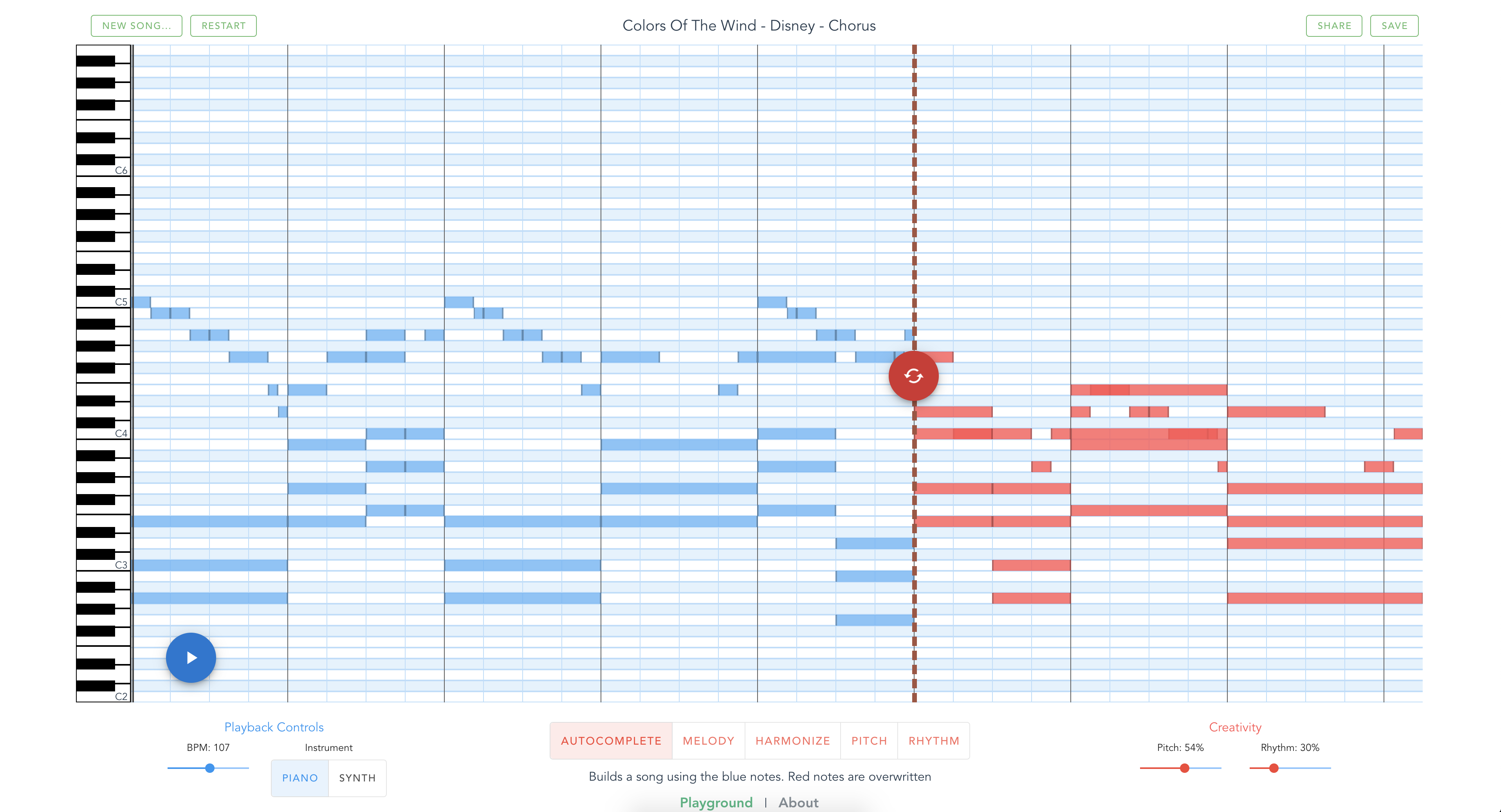
MusicAutobot Using Deep Learning to generate pop music! You can also experiment through the web app - musicautobot. com Overview Recent advances in NLP have produced amazing results in generating text. Transformer architecture is a big reason behind this. This project aims to leverage these powerful language models and apply them to music. ai library Implementation **MusicTransformer** - This basic model uses Transformer-XL to take a sequence of music notes and predict the next note. **MultitaskTransformer** - Built on top of MusicTransformer
, this model is trained on multiple tasks. Next Note Prediction (same as MusicTransformer) BERT Token Masking Sequence To Sequence Translation - Using chords to predict melody and vice versa. Training on multiple tasks means we can generate some really cool predictions (Check out this Notebook): 1. Harmonization - generate accompanying chords 2. Melody - new melody from existing chord progression 3. Remix tune - new song in the rhythm of a reference song 4. Remix beat - same tune, different rhythm How it works Details
are explained in this 4 part series: Part I - Creating a Pop Music Generator Part II - Implementation details Part III - Multitask Transformer Part IV - Composing a song with Multitask Example Notebooks 1. Play with predictions on Google Colab MusicTransformer Generate - Loads a pretrained model and shows how to generate/predict new notes MultitaskTransformer Generate - Loads a pretrained model and shows how to harmonize, generate new melodies, and remix existing songs. MusicTransformer Train - End to end example on how to create
a dataset from midi files and train a model from scratch Generate - Loads a pretrained model and shows how to generate/predict new notes 3. MultitaskTransformer Train - End to end example on creating a seq2seq and masked dataset for multitask training. Generate - Loads a pretrained model and shows how to harmonize, generate new melodies, and remix existing songs. Data Encoding Midi2Tensor - Shows how the libary internally encodes midi files to tensors for training. MusicItem - MusicItem is a wrapper that makes
it easy to manipulate midi data. Convert midi to tensor, apply data transformations, even play music or display the notes within browser. Pretrained Models Pretrained models are available as MusicTransformer and MultitaskTransformer (small and large). means that the model has been trained solely on music transposed to the key of C (all white keys). These models produce better results, but expects the input to all be in the key of C. MusicTransformer (600 MB) - AnyKey | KeyC 2. MultitaskTransformer Small (700
MB) - AnyKey | KeyC Large (2. 1 GB) - AnyKey | KeyC For details on how to load these models, follow the Generate and Multitask Generate notebooks Source Code musicautobot/ numpy_encode. py - submodule for encoding midi to tensor music_transformer. py - Submodule structure similar to fastai's library. Learner, Model, Transform - MusicItem, Dataloader multitask_transformer. py - Submodule structure similar to fastai's library. Learner, Model, Transform - MusicItem, Dataloader Scripts CLI scripts for training models: **run_multitask. py** - multitask training **run_music_transformer. sh** - Helper
method to train with mulitple GPUs (DistributedDataParallel). py **Commands must be run inside the folder** Installation 1. Install Musescore - to
Frequently asked questions
How many stars and forks are recorded?
bearpelican/musicautobot has 551 stars and 106 forks.
What is the repository rank?
bearpelican/musicautobot is ranked 17,189.
What language and category are recorded?
bearpelican/musicautobot has 551 stars, uses Jupyter Notebook and belongs to Model Development.
Which repository is closest in rank?
bearpelican/musicautobot is compared with changzy00/pytorch-attention, ranked 17,190 with 551 stars.
MultitaskTransformer Generate - Loads a pretrained model and shows how to harmonize, generate new melodies, and remix existing songs.
MusicTransformer
Train - End to end example on how to create a dataset from midi files and train a model from scratch
Generate - Loads a pretrained model and shows how to generate/predict new notes
MultitaskTransformer
Train - End to end example on creating a seq2seq and masked dataset for multitask training.
Generate - Loads a pretrained model and shows how to harmonize, generate new melodies, and remix existing songs.
Data Encoding
Midi2Tensor - Shows how the libary internally encodes midi files to tensors for training.
MusicItem - MusicItem is a wrapper that makes it easy to manipulate midi data. Convert midi to tensor, apply data transformations, even play music or display the notes within browser.
Pretrained Models
Pretrained models are available as MusicTransformer and MultitaskTransformer (small and large).
Each model has an additional keyC version. keyC means that the model has been trained solely on music transposed to the key of C (all white keys). These models produce better results, but expects the input to all be in the key of C.