If you like our project, please give us a star ⭐ on GitHub for the latest update.


💡 I also have other LLM projects that may interest you ✨.
Peng Jin, Bo Zhu, Li Yuan, Shuicheng Yan


MoE++: Accelerating Mixture-of-Experts Methods with Zero-Computation Experts
Peng Jin, Bo Zhu, Li Yuan, Shuicheng Yan


-->
📣 News
- [2024/04/05] We've revised the temporal evaluation performance of video understanding, resulting in an actual model performance of 47.9 instead of the previously stated 57.8. We sincerely apologize for any inconvenience our oversight may have caused you.
- [2024/04/05] Chat-UniVi has been selected as a Highlight paper at CVPR 2024! (Top 3% of 11532 submissions).
- [2024/02/27] Our Chat-UniVi has been accepted by CVPR 2024!
- [2024/01/05] We enhance the video loading code by introducing support for variable-length videos. This improvement involves eliminating the previous zero-filling operation on the video. We find that this updated video loading method significantly boosts performance (Results).
- [2023/12/05] The visualization script is available at VISUALIZATION.md.
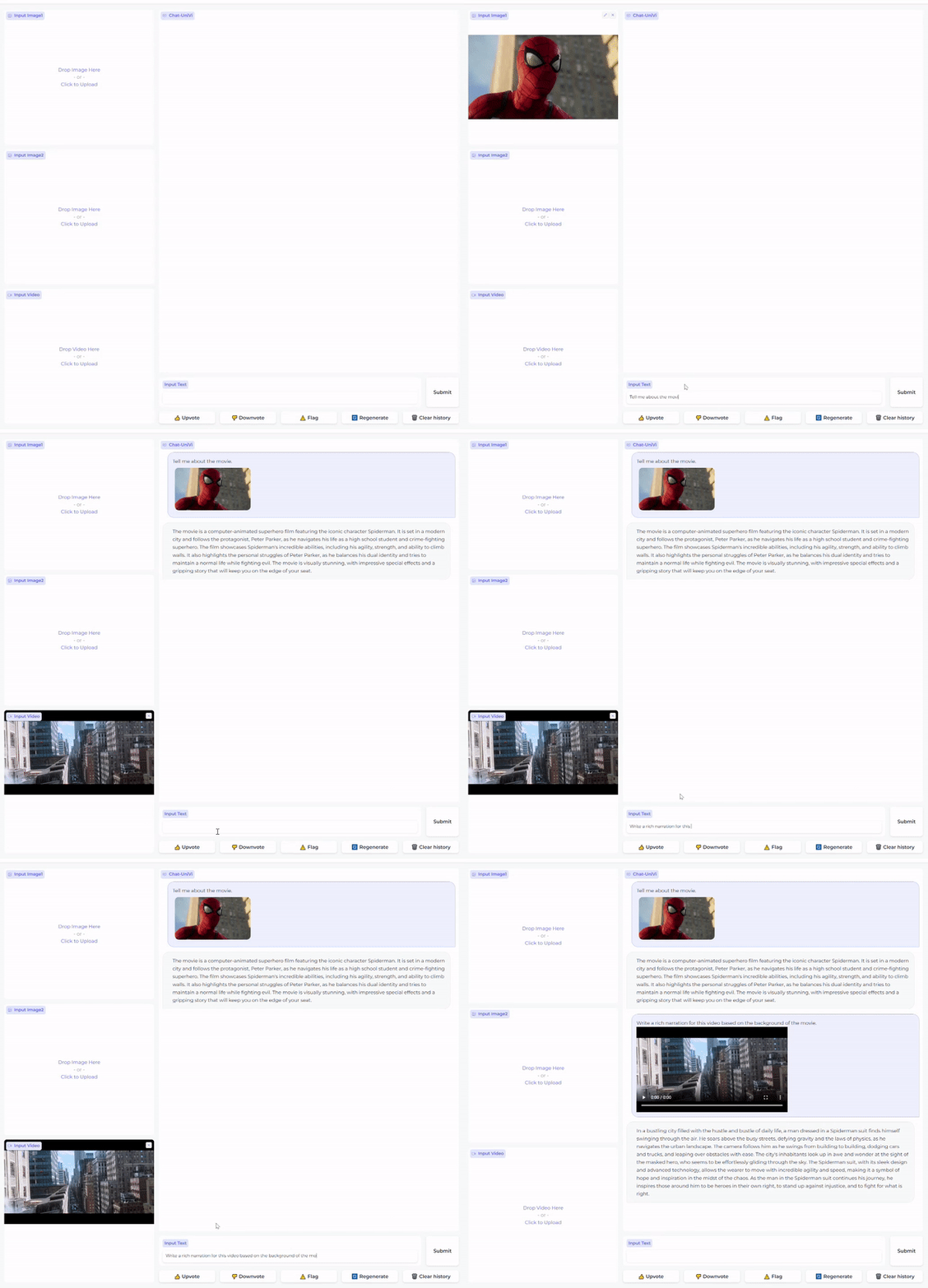
- [2023/11/22] ⚡ The online demo is available at Hugging Face Demo. Welcome to try!
- [2023/11/22] The processed data is available at DATA.md.
- [2023/11/21] 💡 We release Chat-UniVi-13B. Our proposed unified visual representation framework greatly reduces the number of visual tokens, so you can train 13B unified image and video understanding models in full parameters directly on 8 A100 GPUs within 3 days. Chat-UniVi-13B has better performance (Results). The training code for Chat-UniVi-13B has been updated (TRAIN_AND_VALIDATE.md).
- [2023/11/21] We provide inference code for video understanding and image understanding.
- [2023/11/21] We enhance the video loading code by introducing support for variable-length videos. This improvement involves eliminating the previous zero-filling operation on the video. We find that this updated video loading method significantly boosts performance.
- [2023/11/15] Code are available now! Welcome to watch 👀 this repository for the latest updates.
😮 Highlights
💡 Unified visual representation for image and video
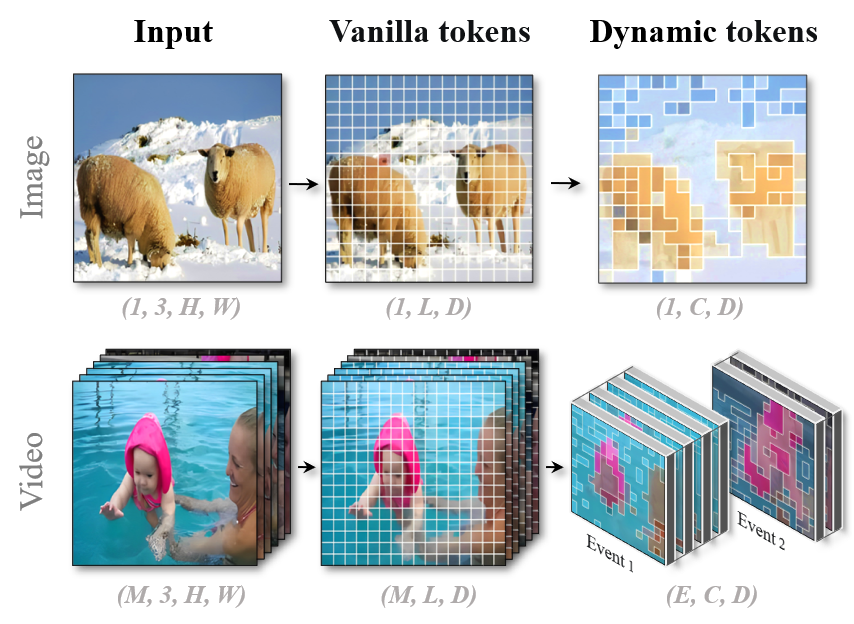
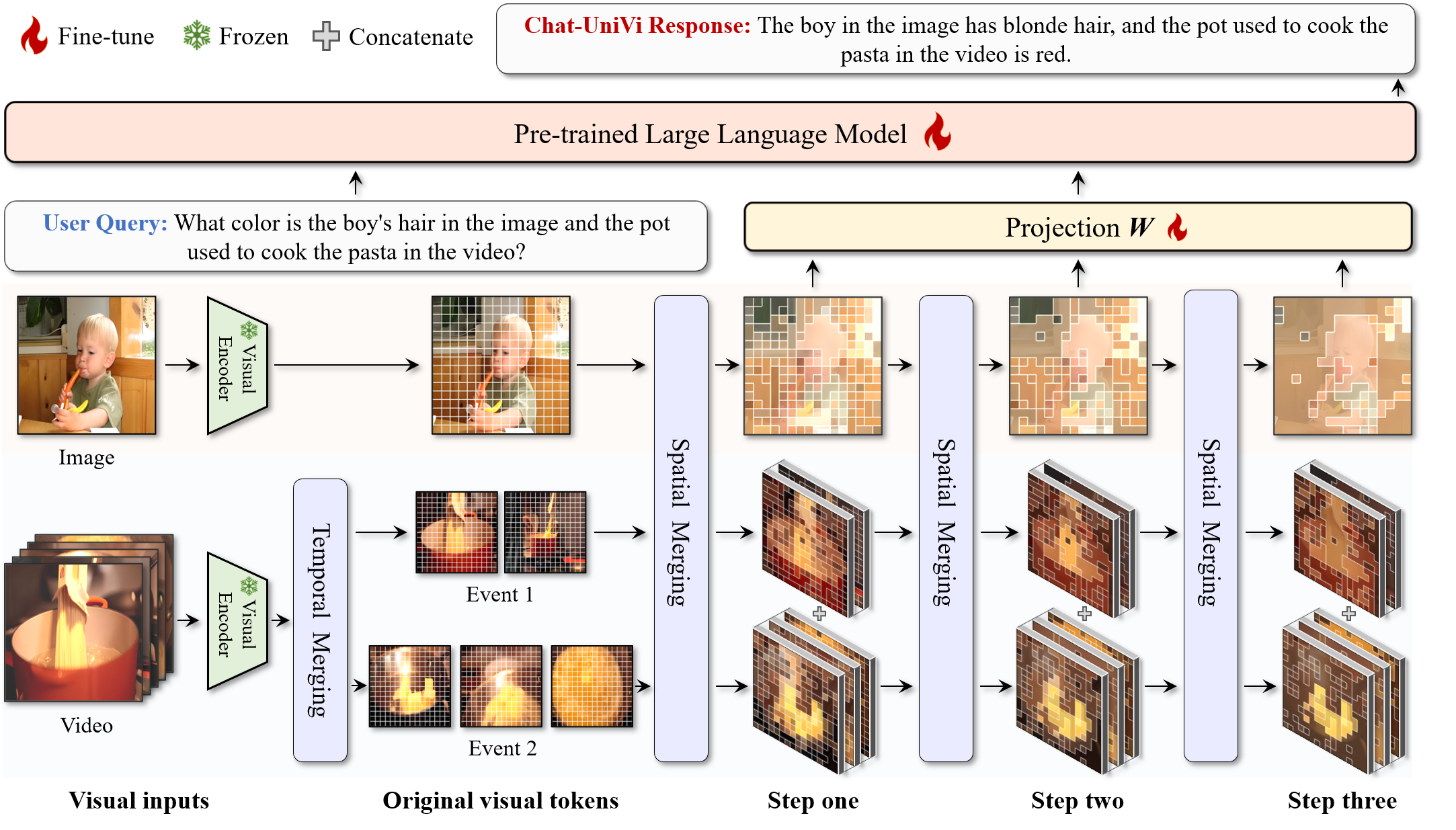
We employ a set of dynamic visual tokens to uniformly represent images and videos. This representation framework empowers the model to efficiently utilize a limited number of visual tokens to simultaneously capture the spatial details necessary for images and the comprehensive temporal relationship required for videos.
🔥 Joint training strategy, making LLMs understand both image and video
Chat-UniVi is trained on a mixed dataset containing both images and videos, allowing direct application to tasks involving both mediums without requiring any modifications.
🤗 High performance, complementary learning with image and video
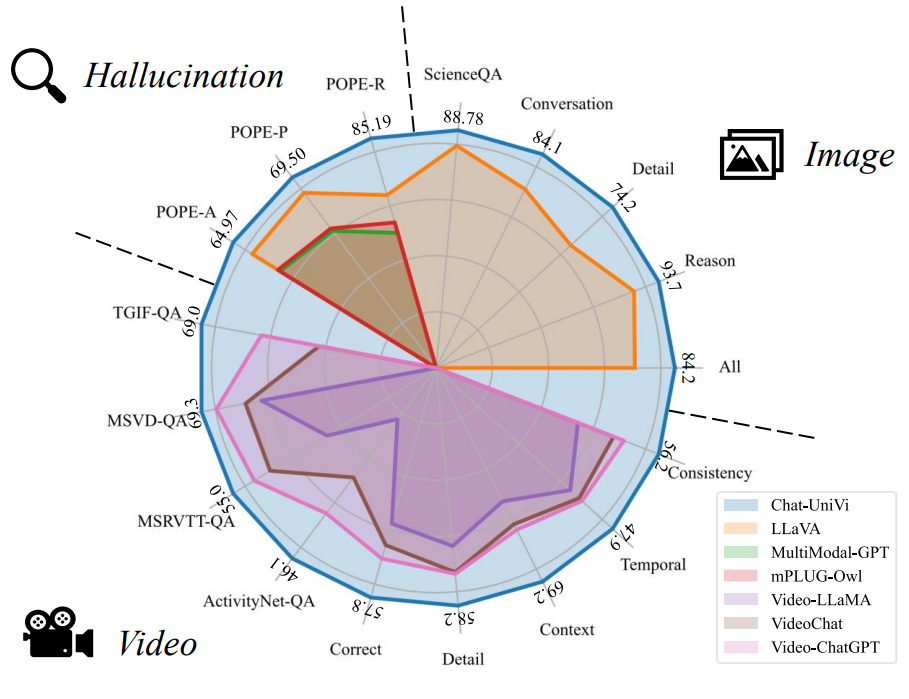
Extensive experimental results demonstrate that Chat-UniVi, as a unified model, consistently outperforms even existing methods exclusively designed for either images or videos.
⚡ Demo
Please change the model path on line 15 of the main_demo.py first. Then run the demo:
# For Chat-UniVi-7B
CUDA_VISIBLE_DEVICES=0 uvicorn main_demo_7B:app --host 0.0.0.0 --port 8888

# For Chat-UniVi-13B
CUDA_VISIBLE_DEVICES=0 uvicorn main_demo_13B:app --host 0.0.0.0 --port 8888
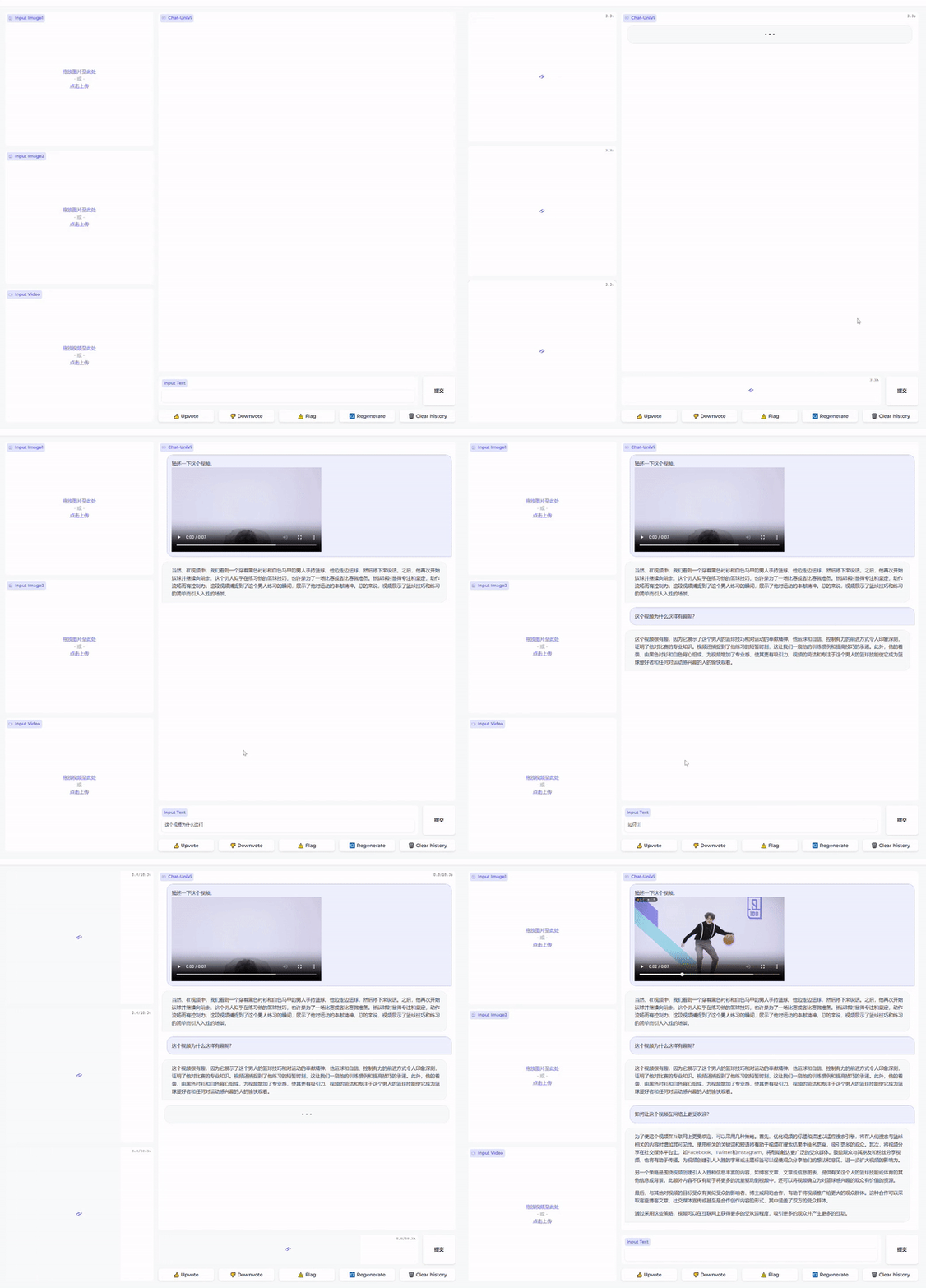
A conversation with both image and video
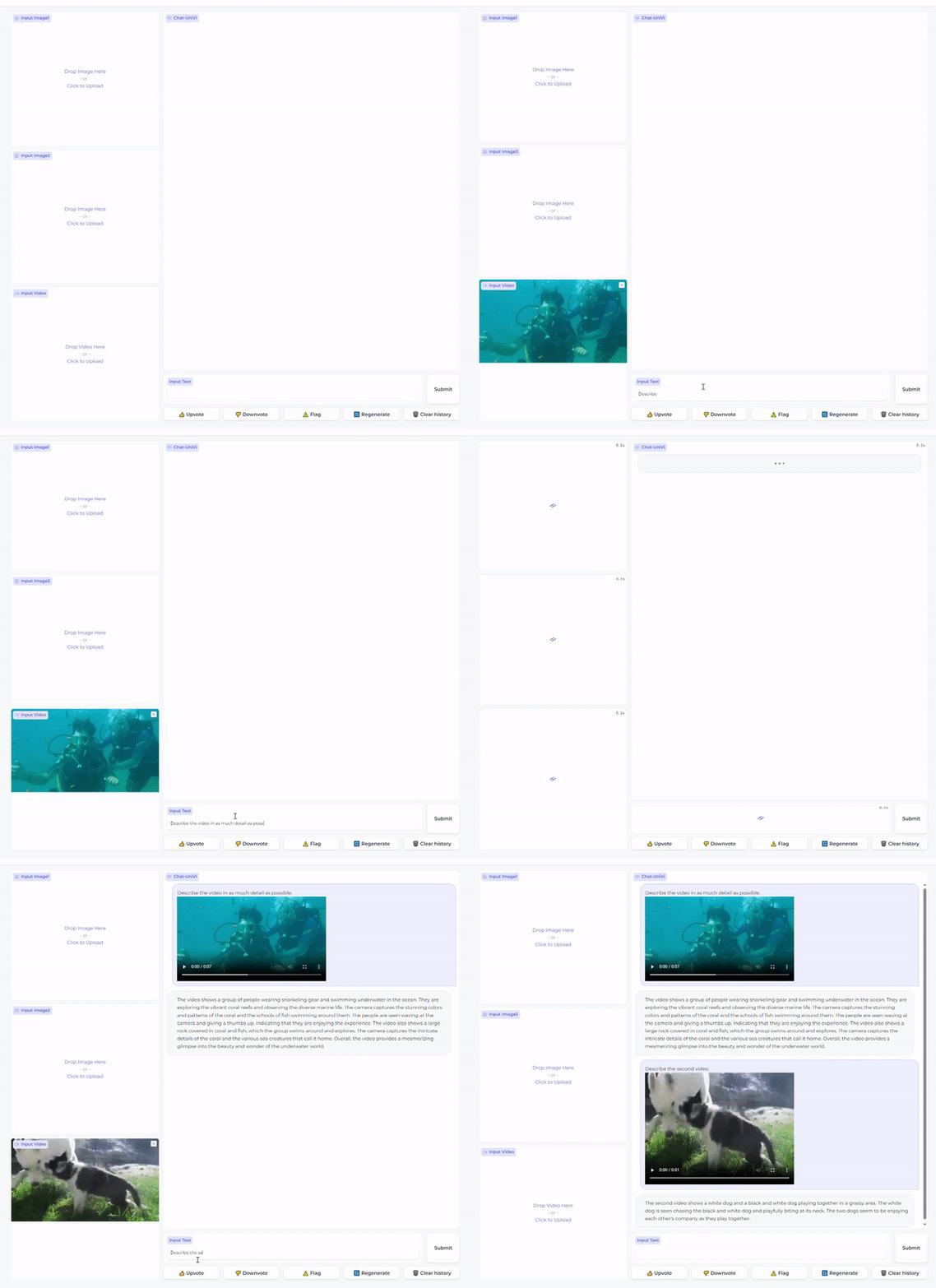
A conversation includes multiple videos
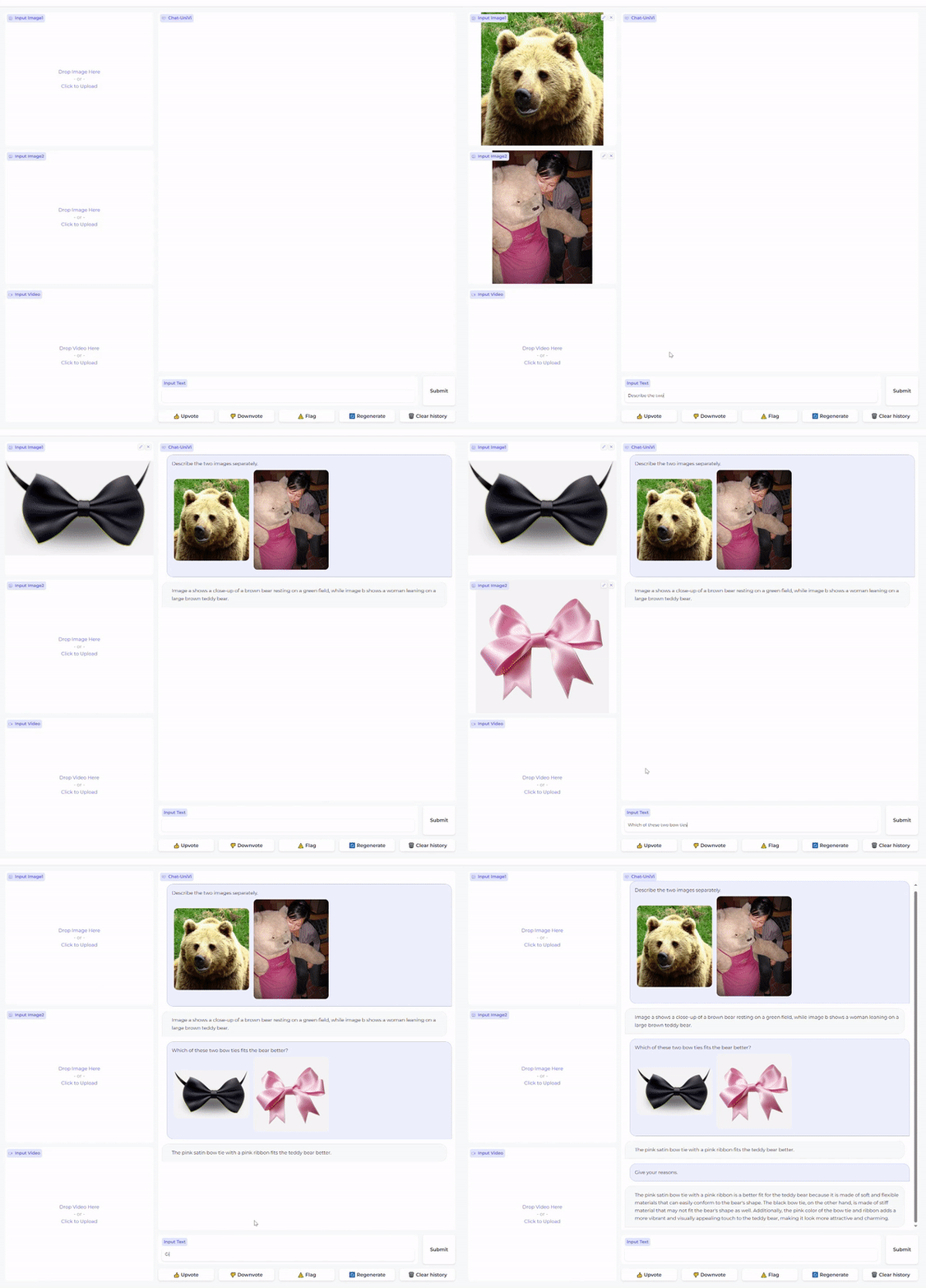
A conversation includes multiple images
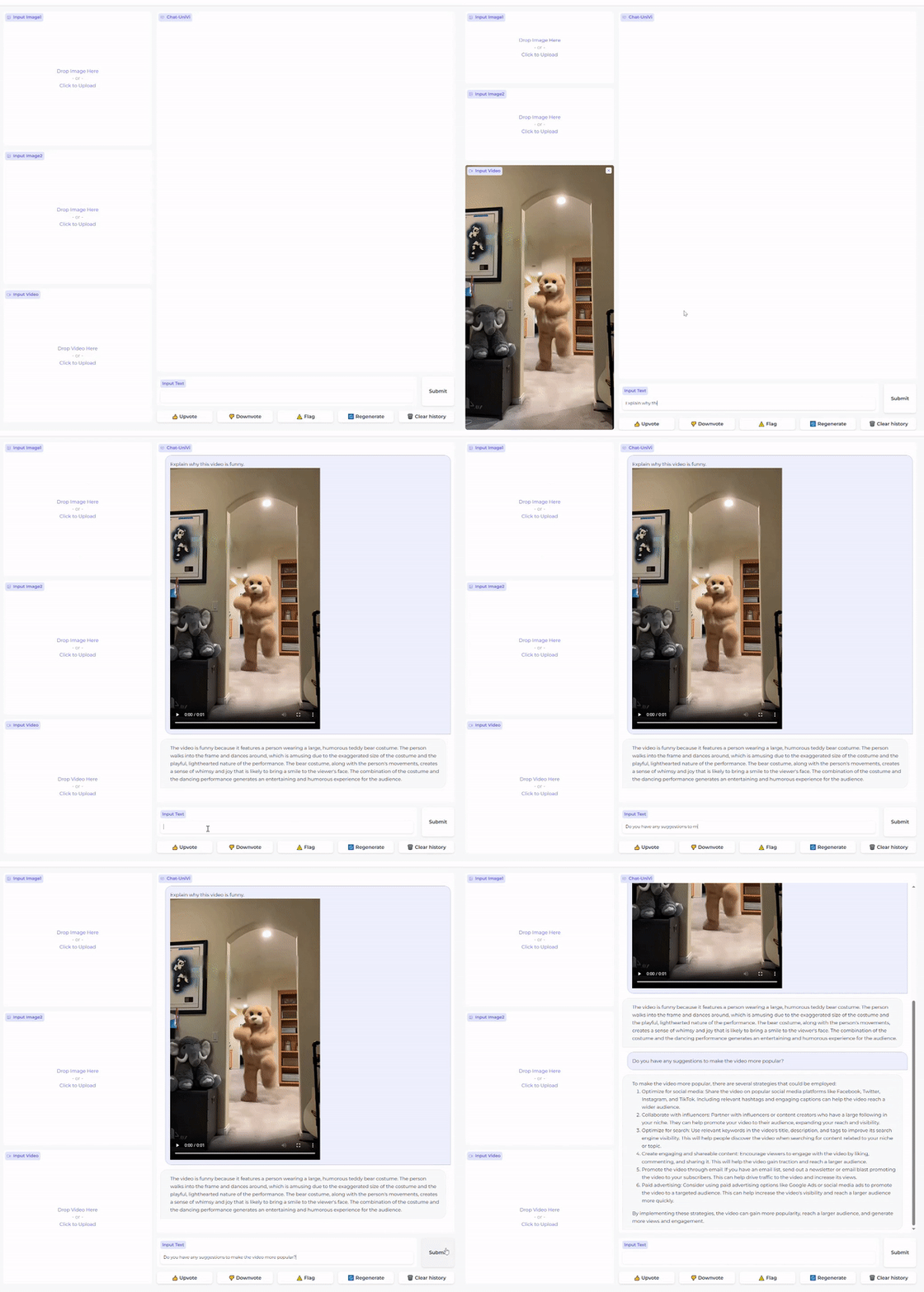
A conversation includes the video
A conversation in Chinese
With translation API, our model can also support Chinese conversations. We will add code to support Chinese conversations in future updates.
🚀 Main Results
Image understanding
Following LLaVA, we report the relative scores to GPT-4 for instruction-following questions.
Methods
LLM
Conversation
Detail Description
Complex Reasoning
All
84.1
74.2
93.7
84.2
84.1
79.4
94.7
86.1
Video understanding
Following Video-ChatGPT, we report the relative scores between the output of the model and the ground truth, with the assistance of GPT. It is worth noting that the results reported in Video-ChatGPT span a range from 0 to 5. To standardize the metrics, we normalize all scores to a scale of 0 to 100.
Methods
LLM
Correct
Detail
Context
Temporal
Consistency
57.8
58.2
69.2
47.9
56.2
59.4
59.8
70.5
60.6
ScienceQA
We report both zero-shot and fine-tuning results on the ScienceQA test set.
Methods
LLM
Average
Subject
Context Modality
Grade
NAT
SOC
LAN
TXT
IMG
NO
G1-6
G7-12
88.78
88.50
93.03
85.91
88.51
85.97
88.15
88.88
88.60
90.99
90.41
95.05
88.91
89.64
88.05
90.94
91.19
90.64
VideoQA
We follow the evaluation protocol in Video-ChatGPT, i.e., employing GPT-assisted evaluation to assess the capabilities of models.
Methods
LLM Size
MSRVTT-QA
MSVD-QA
TGIF-QA
ActivityNet-QA
Accuracy
Score
Accuracy
Score
Accuracy
Score
Accuracy
Score
Video-LLaMA
7B
29.6
1.8
51.6
2.5
12.4
1.1
LLaMA-Adapter
7B
43.8
2.7
54.9
3.1
34.2
2.7
VideoChat
7B
45.0
2.5
56.3
2.8
34.4
2.3
26.5
2.2
Video-ChatGPT
7B
49.3
2.8
64.9
3.3
51.4
3.0
35.2
2.7
Video-LLaVA
7B
59.2
3.5
70.7
3.9
70.0
4.0
45.3
3.3
7B
54.6
3.1
65.0
3.6
60.3
3.4
45.8
3.2
Chat-UniVi-7B with new video loading code
7B
55.0
3.1
69.3
3.7
69.0
3.8
46.1
3.3
Chat-UniVi-7B v1.5
7B
57.5
3.2
68.8
3.7
70.0
3.8
47.2
3.3
Hallucination Evaluation (POPE)
Our model also achieves impressive results in the object hallucination benchmark.
Methods
LLM Size
Random
Popular
Adversarial
Accuracy
F1-Score
Yes
Accuracy
F1-Score
Yes
Accuracy
F1-Score
Yes
LLaVA
7B
72.16
78.22
76.29
61.37
71.52
85.63
58.67
70.12
88.33
Video-LLaVA
7B
86.2
85.2
42.0
85.3
84.0
42.1
81.6
80.8
45.8
7B
85.19
86.05
54.67
69.50
74.39
69.10
64.97
71.54
73.10
Chat-UniVi-7B v1.5
7B
87.01
86.09
41.86
85.87
84.76
42.73
83.23
82.31
44.77
😍 Visualization
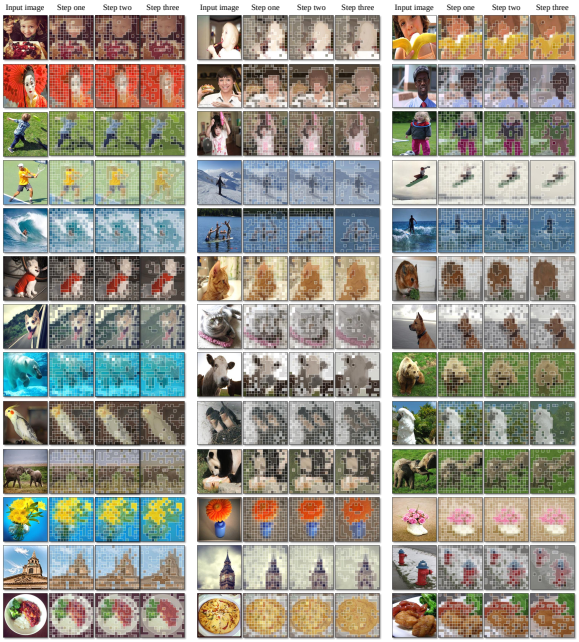
Visualization for the image inputs
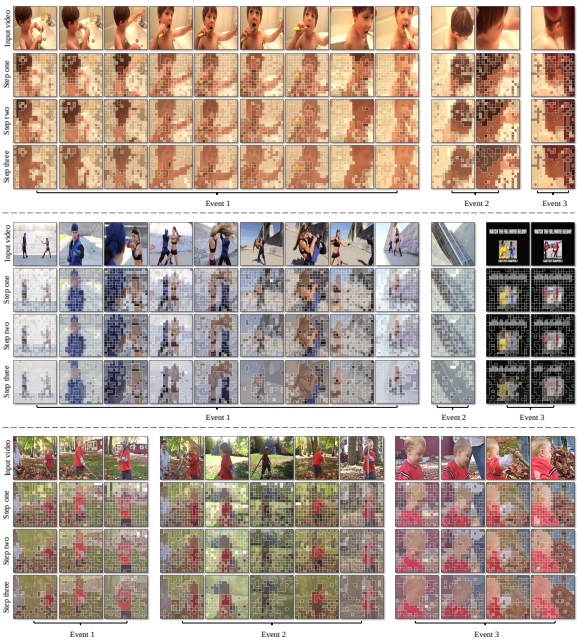
Visualization for the video inputs
🛠️ Requirements and Installation
Attention! If you are using a Windows system, please make sure to comment out deepspeed in pyproject.toml (#Line 20), as installing deepspeed may result in errors on Windows (see Link). Keep in mind that deepspeed is intended for training models only. If you are solely engaged in inference and not training models, it is recommended to comment it out.
- Python >= 3.10
- Install required packages:
git clone https://github.com/PKU-YuanGroup/Chat-UniVi
cd Chat-UniVi
conda create -n chatunivi python=3.10 -y
conda activate chatunivi
pip install --upgrade pip
pip install -e .
# pip install ninja  # If you only intend to perform inference, there's no need to install ```ninja```.
# pip install flash-attn --no-build-isolation  # If you only intend to perform inference, there's no need to install ```flash-attn```.
🤖 API
We open source all modalities preprocessing code. If you want to load the model from the model hub on Hugging Face or on local, you can use the following code snippets.
Inference for Video Understanding
import torch
import os
from ChatUniVi.constants import *
from ChatUniVi.conversation import conv_templates, SeparatorStyle
from ChatUniVi.model.builder import load_pretrained_model
from ChatUniVi.utils import disable_torch_init
from ChatUniVi.mm_utils import tokenizer_image_token, get_model_name_from_path, KeywordsStoppingCriteria
from PIL import Image
from decord import VideoReader, cpu
import numpy as np


def _get_rawvideo_dec(video_path, image_processor, max_frames=MAX_IMAGE_LENGTH, image_resolution=224, video_framerate=1, s=None, e=None):
    # speed up video decode via decord.

    if s is None:
        start_time, end_time = None, None
    else:
        start_time = int(s)
        end_time = int(e)
        start_time = start_time if start_time >= 0. else 0.
        end_time = end_time if end_time >= 0. else 0.
        if start_time > end_time:
            start_time, end_time = end_time, start_time
        elif start_time == end_time:
            end_time = start_time + 1

    if os.path.exists(video_path):
        vreader = VideoReader(video_path, ctx=cpu(0))
    else:
        print(video_path)
        raise FileNotFoundError

    fps = vreader.get_avg_fps()
    f_start = 0 if start_time is None else int(start_time * fps)
    f_end = int(min(1000000000 if end_time is None else end_time * fps, len(vreader) - 1))
    num_frames = f_end - f_start + 1
    if num_frames > 0:
        # T x 3 x H x W
        sample_fps = int(video_framerate)
        t_stride = int(round(float(fps) / sample_fps))

        all_pos = list(range(f_start, f_end + 1, t_stride))
        if len(all_pos) > max_frames:
            sample_pos = [all_pos[_] for _ in np.linspace(0, len(all_pos) - 1, num=max_frames, dtype=int)]
        else:
            sample_pos = all_pos

        patch_images = [Image.fromarray(f) for f in vreader.get_batch(sample_pos).asnumpy()]

        patch_images = torch.stack([image_processor.preprocess(img, return_tensors='pt')['pixel_values'][0] for img in patch_images])
        slice_len = patch_images.shape[0]

        return patch_images, slice_len
    else:
        print("video path: {} error.".format(video_path))


if __name__ == '__main__':
    # Model Parameter
    model_path = "Chat-UniVi/Chat-UniVi"  # or "Chat-UniVi/Chat-UniVi-13B"、"Chat-UniVi/Chat-UniVi-v1.5"
    video_path = ${video_path}

    # The number of visual tokens varies with the length of the video. "max_frames" is the maximum number of frames.
    # When the video is long, we will uniformly downsample the video to meet the frames when equal to the "max_frames".
    max_frames = 100

    # The number of frames retained per second in the video.
    video_framerate = 1

    # Input Text
    qs = "Describe the video."

    # Sampling Parameter
    conv_mode = "simple"
    temperature = 0.2
    top_p = None
    num_beams = 1

    disable_torch_init()
    model_path = os.path.expanduser(model_path)
    model_name = "ChatUniVi"
    tokenizer, model, image_processor, context_len = load_pretrained_model(model_path, None, model_name)

    mm_use_im_start_end = getattr(model.config, "mm_use_im_start_end", False)
    mm_use_im_patch_token = getattr(model.config, "mm_use_im_patch_token", True)
    if mm_use_im_patch_token:
        tokenizer.add_tokens([DEFAULT_IMAGE_PATCH_TOKEN], special_tokens=True)
    if mm_use_im_start_end:
        tokenizer.add_tokens([DEFAULT_IM_START_TOKEN, DEFAULT_IM_END_TOKEN], special_tokens=True)
    model.resize_token_embeddings(len(tokenizer))

    vision_tower = model.get_vision_tower()
    if not vision_tower.is_loaded:
        vision_tower.load_model()
    image_processor = vision_tower.image_processor

    if model.config.config["use_cluster"]:
        for n, m in model.named_modules():
            m = m.to(dtype=torch.bfloat16)

    # Check if the video exists
    if video_path is not None:
        video_frames, slice_len = _get_rawvideo_dec(video_path, image_processor, max_frames=max_frames, video_framerate=video_framerate)

        cur_prompt = qs
        if model.config.mm_use_im_start_end:
            qs = DEFAULT_IM_START_TOKEN + DEFAULT_IMAGE_TOKEN * slice_len + DEFAULT_IM_END_TOKEN + '\n' + qs
        else:
            qs = DEFAULT_IMAGE_TOKEN * slice_len + '\n' + qs

        conv = conv_templates[conv_mode].copy()
        conv.append_message(conv.roles[0], qs)
        conv.append_message(conv.roles[1], None)
        prompt = conv.get_prompt()

        input_ids = tokenizer_image_token(prompt, tokenizer, IMAGE_TOKEN_INDEX, return_tensors='pt').unsqueeze(
            0).cuda()

        stop_str = conv.sep if conv.sep_style != SeparatorStyle.TWO else conv.sep2
        keywords = [stop_str]
        stopping_criteria = KeywordsStoppingCriteria(keywords, tokenizer, input_ids)

        with torch.inference_mode():
            output_ids = model.generate(
                input_ids,
                images=video_frames.half().cuda(),
                do_sample=True,
                temperature=temperature,
                top_p=top_p,
                num_beams=num_beams,
                output_scores=True,
                return_dict_in_generate=True,
                max_new_tokens=1024,
                use_cache=True,
                stopping_criteria=[stopping_criteria])

        output_ids = output_ids.sequences
        input_token_len = input_ids.shape[1]
        n_diff_input_output = (input_ids != output_ids[:, :input_token_len]).sum().item()
        if n_diff_input_output > 0:
            print(f'[Warning] {n_diff_input_output} output_ids are not the same as the input_ids')
        outputs = tokenizer.batch_decode(output_ids[:, input_token_len:], skip_special_tokens=True)[0]
        outputs = outputs.strip()
        if outputs.endswith(stop_str):
            outputs = outputs[:-len(stop_str)]
        outputs = outputs.strip()
        print(outputs)
Inference for Image Understanding
import torch
import os
from ChatUniVi.constants import *
from ChatUniVi.conversation import conv_templates, SeparatorStyle
from ChatUniVi.model.builder import load_pretrained_model
from ChatUniVi.utils import disable_torch_init
from ChatUniVi.mm_utils import tokenizer_image_token, get_model_name_from_path, KeywordsStoppingCriteria
from PIL import Image


if __name__ == '__main__':
    # Model Parameter
    model_path = "Chat-UniVi/Chat-UniVi"  # or "Chat-UniVi/Chat-UniVi-13B"、"Chat-UniVi/Chat-UniVi-v1.5"
    image_path = ${image_path}

    # Input Text
    qs = "Describe the image."

    # Sampling Parameter
    conv_mode = "simple"
    temperature = 0.2
    top_p = None
    num_beams = 1

    disable_torch_init()
    model_path = os.path.expanduser(model_path)
    model_name = "ChatUniVi"
    tokenizer, model, image_processor, context_len = load_pretrained_model(model_path, None, model_name)

    mm_use_im_start_end = getattr(model.config, "mm_use_im_start_end", False)
    mm_use_im_patch_token = getattr(model.config, "mm_use_im_patch_token", True)
    if mm_use_im_patch_token:
        tokenizer.add_tokens([DEFAULT_IMAGE_PATCH_TOKEN], special_tokens=True)
    if mm_use_im_start_end:
        tokenizer.add_tokens([DEFAULT_IM_START_TOKEN, DEFAULT_IM_END_TOKEN], special_tokens=True)
    model.resize_token_embeddings(len(tokenizer))

    vision_tower = model.get_vision_tower()
    if not vision_tower.is_loaded:
        vision_tower.load_model()
    image_processor = vision_tower.image_processor

    # Check if the video exists
    if image_path is not None:
        cur_prompt = qs
        if model.config.mm_use_im_start_end:
            qs = DEFAULT_IM_START_TOKEN + DEFAULT_IMAGE_TOKEN + DEFAULT_IM_END_TOKEN + '\n' + qs
        else:
            qs = DEFAULT_IMAGE_TOKEN + '\n' + qs

        conv = conv_templates[conv_mode].copy()
        conv.append_message(conv.roles[0], qs)
        conv.append_message(conv.roles[1], None)
        prompt = conv.get_prompt()

        input_ids = tokenizer_image_token(prompt, tokenizer, IMAGE_TOKEN_INDEX, return_tensors='pt').unsqueeze(0).cuda()

        image = Image.open(image_path)
        image_tensor = image_processor.preprocess(image, return_tensors='pt')['pixel_values'][0]

        stop_str = conv.sep if conv.sep_style != SeparatorStyle.TWO else conv.sep2
        keywords = [stop_str]
        stopping_criteria = KeywordsStoppingCriteria(keywords, tokenizer, input_ids)

        with torch.inference_mode():
            output_ids = model.generate(
                input_ids,
                images=image_tensor.unsqueeze(0).half().cuda(),
                do_sample=True,
                temperature=temperature,
                top_p=top_p,
                num_beams=num_beams,
                max_new_tokens=1024,
                use_cache=True,
                stopping_criteria=[stopping_criteria])

        input_token_len = input_ids.shape[1]
        n_diff_input_output = (input_ids != output_ids[:, :input_token_len]).sum().item()
        if n_diff_input_output > 0:
            print(f'[Warning] {n_diff_input_output} output_ids are not the same as the input_ids')
        outputs = tokenizer.batch_decode(output_ids[:, input_token_len:], skip_special_tokens=True)[0]
        outputs = outputs.strip()
        if outputs.endswith(stop_str):
            outputs = outputs[:-len(stop_str)]
        outputs = outputs.strip()
        print(outputs)
🗝️ Training & Validating
- The data instruction is in DATA.md.
- The training instruction is in TRAIN_AND_VALIDATE.md.
👍 Acknowledgement
- LLaVA The codebase we built upon and it is an efficient large language and vision assistant.
- Video-ChatGPT Great job contributing the evaluation code and dataset.
🤝 Related Projects
- Video-LLaVA This framework exhibits remarkable interactive capabilities between images and videos.
🔒 License
- The majority of this project is released under the Apache 2.0 license as found in the LICENSE file.
- The service is a research preview intended for non-commercial use only, subject to the model License of LLaMA, Terms of Use of the data generated by OpenAI, and Privacy Practices of ShareGPT. Please contact us if you find any potential violations.
✏️ Citation
If you find this paper useful, please consider staring 🌟 this repo and citing 📑 our paper:
@article{jin2023chatunivi,
  title={Chat-UniVi: Unified Visual Representation Empowers Large Language Models with Image and Video Understanding},
  author={Peng Jin and Ryuichi Takanobu and Caiwan Zhang and Xiaochun Cao and Li Yuan},
  journal={arXiv preprint arXiv:2311.08046},
  year={2023}
}